


Let me guess, you’re tired of trying to build backlinks and someone advised you to just buy PBN backlinks.
Stop right there.
Google is directly against PBN backlinks, and if you’re caught using them, your site can even get deindexed. Here’s everything you need to know about PBN backlinks and why you should stay away from them.
What Are PBN Backlinks?
PBN, short for Private Blog Network, is a network of sites built for one purpose: linking out to target websites to manipulate their SEO value. A backlink from one of these sites is a PBN backlink.
How Do PBN Sites Work?
PBN operators typically buy expired domains that still carry a strong past backlink profile and high domain authority, then rebuild them with low-quality content, usually spun or copied from elsewhere just to look like a legitimate blog.
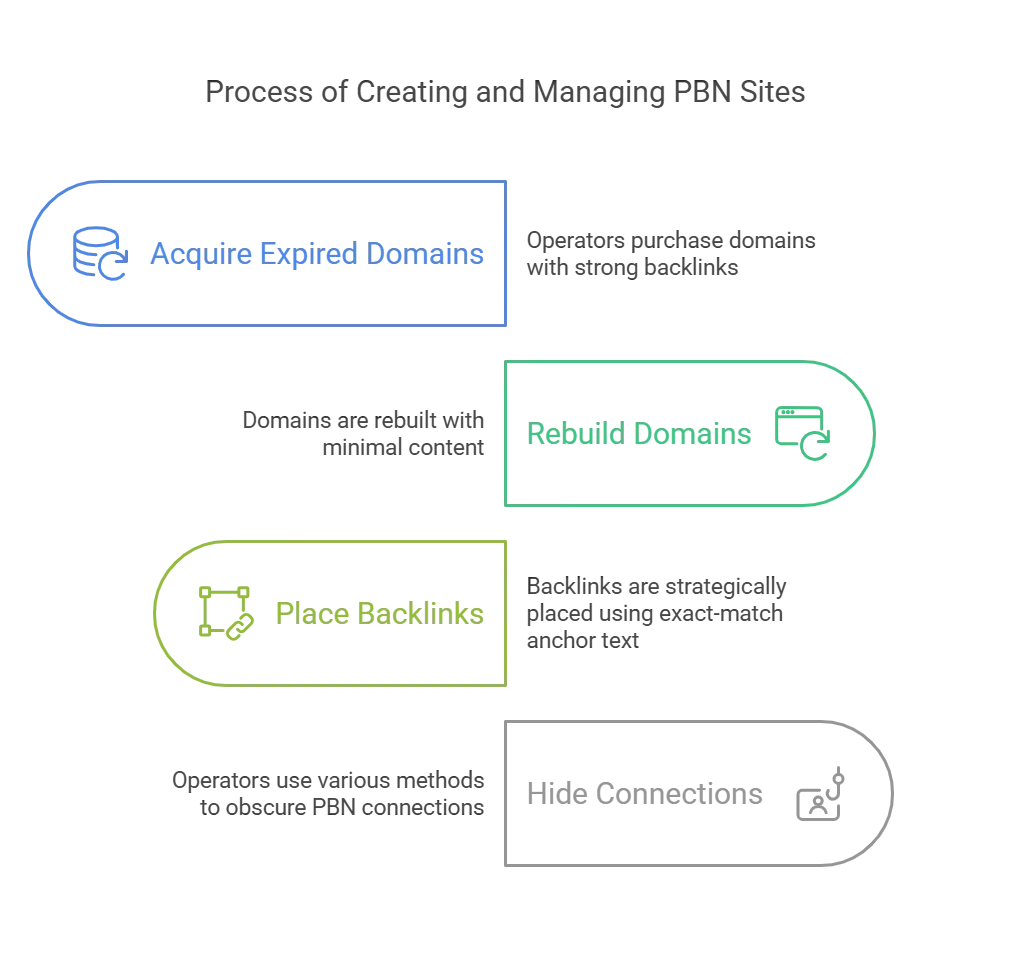
They then link out to target sites, either part of their own network or belonging to someone who bought links from them. To avoid getting caught, PBN owners often spread across different hosting providers, vary site designs, and use WHOIS privacy protection.
Why Do Some SEOs Use PBN Links?
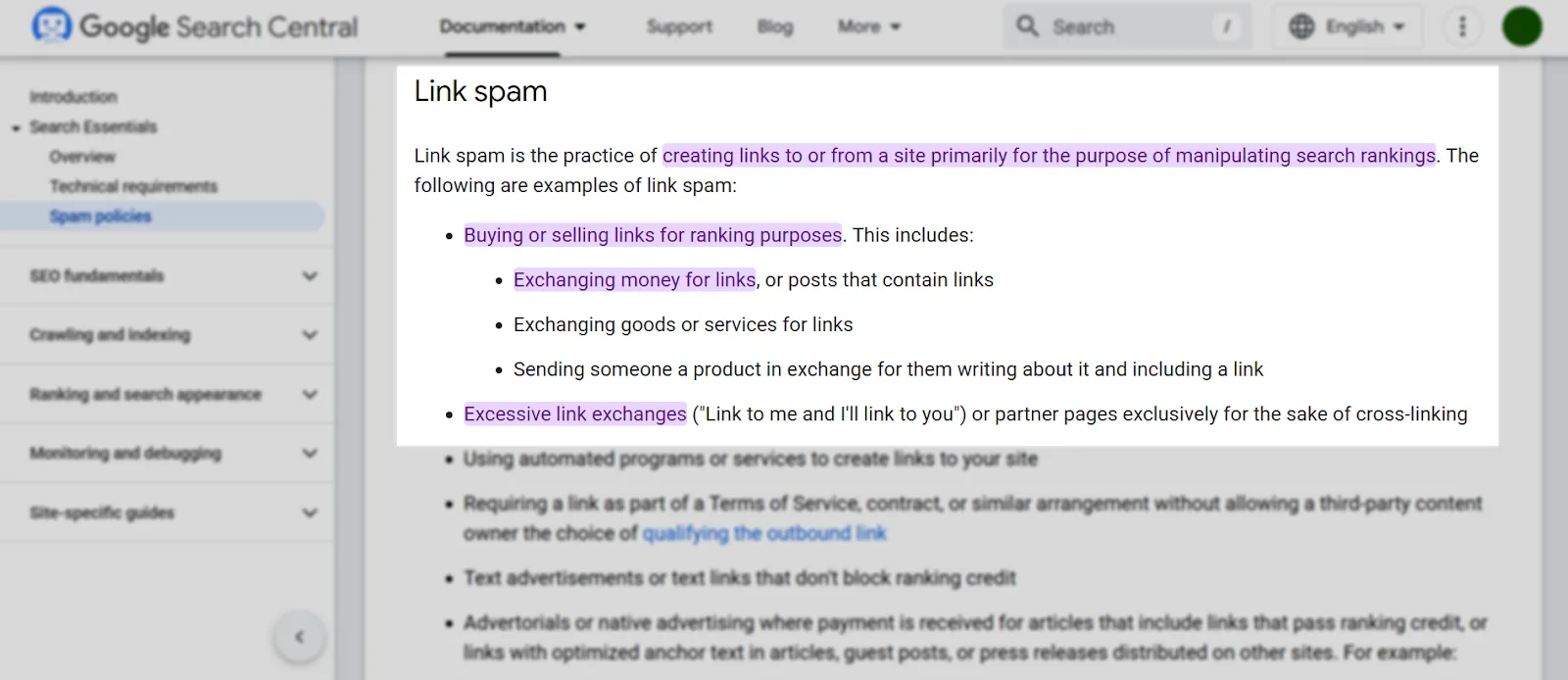
No legitimate SEO professional will ever tell you to buy backlinks, but plenty of site owners do it anyway, or build their own networks. Compared to organic link-building, PBN backlinks offer:
↳ Full control. With organic link-building, you have zero say over where a link goes or what anchor text is used (guest blogging aside). Buy PBN backlinks, and you can choose the exact placement, anchor text, and steer ranking signals precisely where you want.
↳ Quick results. Organic link-building is slow and often takes real effort for decent ROI, tempting for anyone frustrated with the pace.
↳ Tough niches. In highly competitive spaces like healthcare, finance, or gaming, earning organic backlinks is genuinely hard, another reason people gravitate toward PBNs.
These “benefits” come with enormous risk attached.
What Is Google’s Stance on PBNs (and the Consequences)?
It directly violates Google’s guidelines. Google actively looks for and penalizes PBN sites and anyone using PBN backlinks. Google explicitly states that link schemes designed to manipulate rankings can lead to penalties. Once caught, every benefit disappears, and it can sink a site well past the point of recovery.
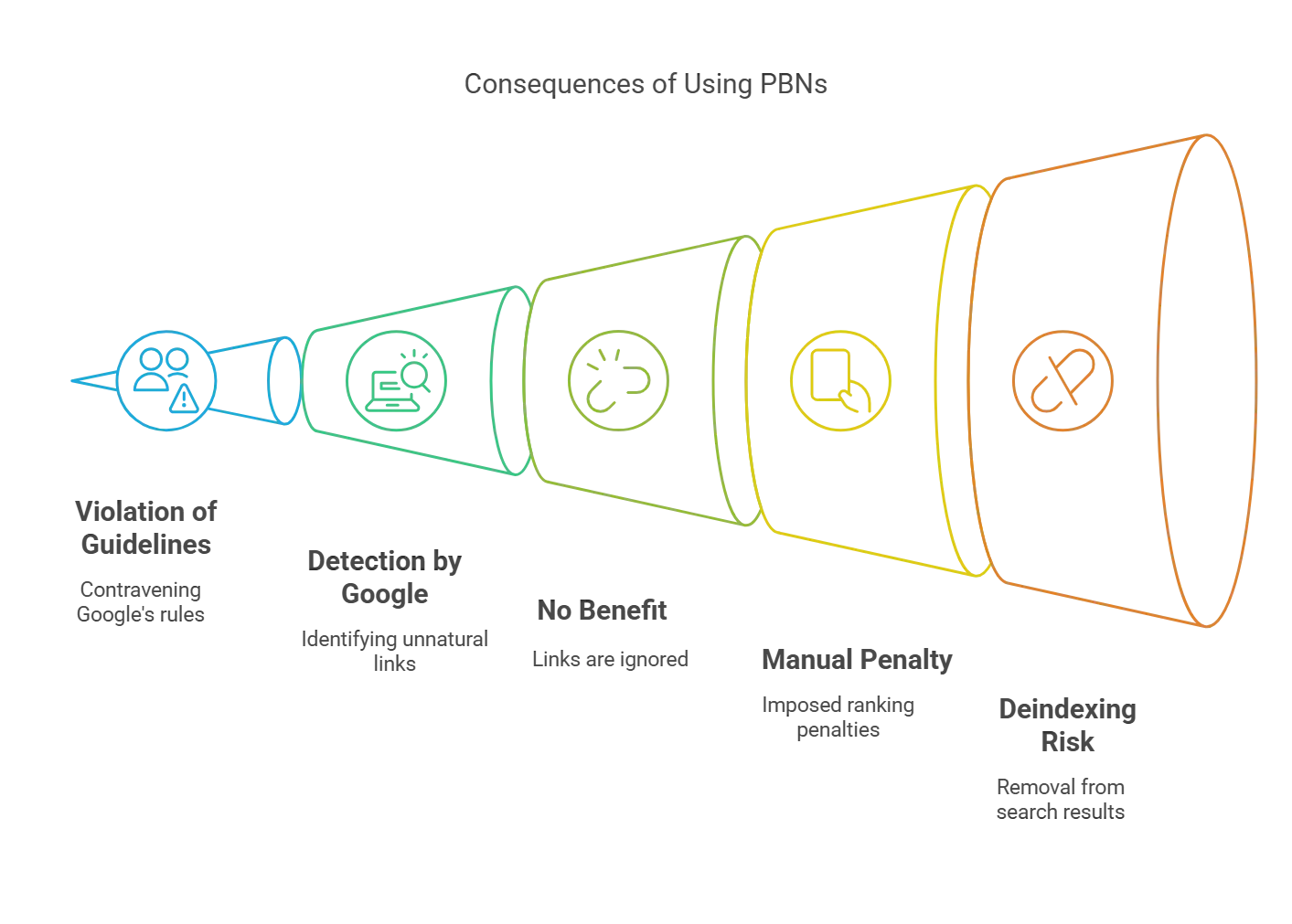
How Google detects PBN backlinks. Updates like Penguin, and more recently AI-driven detection systems, have gotten very good at spotting unnatural links. Sometimes Google simply ignores PBN links, meaning you get zero benefit, that’s actually the best-case outcome. Worse case: a manual penalty that tanks your rankings, or full deindexing.
Do PBN Backlinks Ever Work? (Short-Term Gains vs. Long-Term Losses)
A site with PBN backlinks might see a temporary ranking spike, since you control anchor text, placement, and exactly which URL gets linked. That control lets you steer rankings in your favor, briefly.
But the long-term cost is far too high.
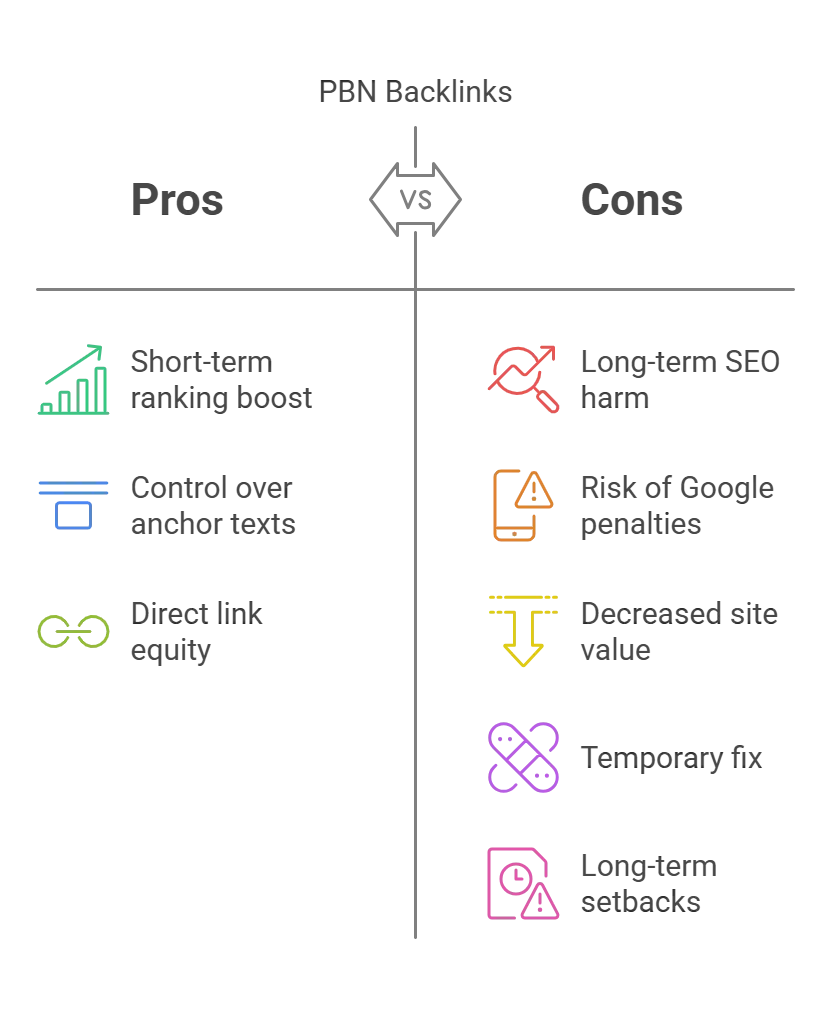
Whatever SEO benefit you got disappears the moment Google catches on. The risk of a manual penalty is real, and recovery can be nearly impossible. And if you ever plan to sell the site, PBN backlinks can tank its value.
What Are the Costs of Building a PBN?
Monetary investment. Beyond being unethical and risky, PBNs get expensive fast. A high-authority expired domain alone can cost hundreds to thousands of dollars, build five or ten sites and you’re looking at tens of thousands total.
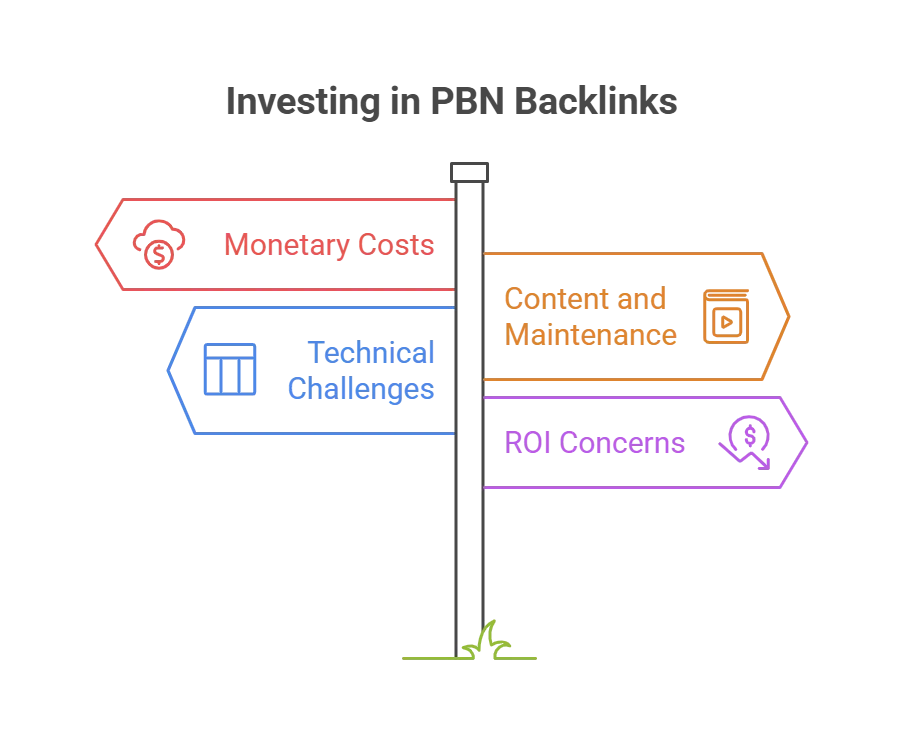
Content and maintenance. To keep each site looking legitimate, you need to regularly publish articles across the network, plus ongoing hosting, SSL, and privacy protection costs.
Technical challenges. Even small mistakes can tip Google off, so PBN operators have to carefully manage hosting, design, and metadata to hide footprints. That eats into time you could be spending growing your actual business.
Uncertain ROI. Zoom out and the return is often negative: you spend heavily, get a brief boost, and put your whole site at risk. When Google catches on, it’s all gone.
Is Buying PBN Links from Third-Party Networks Any Better?
No. Buying instead of building doesn’t change the math. You’ll find freelance services offering “high authority” PBN links cheap, but it’s still not worth it:
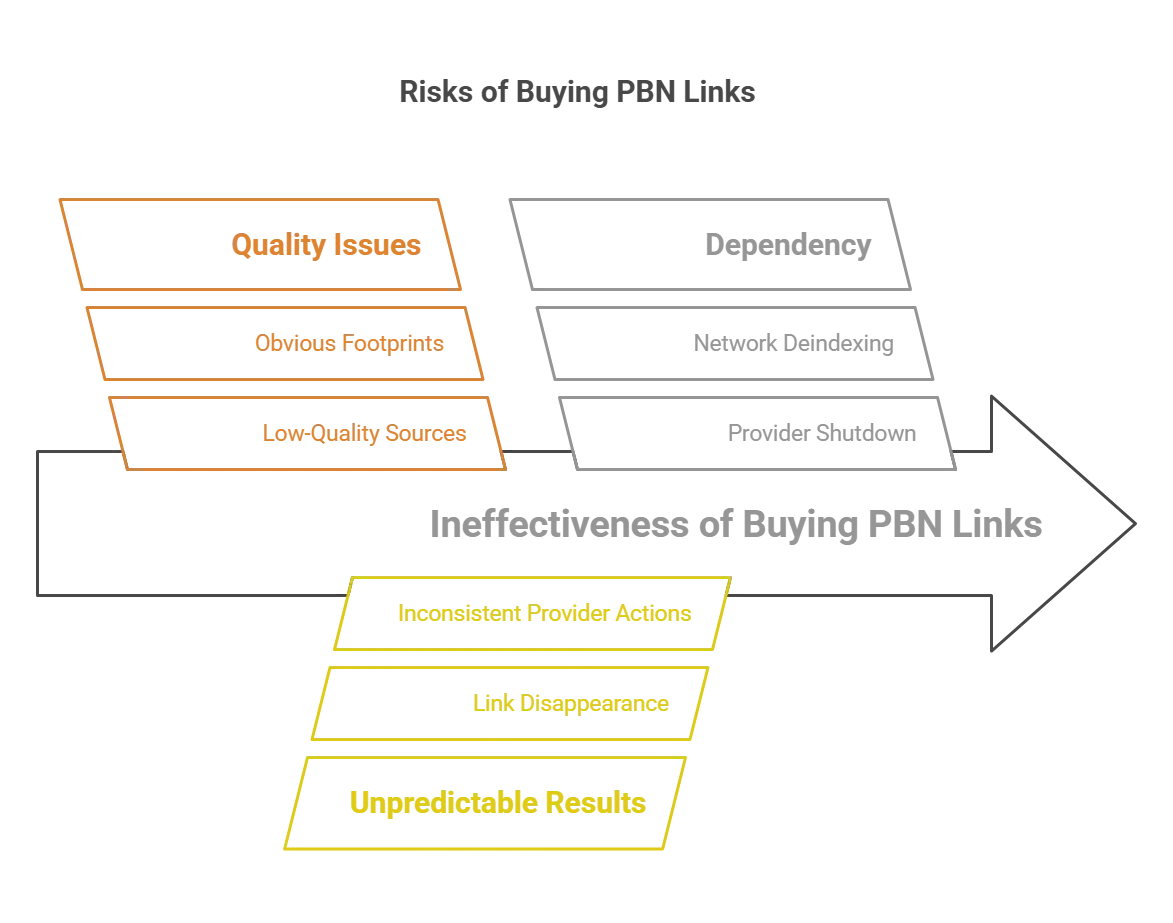
↳ These links often come from networks with poor traffic and obvious footprints, genuinely quality backlinks aren’t realistic here.
↳ You never know if the provider will maintain the links. They can disappear after a few months with zero warning.
↳ You’re entirely dependent on someone else’s network. If it gets deindexed or the provider shuts down, you lose everything overnight.
How to Identify and Remove PBN Backlinks
Red flags to look for:
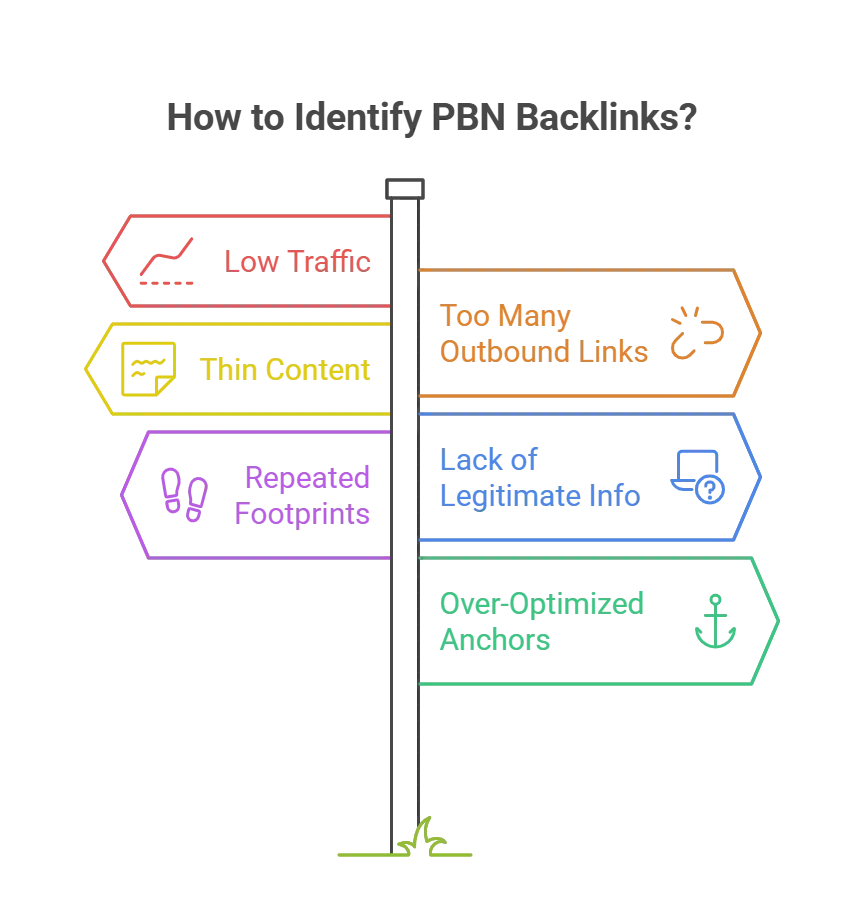
↳ Low traffic. Good domain metrics paired with almost no organic traffic is a warning sign.
↳ Too many outbound links. A site dumping links to many unrelated sites often signals a PBN.
↳ Thin content. Generic, low-quality pages that seem designed purely to host links.
↳ No legitimate info. Real sites have clear About Us pages and contact details. PBN sites usually don’t.
↳ Repeated footprints. Similar site designs, shared hosting, or WHOIS privacy across multiple sites.
↳ Over-optimized anchors. A surge of exact-match anchor text pointing to you can indicate a manufactured link scheme.
Compile these into a list and decide whether to disavow or dig deeper.
How to remove them. If you’ve bought PBN backlinks, or suspect you have some pointing at you, disavow them. List every suspicious domain or URL in a .txt file, then open Google’s Disavow Tool, select the right property, and upload it.
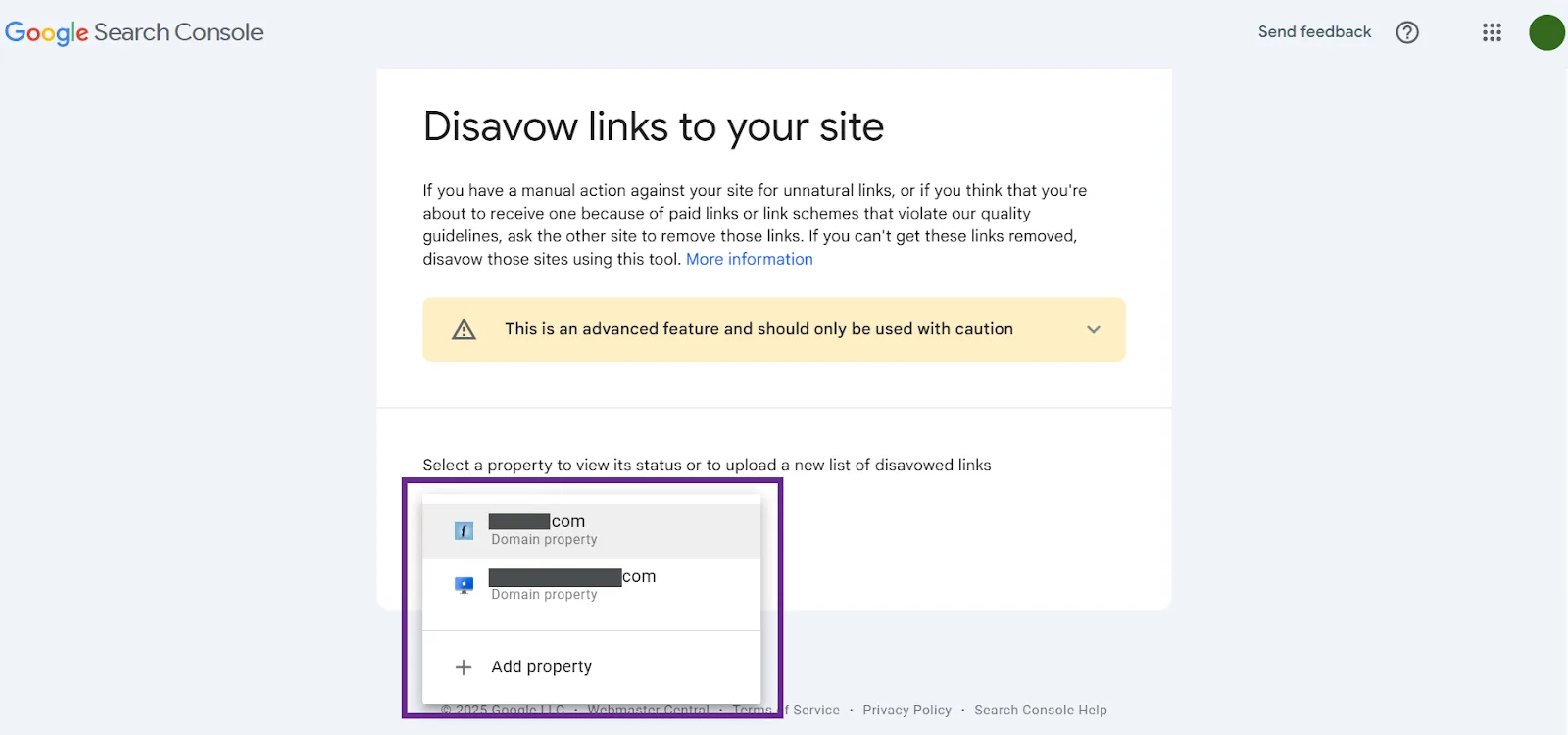
It takes some time to come into effect.
Safe and Effective Alternatives to PBNs
Guest posting. Reach out to reputed blogs in your niche and offer a detailed, valuable article in exchange for a backlink. Takes real effort, but it’s legitimate and drives steady growth in both rankings and audience trust.
Curated link placements / niche edits. Find content on quality sites in your niche where your work would genuinely add value, then ask for a backlink to your existing content. No new content needed, you’re extracting more value from what’s already working. See Guest Posting Vs Niche Edits for a deeper comparison.

The “skyscraper” technique and original research. Build content so genuinely good that others want to link to it organically, conduct your own studies, publish unique data. Unique insights naturally attract citations. It’s slower, more resource-intensive, and firmly a long-term strategy.
Media placements. Journalists are actively looking for expert quotes for their articles. Getting featured in high-authority publications is a real credibility boost. HARO used to be the go-to platform for this before it shut down, check out HARO alternatives if this route interests you.

Broken link building. A legitimate, slightly easier tactic: find broken links on quality niche sites and suggest your content as the replacement. High success rate, it’s a genuine win-win, you help fix the site owner’s problem and earn a natural backlink.
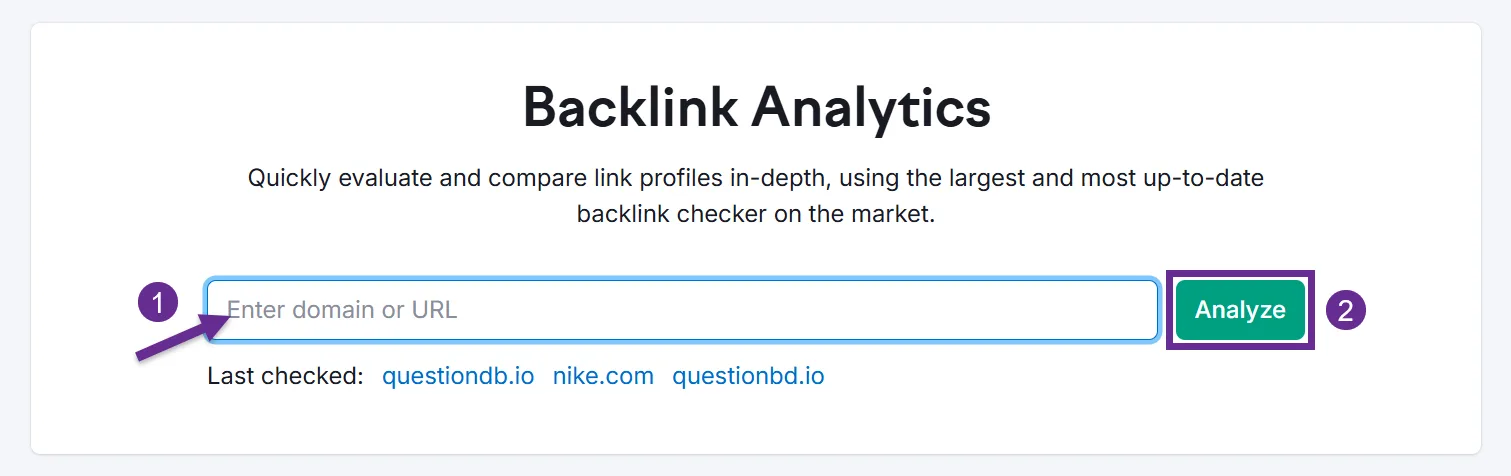
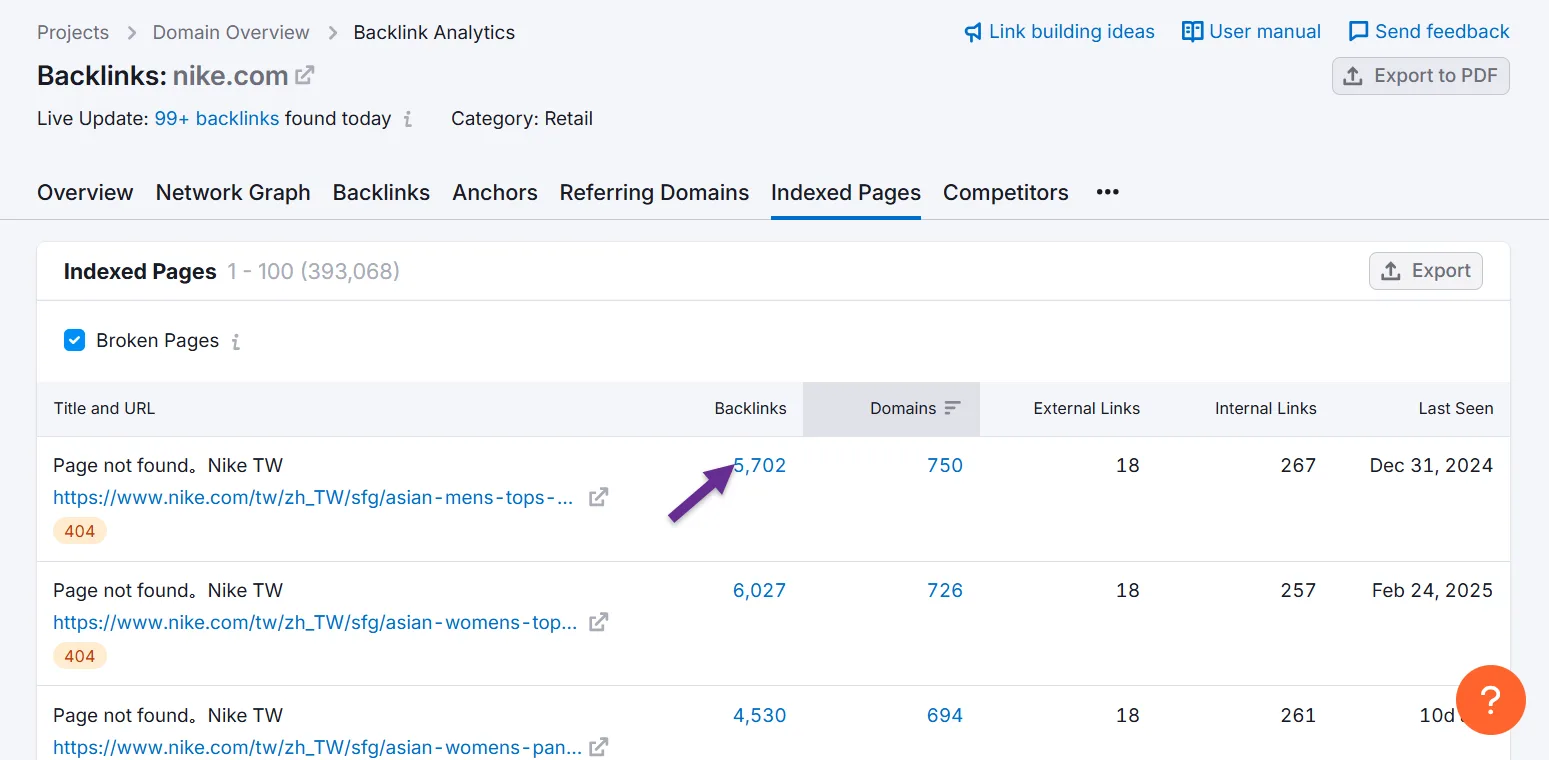
I use Semrush for this. Open Backlink Analytics, enter a competitor’s domain, click Analyze.
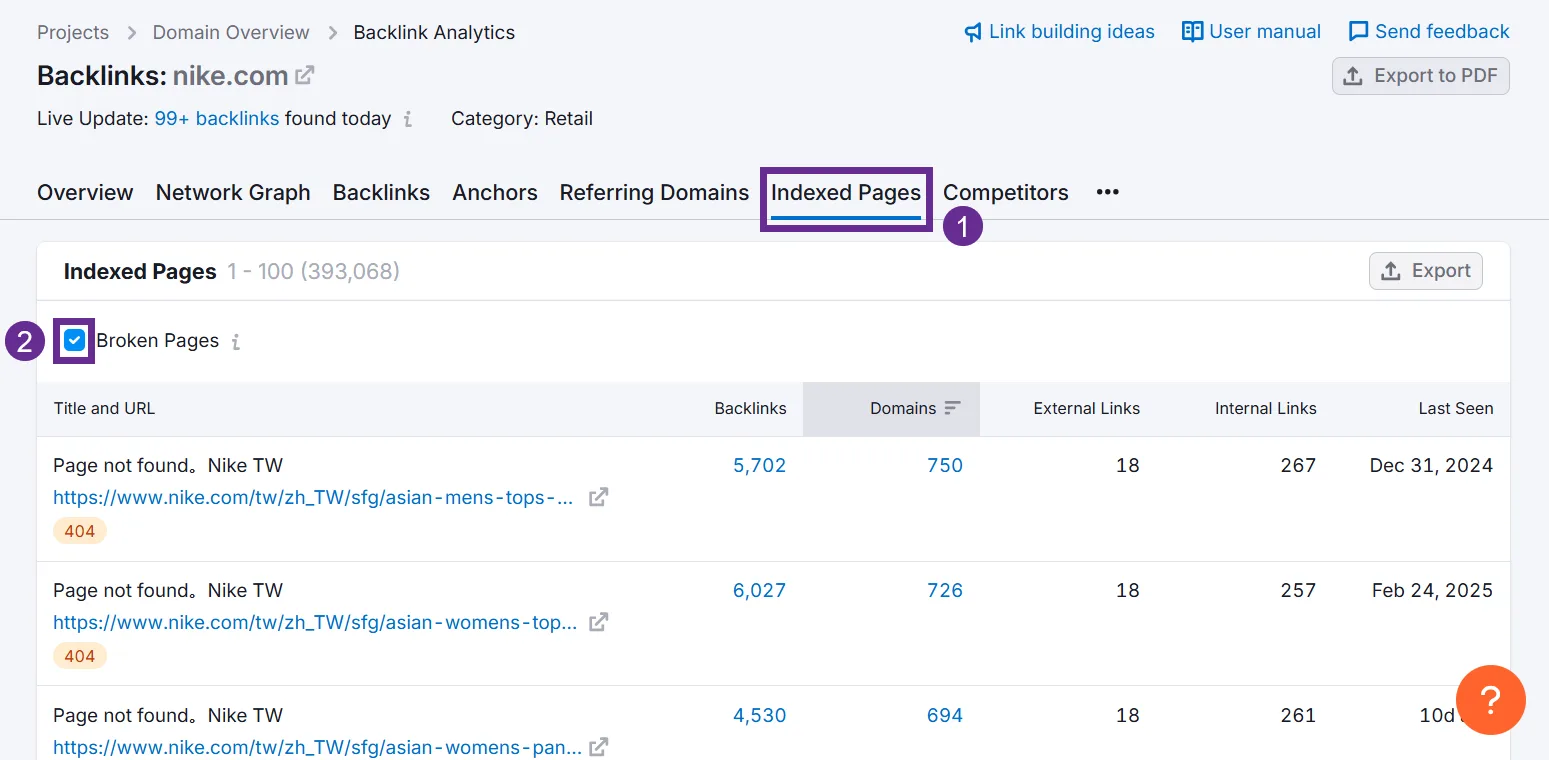
Go to Indexed Pages and check Broken Links for a list of the competitor’s dead backlinks.
Look for 404s specifically, that means the page is genuinely gone.
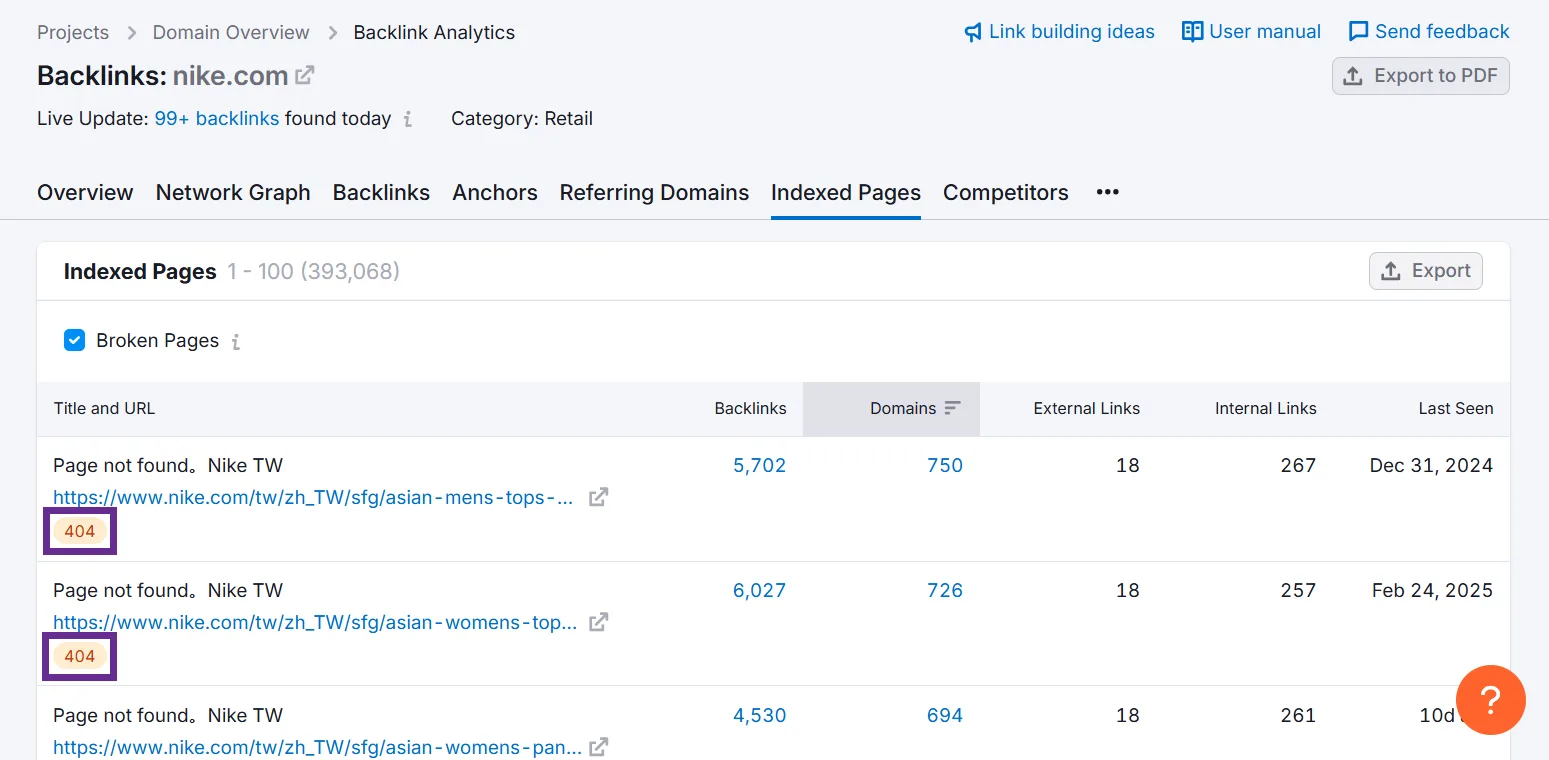
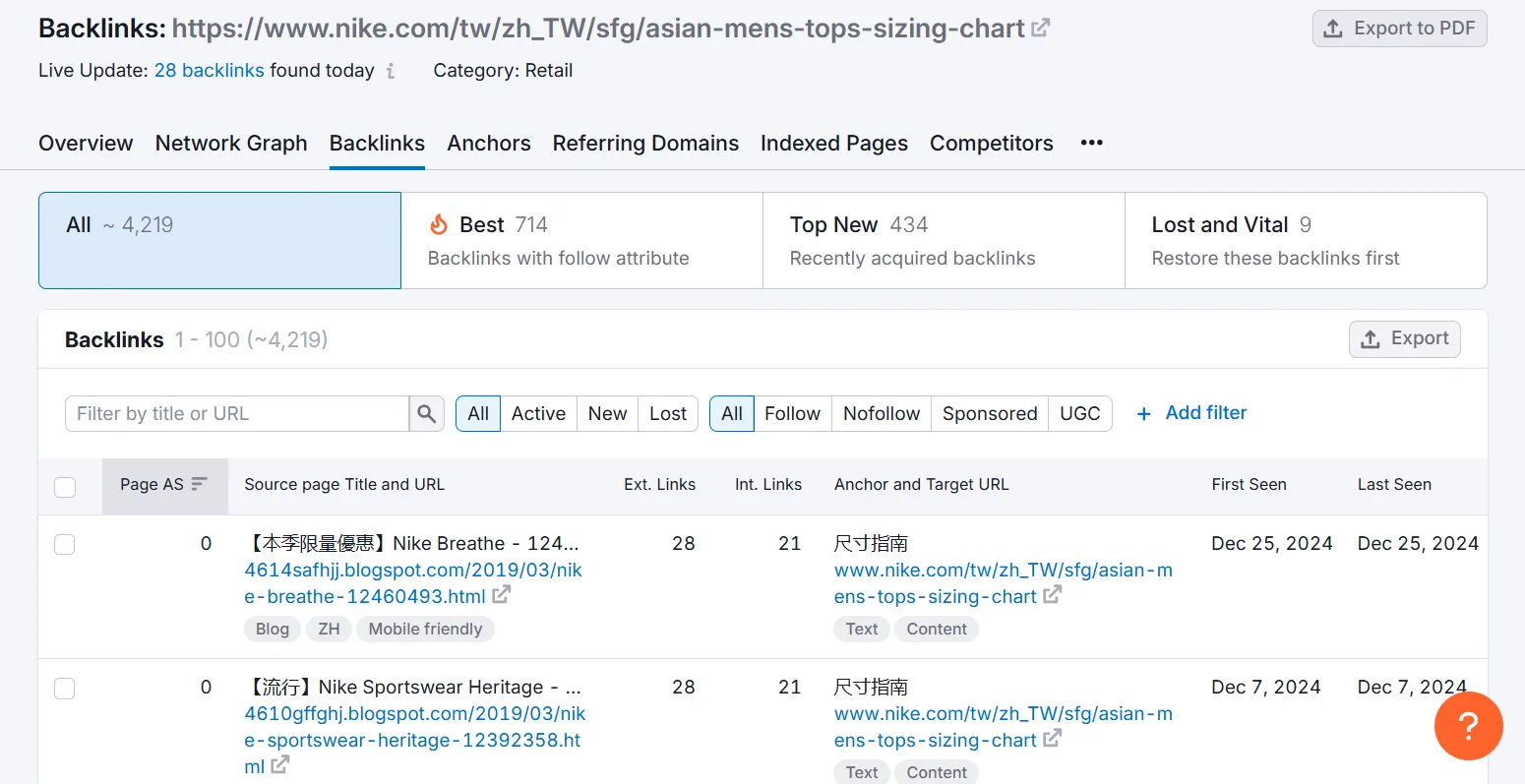
Click the Backlinks number next to a broken link to see which domains still reference it.
That’s your outreach list, offer your substitute content in place of the competitor’s broken page.
Stay Away From PBN Backlinks
PBN backlinks are too risky to be worth it. If an SEO hire suggests buying PBN links, or any links at all, walk away. Put that time and money into quality content and natural backlinks instead.
More guides for earning legitimate backlinks:
↳ International Link Building Strategies That Actually Work
↳ 7 Ways to Get Backlinks from Gov Sites
↳ 7 Ecommerce Link Building Strategies That Helped Me Earn Over 3,200 Backlinks
Frequently Asked Questions
Are PBN links illegal?
No, they don’t break any laws, but they violate Google’s guidelines. Avoid them anyway, you risk severe penalties that hurt your rankings and damage your site’s reputation, and any short-term gain is outweighed by the long-term risk once search engines devalue the manipulated links.
Do PBNs still work in 2025?
You might see a short-term boost, but modern algorithms catch these links quickly, and gains tend to vanish as soon as Google adjusts its filters. Relying on this tactic exposes you to high risk while you miss out on building the natural, quality links that establish lasting authority.
How can I tell if a site is part of a PBN?
Check for red flags: low traffic despite decent domain metrics, excessive outbound links, and thin or generic content. Tools like Ahrefs, Semrush, or Moz help analyze a site’s backlink profile and traffic data, and repeated design elements or shared hosting details across sites are a strong signal.
What’s the difference between a PBN and a link farm?
A PBN directs link juice to one target site using multiple sites with similar footprints, while a link farm consists of sites linking to each other to boost overall rankings. Avoid both, they increase penalty risk and don’t build genuine authority the way quality content does.
Should I disavow PBN links on my site?
Disavow them if you notice negative impacts or receive a penalty notice. Review your backlink profile with a tool like Semrush’s Backlink Audit, flag suspicious links, export the list, then submit a properly formatted disavow file through Google Search Console once you’ve confirmed those links are actually harmful.
Are all networks of sites bad?
No, plenty of networks serve legitimate purposes like branding and navigation. What matters is intent, if a network exists solely to manipulate rankings, it’s risky. Focus on strategies that build genuine trust and sustainable authority rather than relying on manipulative networks.
What are the three types of backlinks?
Natural editorial links earned by creating valuable content, manually built links acquired through outreach and guest posting, and low-quality automated links often generated by directories or link-building software. Focus on the first two, they build authority without risking penalties.
What is Tier 1, Tier 2, Tier 3 backlinks?
Tier 1 backlinks come from high-authority, editorial sites and deliver the most ranking power. Tier 2 backlinks support your Tier 1 links from moderately authoritative sources. Tier 3 backlinks are typically low-quality and inflate numbers without much real value. Prioritize building strong Tier 1 links.
Which backlink is most powerful?
One from a high-authority, editorially approved website publishing original content relevant to your niche. These carry strong trust signals and meaningfully boost rankings. Focus on earning them through guest posting, exceptional content, and proactive outreach, they deliver the most lasting SEO benefit.