



Your competitors’ websites are handing you the blueprint to their success.
Their site holds the key to what’s actually working. Analyze it, and you can see exactly what’s driving their traffic, then use that to outrank them.
Here’s how to steal your competitors’ keywords.
What “Stealing” Competitor Keywords Really Means
Don’t get me wrong, stealing keywords doesn’t mean copying your competitor’s work.
It means spotting the terms that help them rank, then using that insight to build something better. Instead of imitating their tactics, you’re learning from public information to refine your own approach, taking what works for them, adapting it to your brand’s voice, and creating something more valuable for your audience.
So let’s get down to it.
Step-By-Step Guide to Steal Keywords from Competitors’ Websites
Competitor keyword analysis sounds daunting, but it’s really a three-step process:
↳ Find your competitors.
↳ Identify their keywords.
↳ Analyze the metrics and pick which ones to target.
I’ll walk through each step using a pest control company as the example.
Step 1: Find the Right Competitors to Analyze
Your competitors aren’t exactly enemies, but knowing who they are matters for both competitor analysis and your broader SEO strategy.
A good rule of thumb:
↳ Your direct competitors are the sites ranking high on page one for the keywords you’re after.
↳ They offer similar products or services and target the same audience you do.
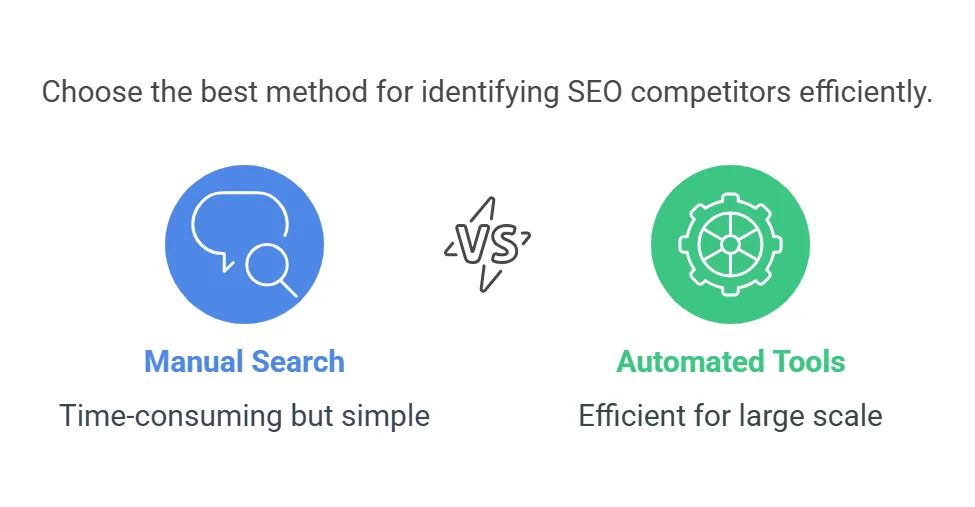
a. Do it manually. The simplest way to spot competitors is to search your main keywords on Google and note the top-ranking sites. If the same domains keep showing up across multiple keywords, they’re likely your key organic competitors. Log them in a spreadsheet as you go.
This works fine if you’re focused on a handful of keywords. But for hundreds or thousands of terms, it’s not realistic, you’ll be at it for days. That’s why I lean on tools like Semrush instead, they automate the process and give you a full view of the competitive landscape.
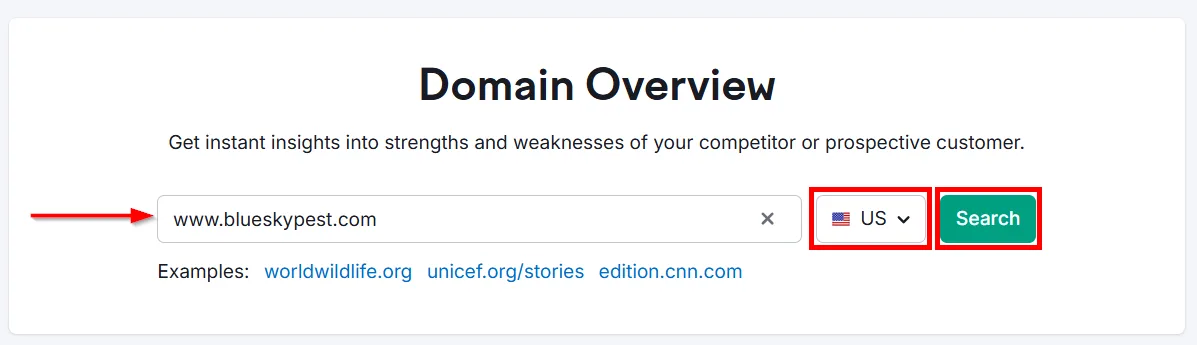
b. Use a tool like Semrush. Go to Semrush’s Domain Overview, enter your site’s URL, select your target country, and click Search.
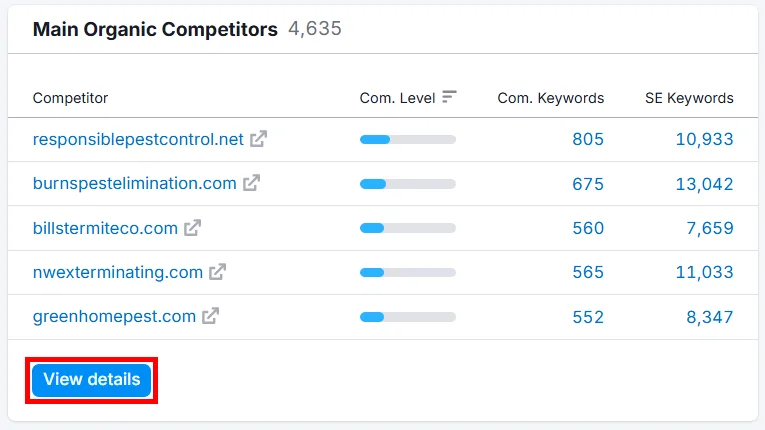
Scroll to Main Organic Competitors for a list of top competitor sites, all ranking for similar keywords and targeting a similar audience. Click View details for more.
The Common Keywords section here is especially useful, it shows the total shared keywords with each site.
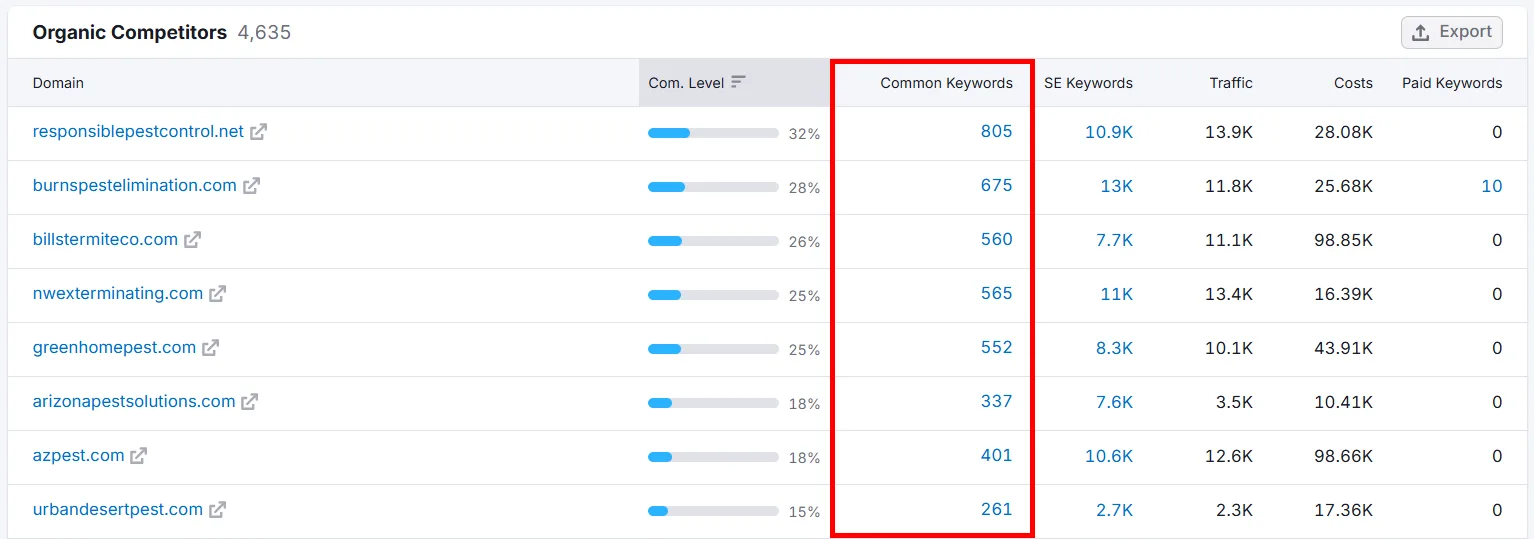
A high common-keyword count is a strong signal they’re a genuine competitor. By the end of this, aim for a list of at least 4 to 5 primary organic competitors.
Before adding anyone to that list though, check their authority score. Authority reflects how reliable Google and other search engines consider a domain, shaped by things like:
→ E-E-A-T signals (Expertise, Experience, Authority, Trust)
→ Social signals and brand reputation
→ High-quality, expert-level content
→ Excellent user experience
→ The site’s age and history
→ Positive user interactions
→ A strong backlink profile
Competing with highly authoritative sites is tough, especially without the resources to match. A new tech review site, for instance, would struggle to outrank established giants that already dominate the results.
So check your own site’s authority score first, also via Semrush’s Domain Overview.
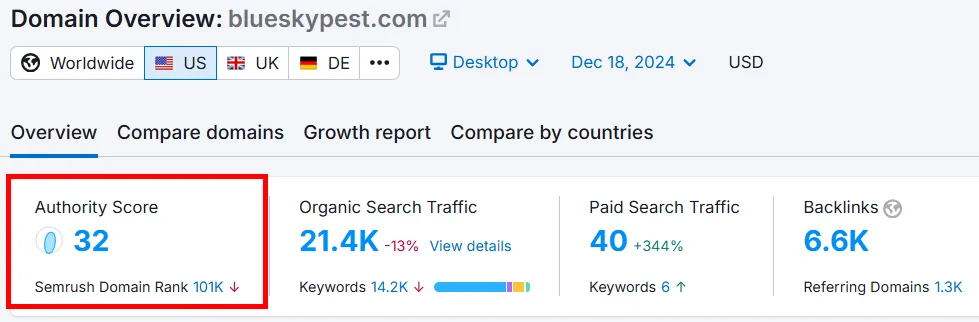
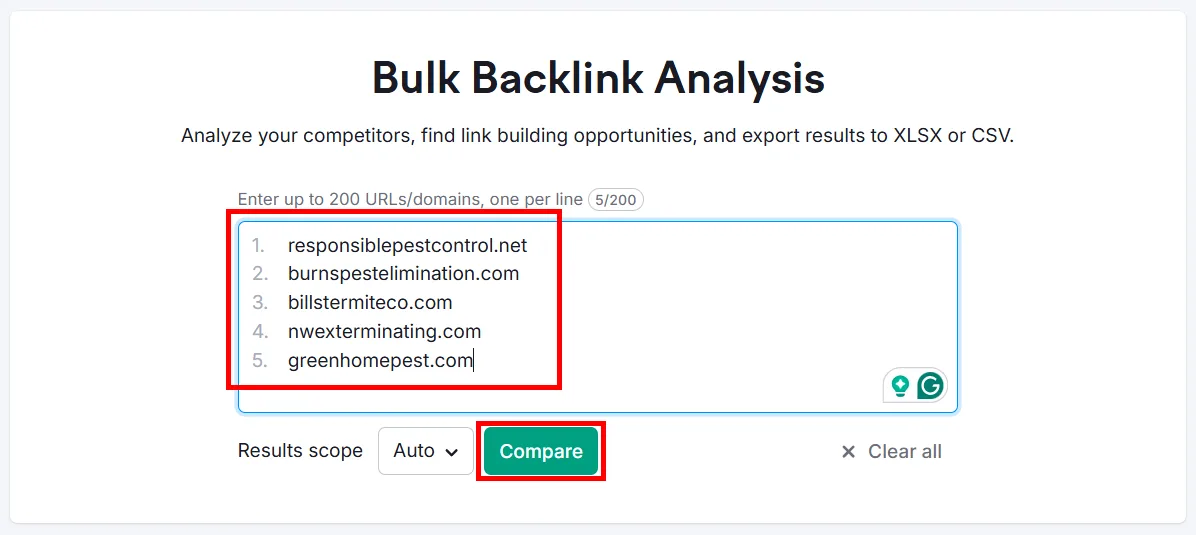
Then check your competitors’. For several at once, use Semrush’s Bulk Analysis tool, paste in the URLs and click Compare.
You’ll see authority scores for every domain side by side under the AS column.
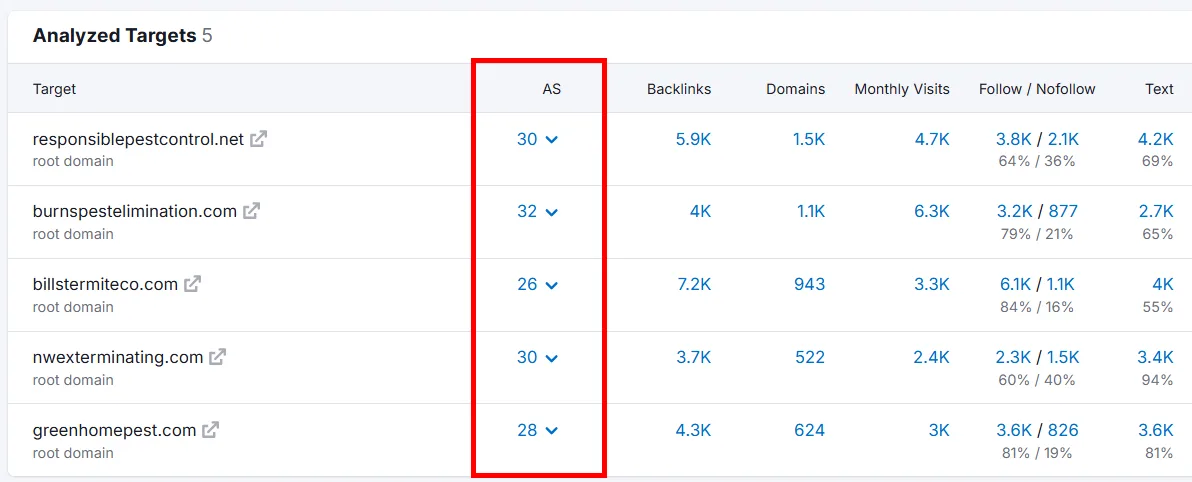
Log these scores in your spreadsheet so you know which competitors are within reach and which need a longer-term strategy.
Pro tip: choose your competitors wisely. If you’re ready to take on the giants, make sure you have the resources to match their scale. Otherwise, start with smaller, relevant sites, it’s a smarter way to build momentum.
Step 2: Find Competitor Keywords With the Right Tools
Now dig into your competitors’ keyword strategies and find terms you’re not ranking for yet. Same as before, you can do this manually or with a tool.
1. Manually. Go to their website and look closely at their pages and content, page titles, meta descriptions, headings, blog posts, FAQs, all of it.
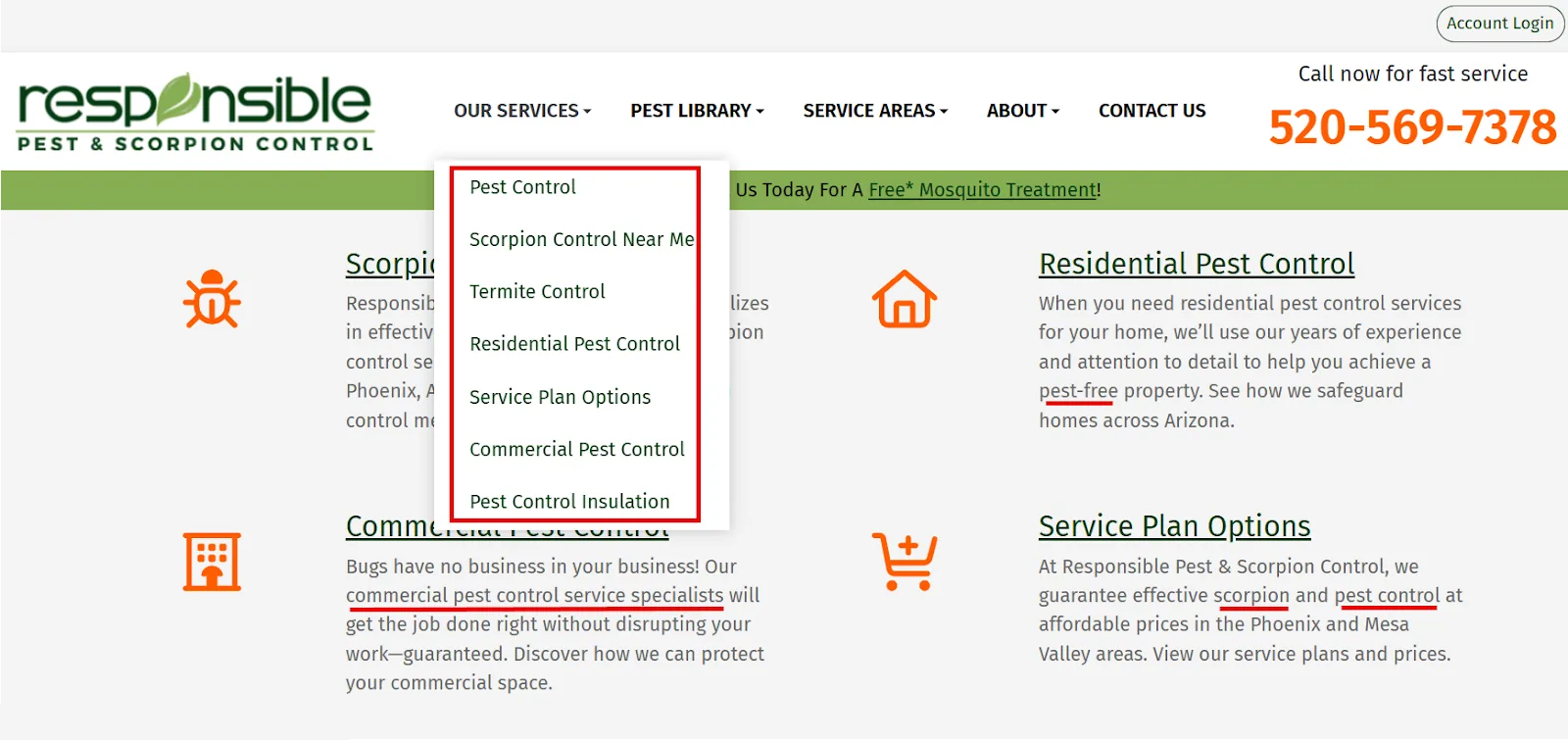
It’s a decent starting point, but it won’t surface every keyword and gives you no metrics to work with. I’d still use a tool alongside it.
2. With an SEO tool. Semrush’s Keyword Gap tool is built exactly for this, finding keywords your competitors rank for that you don’t. Enter your site’s URL plus up to 4 competitor domains and hit Compare.
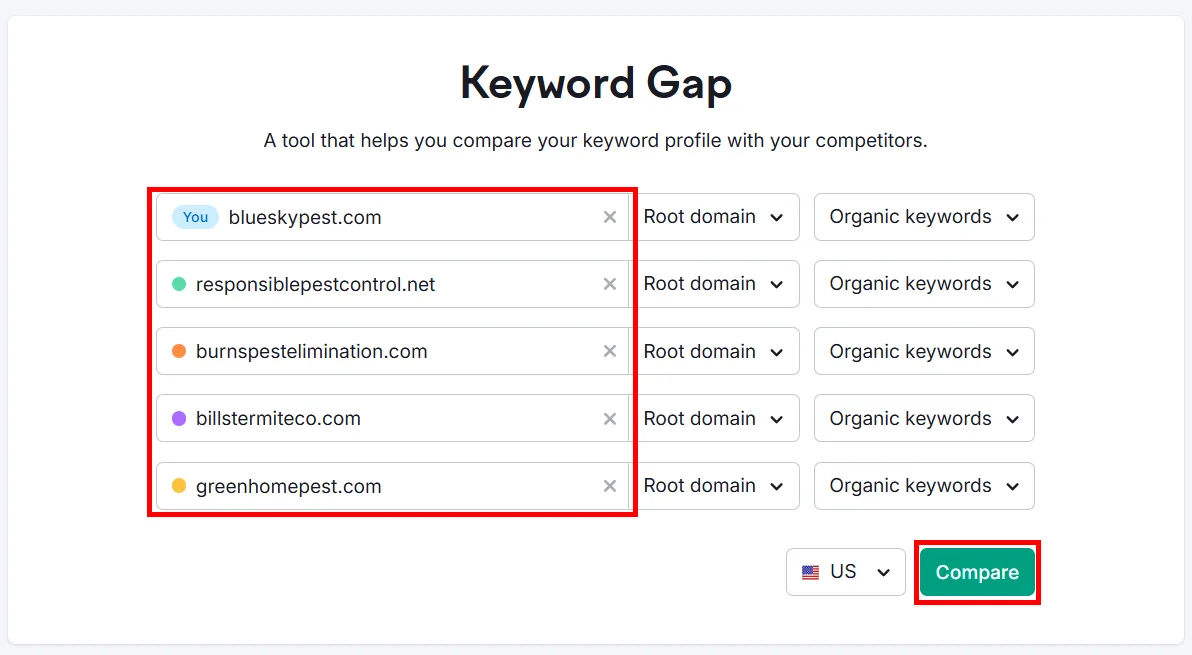
Scroll to the keyword details section and select Missing.
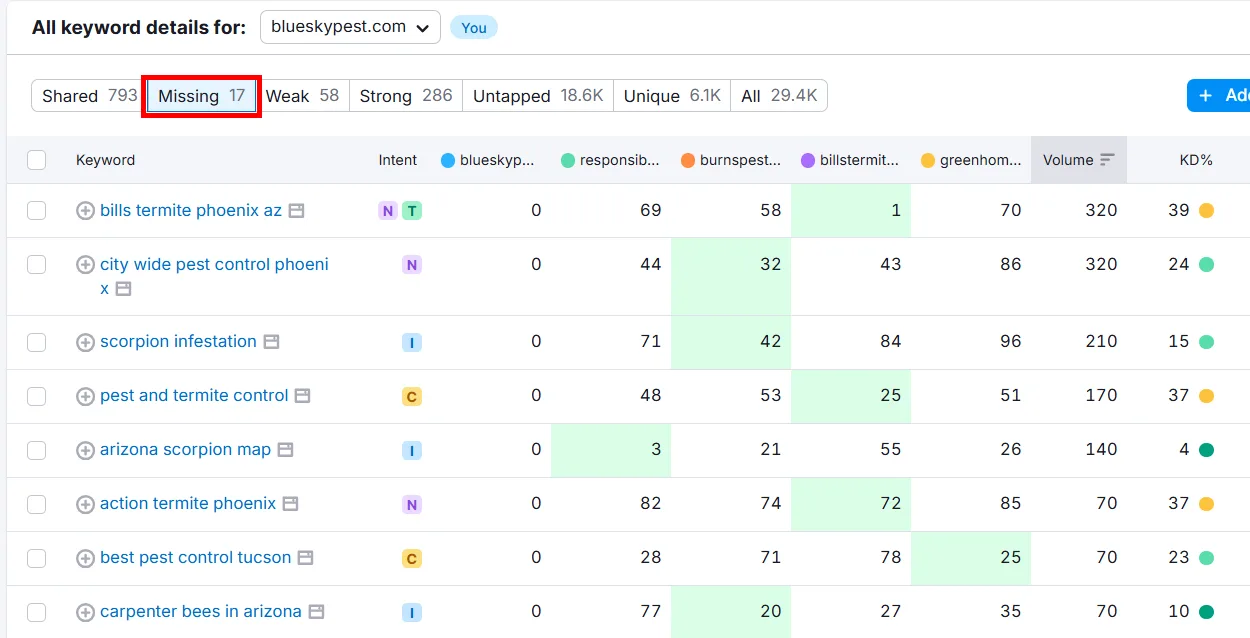
This shows keywords your competitors rank for but you don’t. Not every keyword will be a perfect fit, so review the list and keep what’s relevant. In my example, there were only 17 keywords to review, yours might run into the hundreds, which gets tedious fast.
To avoid copying each one manually, use Semrush’s Keyword Strategy Builder. Tick the box next to relevant keywords and click + Add to keyword list.
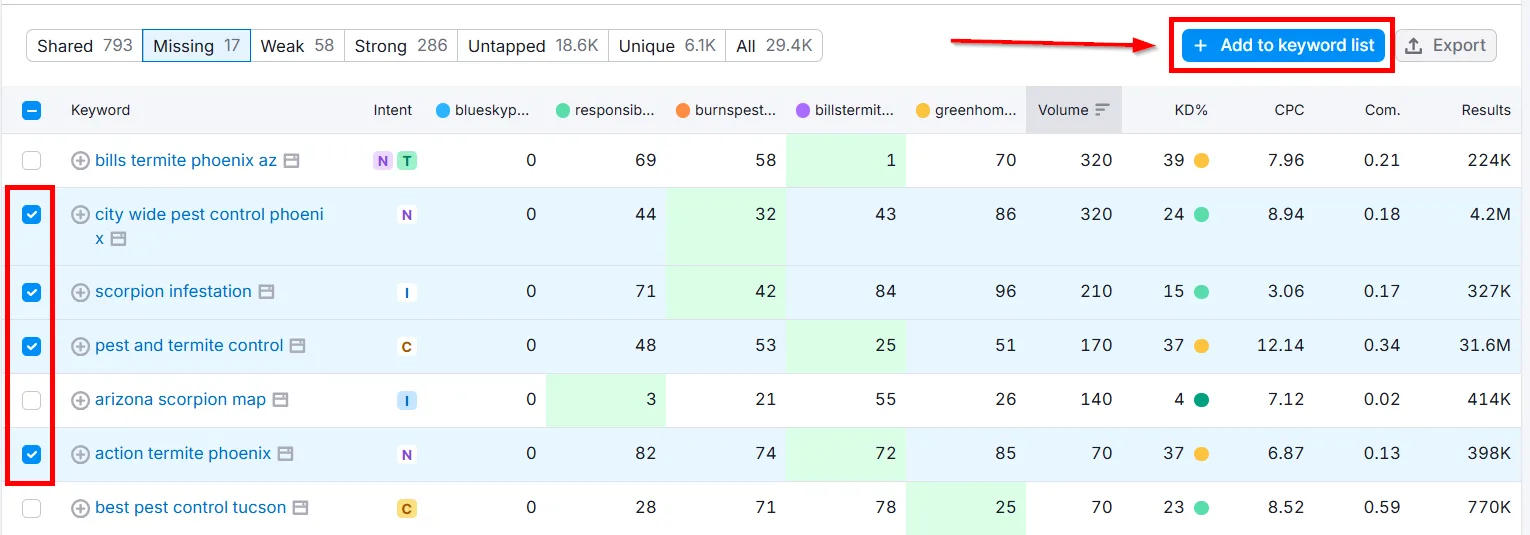
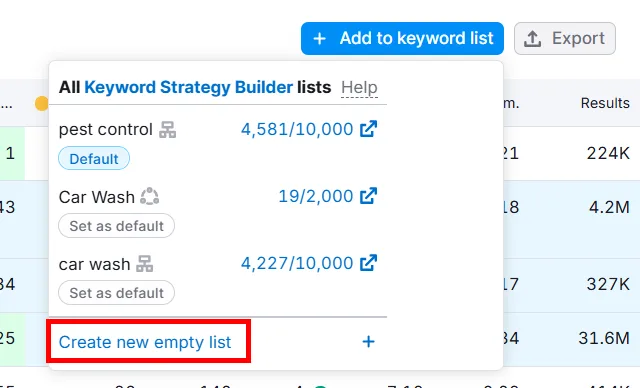
You can add them to an existing list or create a new one.
To export, click Export on the right and select Excel.
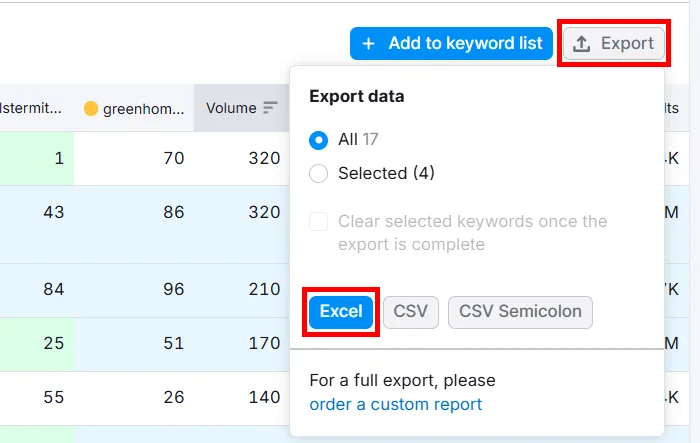
Import the file into Google Sheets, review the terms, and trim what you don’t need.
Another useful tab in the Keyword Gap tool is Untapped, keywords at least one competitor ranks for while the others don’t.
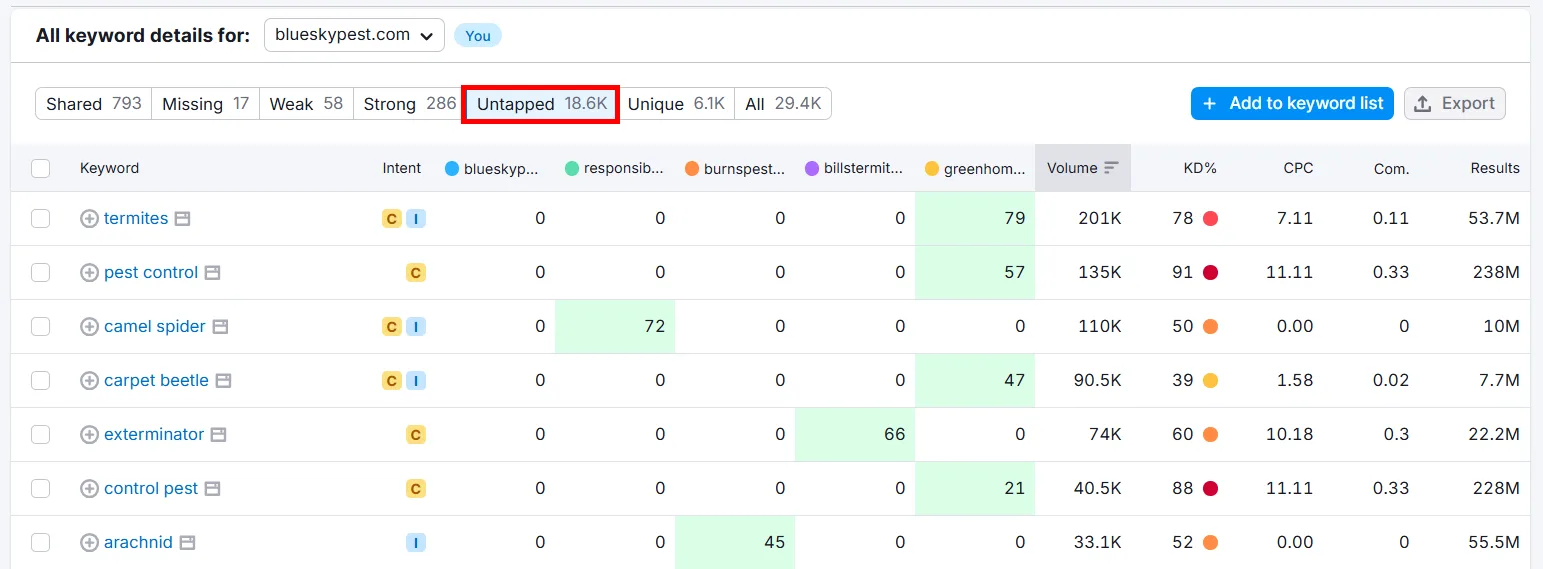
Don’t skip Lost Keywords either. As hopeless as they sound, they’re actually a great opportunity, terms your competitor has lost rankings for, meaning there’s an opening for you to create better content and surpass them.
Find these with Semrush’s Organic Research tool. Add your top competitor’s URL and click Search.
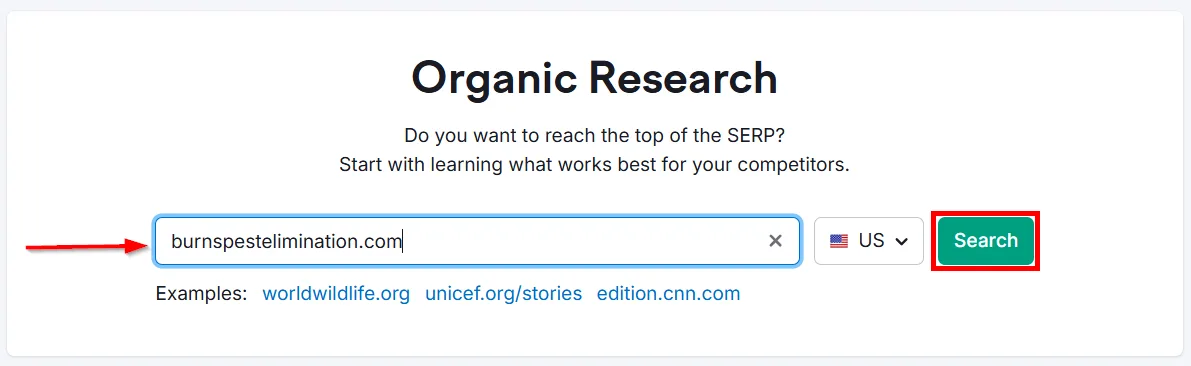
Select the Position Changes tab and scroll to the All Position Changes table.

Click the Positions filter (or add it via Add filter if it’s not visible). I applied it alongside the Position Changes filter, which comes next.
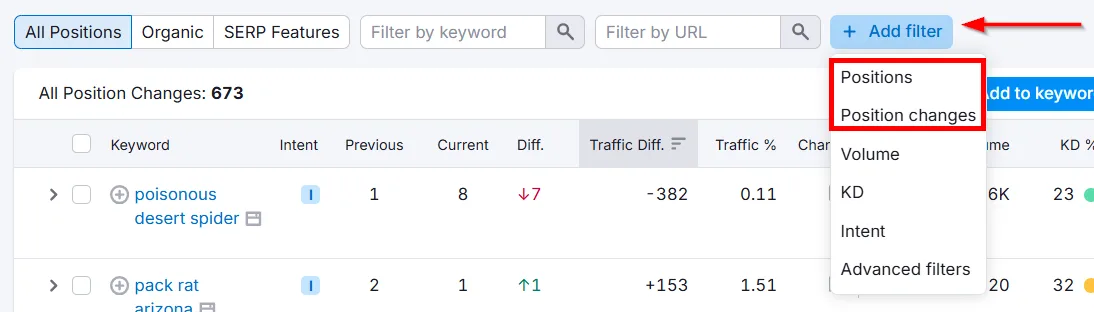
Set Positions to Top 20, then Position Changes to Lost, and click Apply.
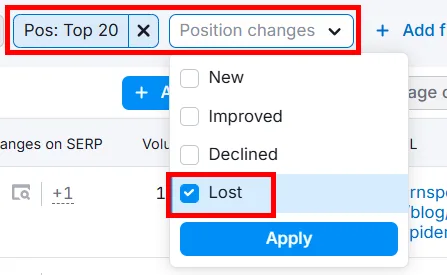
You’ll now see every keyword your competitor has lost.
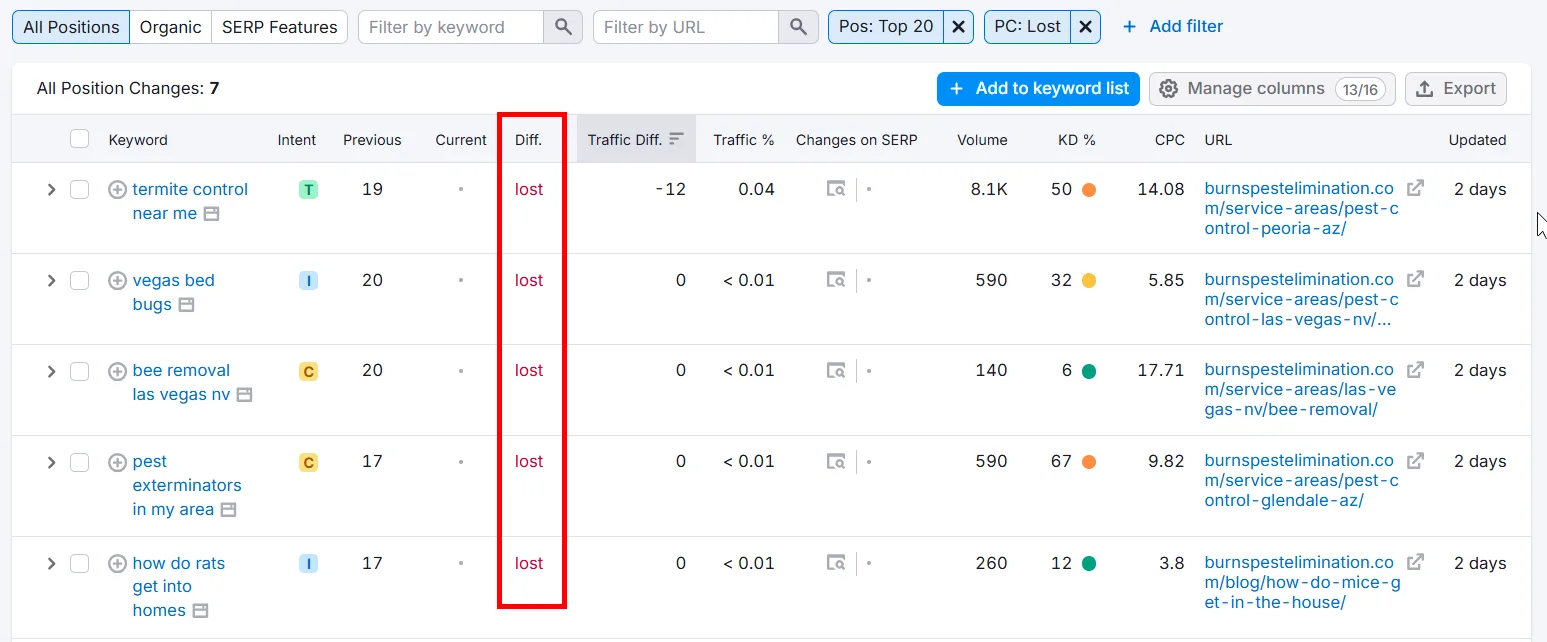
Use these to build new pages or improve existing ones and outrank your competitor for those terms. In my list, “pest exterminators in my area” stood out, a good balance of volume and difficulty (590 and 67), making it a solid one to target.

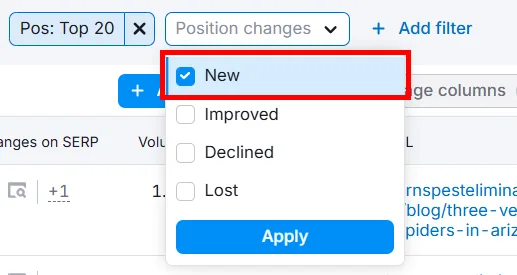
Keep an eye on new keywords too, terms your competitors are just starting to rank for. These reveal their evolving content strategy and can inspire new directions for your own. Follow the same steps in Organic Research, but pick New instead of Lost in the Position Changes filter.
When I checked new keywords for my example, competitors were leaning more into informational content, clear from the intent behind the terms.
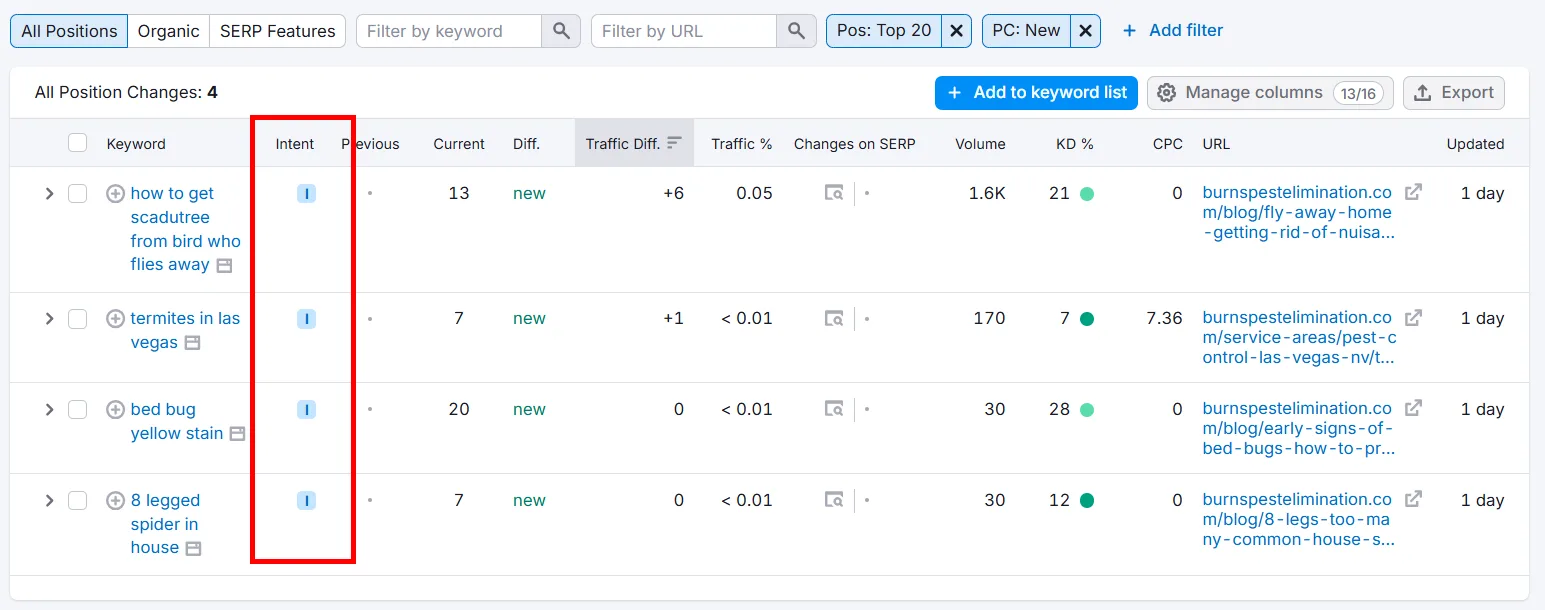
That kind of insight is genuinely useful, it tells me where to focus my own informational content and match search intent correctly.
By now you should have a solid list of keywords pulled from your competitors’ sites. Time for the next step.
Step 3: Analyze and Pick Competitor Keywords to Target
Start narrowing your list. Cut anything unrelated to your business or audience, there’s no value ranking for a term that won’t bring in customers.
If you’re a smaller brand, also drop keywords that are too competitive, popular single-word terms or anything with a high difficulty rating. Keep them on a later list rather than tackling them now. Aim for a difficulty score of 30 or lower until you’ve built more authority.
Run your remaining keywords through Semrush’s Keyword Overview tool to check KD%.
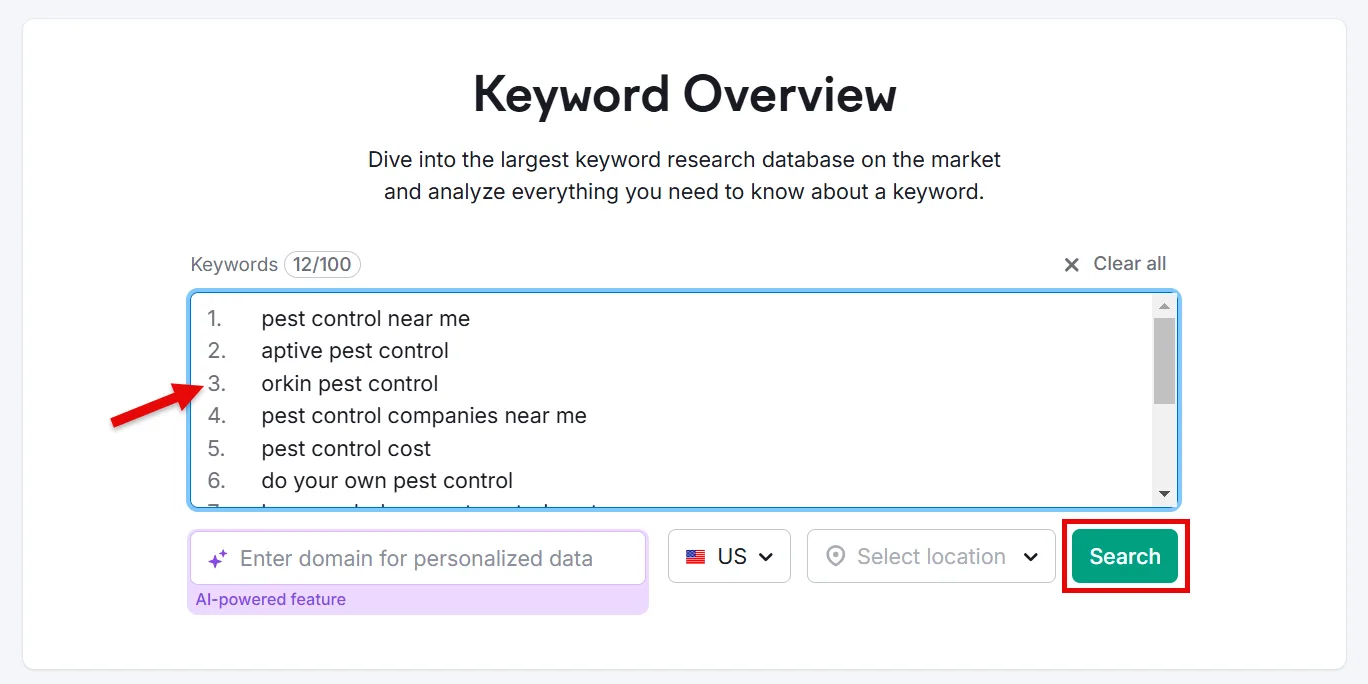
This gives you Keyword Difficulty and other important metrics for each term.
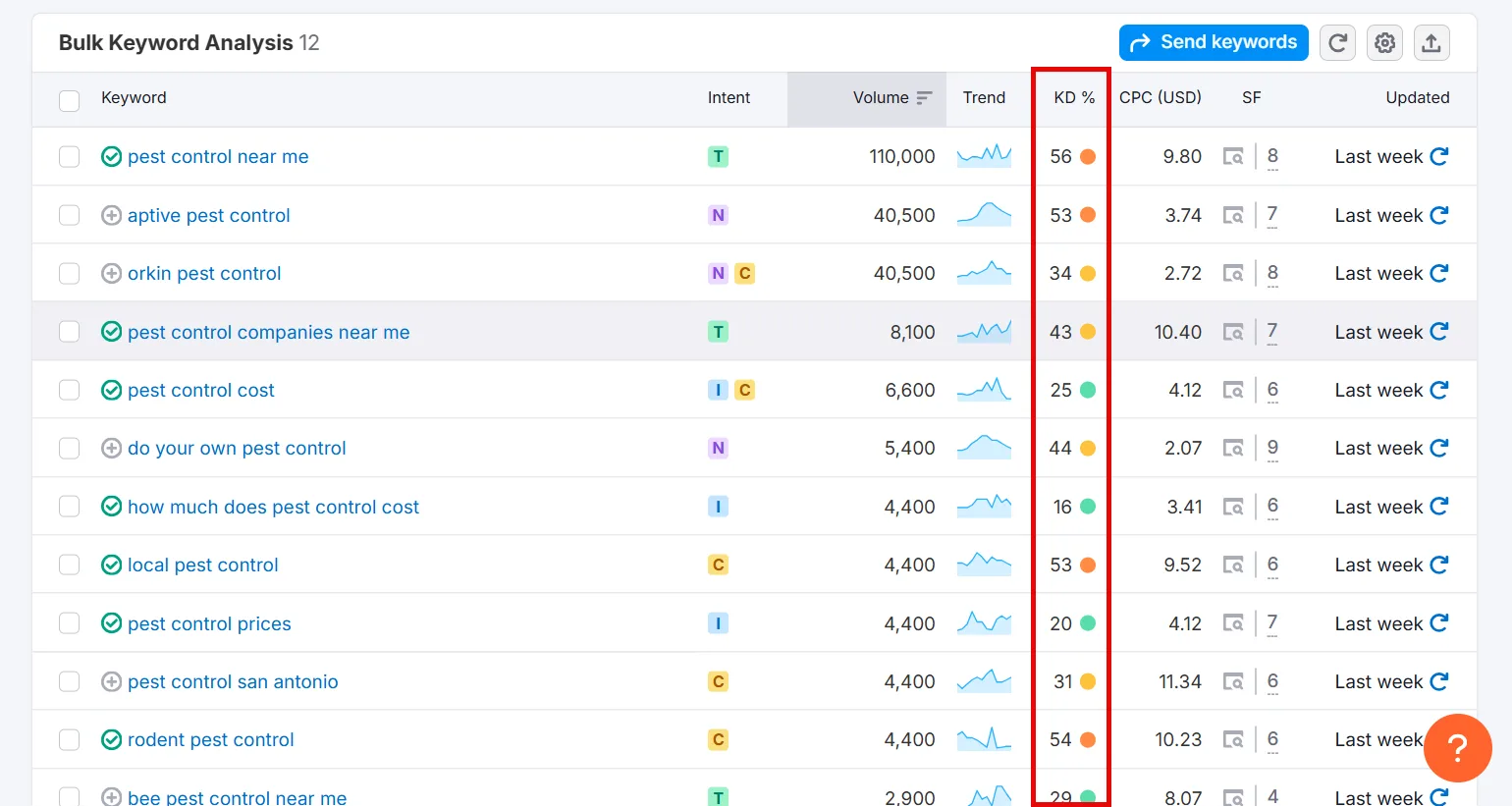
Focus on lower-competition keywords with good-to-decent volume. Then trim your list further with a quick Google search for each remaining term, checking two things:
- Content quality. If the top three results are shallow or outdated, that’s your opening, target it.
- Established sites. If the top-ranking brands have a high Domain Rating, outranking them will be tough for a newer or smaller site. Go after a related long-tail keyword with an easier SERP instead.
The weaker the current results, the easier it should be to rank, especially if your site already has some authority.
A few more tips to keep your strategy aligned with current search trends:
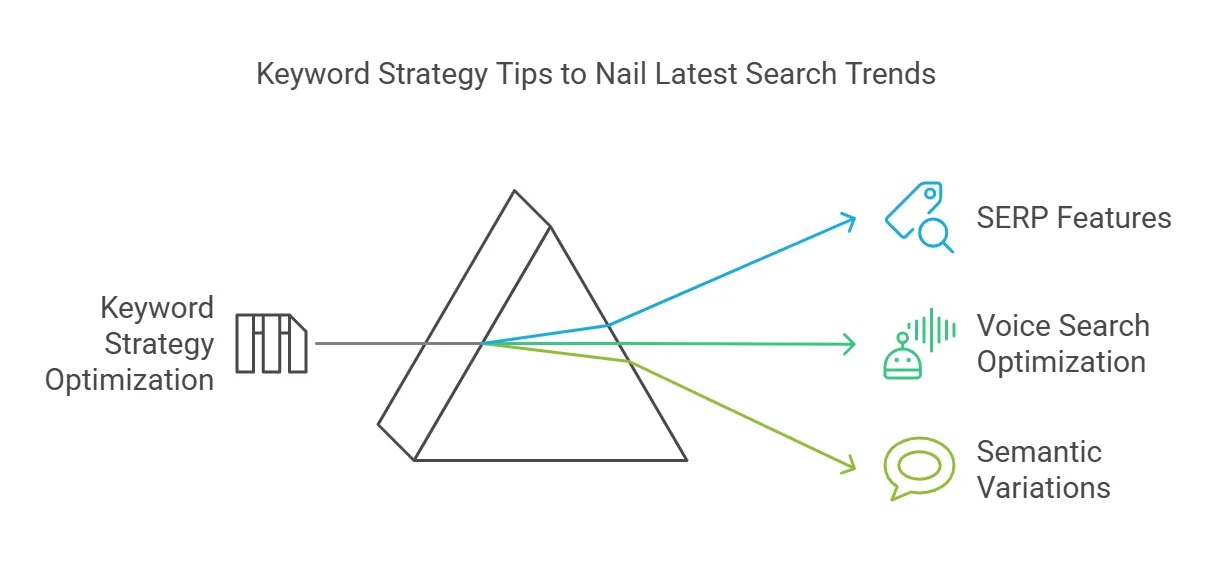
↳ Check for SERP features. Look beyond standard listings, see if competitors show up in featured snippets, People Also Ask boxes, or video carousels. Targeting these can boost visibility significantly.
↳ Optimize for voice search. People tend to use longer, more conversational queries, look for keywords that match common questions or natural speech.
↳ Use semantic variations. Work in related terms and phrases for context, search engines now weigh overall meaning over exact keyword matches.
With all this in hand, you can build a well-targeted keyword list for your site, one you technically stole from your competitors.
Strengthen Keyword Research with Competitor Analysis
That’s how you steal from your competitors. The goal isn’t to copy, it’s to see what’s already working for them and build something more valuable around it.
There’s a lot more that goes into keyword research though. A few guides to round out your strategy:
↳ Expert Keyword Research Tips For Small Businesses
↳ How to Do Keyword Gap Analysis
↳ How to Do International Keyword Research
Frequently Asked Questions
How do you spy on competitors’ keywords?
Check which search terms drive their traffic. Use an SEO tool like Semrush’s Keyword Gap to see the keywords they rank for, or manually review their page titles, meta descriptions, and content. This gives you insight to refine your own strategy and improve your content.
Is it illegal to bid on competitor keywords?
No, it’s completely legal. Search engines like Google allow advertisers to bid on terms related to competitors. Just stay mindful of trademark guidelines and advertising policies. It’s a common practice that can position your ads next to related search results.
How to calculate keyword competition?
Use an SEO tool like Semrush that provides a keyword difficulty score alongside search volume data. Check metrics like KD% and examine the strength of sites already ranking for the term to gauge how challenging it’ll be to rank.
Where to bid for keywords?
Major search engines like Google and Bing, through advertising platforms such as Google Ads and Microsoft Advertising. These let you set bids for specific keywords so your ads appear in relevant search results.
What are Google competitor keywords?
Search terms your competitors are ranking for on Google. These keywords drive traffic to their sites and reveal their content strategy, helping you spot gaps in your own content and target similar or improved keywords.
How do I find zero competition keywords?
Search for niche or long-tail phrases that few or no major sites target. Use a keyword research tool like Semrush to find terms with low search volume and minimal competition, making it easier to rank quickly for highly specific searches.
How do you steal a competitor’s audience?
Create better, more valuable content that addresses their users’ needs. Analyze their keyword and content strategy to find gaps, then produce targeted content that answers similar questions, and promote it through SEO and social media to draw interested visitors your way.
How do I find winning keywords?
Research your niche and analyze competitors. Use SEO tools to find keywords with a good mix of high volume and low competition, check the ranking pages for content quality and intent, and narrow your list based on relevance to your audience.
Is SpyFu better than Semrush?
Depends on your needs. SpyFu focuses on historical PPC data and competitor ad strategies, while Semrush offers a broader view of keyword research, backlinks, and content analysis. I prefer Semrush for its versatility, but pick whichever fits your goals and budget.
How do I find competitors’ keywords for free?
Manually review their websites, page titles, meta descriptions, and visible content, for recurring keywords. Free tools like Ubersuggest and Google Keyword Planner can add basic insight too. Less detailed than paid tools, but a solid starting point.
How to spy competitor ads?
Use tools like Semrush, Adbeat, or SimilarWeb to track ad performance and copy. They show you headlines, descriptions, and landing pages your competitors use, helping you understand their messaging and refine your own advertising.
What is competitor analysis in SEO?
Studying your rivals’ websites to understand their keyword strategies, content quality, backlink profiles, and user experience, so you can spot where to improve your own site and find new keyword opportunities.
How to find targeted keywords?
Focus on phrases matching your audience’s search intent. Use SEO tools to check search volume, difficulty, and competition, research what competitors successfully target, then build a list of long-tail, relevant keywords specific to your niche.
How do we identify competitors?
Search your primary keywords and note which sites appear consistently in the top results, especially ones offering similar products or services to the same audience. SEO tools like Semrush can also list competitors based on shared keywords.
What is the best keyword competitor analysis tool?
Depends on your needs. I prefer Semrush for its comprehensive data, keyword insights, competitor tracking, and backlink analysis. Ahrefs and SpyFu are solid alternatives too, worth comparing features and pricing against your own strategy.
How to find competitors’ keywords in Semrush?
Enter a competitor’s URL into Domain Overview, then check Organic Research for the keywords driving their traffic. Use the Keyword Gap tool to compare your site against theirs and find additional terms to target.