



Right now, someone in Tokyo, Berlin, or São Paulo is searching for exactly what you offer, and landing on someone else’s site instead. Usually because their search language and intent just isn’t aligned with your content.
International keyword research isn’t just translation. It’s understanding how people actually think, search, and decide across different cultures. Here’s the process I use to find keywords that resonate globally and actually bring in traffic and conversions.
What Is International Keyword Research?
It’s the process of identifying the words and phrases people in different countries and languages actually use when searching for you or your business. That lets you tailor content to local language and cultural context, so it reaches more people and ranks better in local results.
A few situations where this matters:
↳ You have a US site and want to expand into a market like Germany.
↳ You need to optimize multilingual content for a global audience.
↳ You want to account for regional variations, “flat” (British) vs. “apartment” (American).
↳ Your product is a “biscuit” in the UK but needs to be a “cookie” for the US market.
↳ You’re launching an eCommerce store in Spain and need to find high-performing Spanish keywords.
↳ You rank well in English but struggle in French-speaking regions.
↳ You’re targeting a festival-specific audience, “Diwali offers” in India, for example.
↳ You’re optimizing a travel blog covering multiple countries with region-specific attractions.
↳ You’re localizing a software landing page for Brazil and need Portuguese keywords.
↳ You’re launching a new product and want to gauge demand across countries before setting up distribution.
A Trick to Find Countries You’re Most Likely to Rank In
Before picking a market, here’s a shortcut. Say a US shoe brand wants to expand internationally: run its seed keywords through Semrush’s Keyword Overview and look at which other countries are searching those same terms.
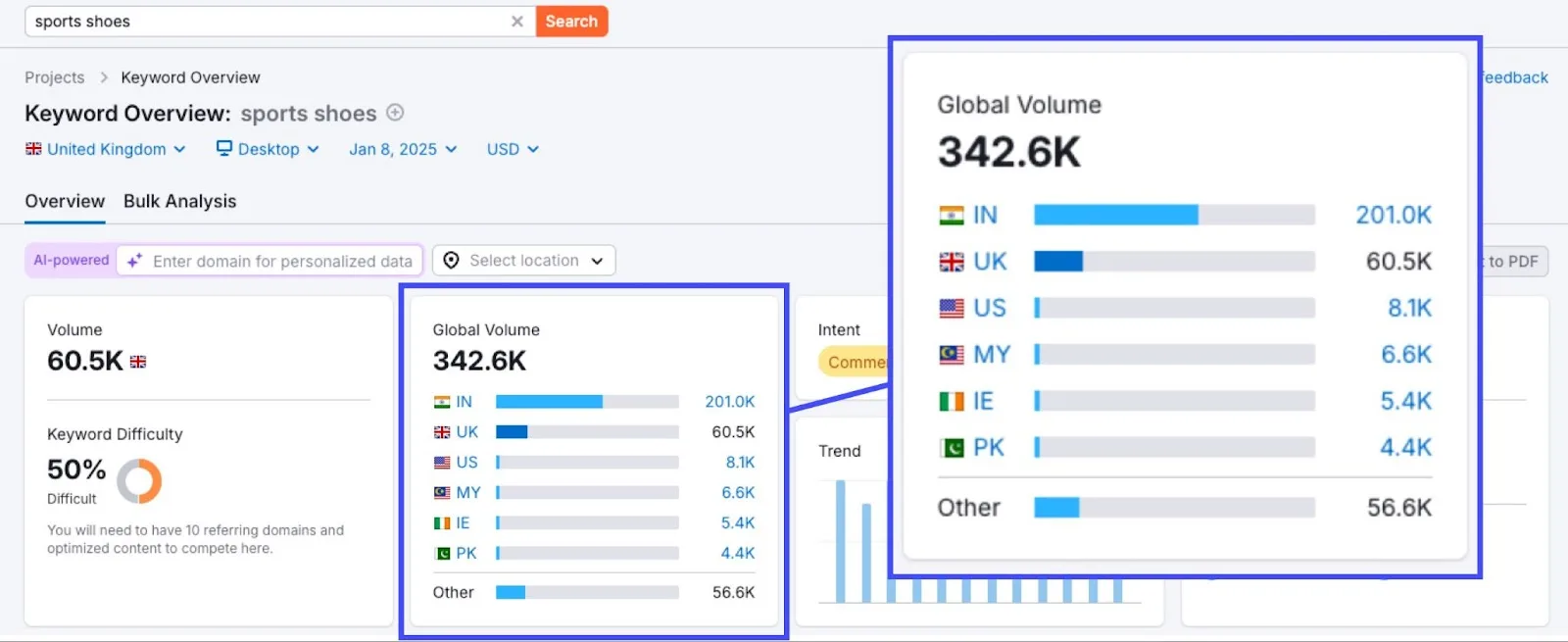
In this case, the UK has over 60K monthly volume for “sports shoes,” and India has over 200K, compared to a fairly modest 8K in the US. That’s a real signal of opportunity in either market. You can do the same thing with translated seed keywords for non-English-speaking markets too.
How to Do International Keyword Research
Here’s the process, walked through with the same shoe-brand example expanding into the UK and Spain, covering both an English-speaking market and a non-English one.
Step 1: Start With Seed Keywords
Seed keywords are broad, usually one or two words, capturing the core idea of your product. For the shoe brand:
→ Sports shoes
→ Running shoes
→ Women’s shoes
→ Summer sandals
→ Basketball sneakers
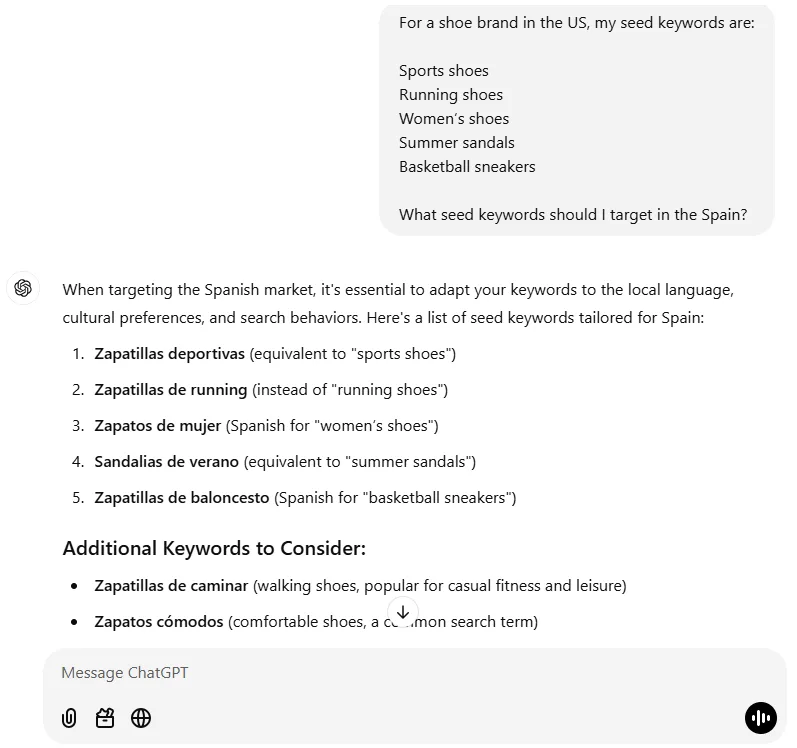
ChatGPT can help adapt these for a target market. A prompt like “For a [business profile] in [current country], my seed keywords are [list]. What seed keywords should I target in [target country]?” works well.
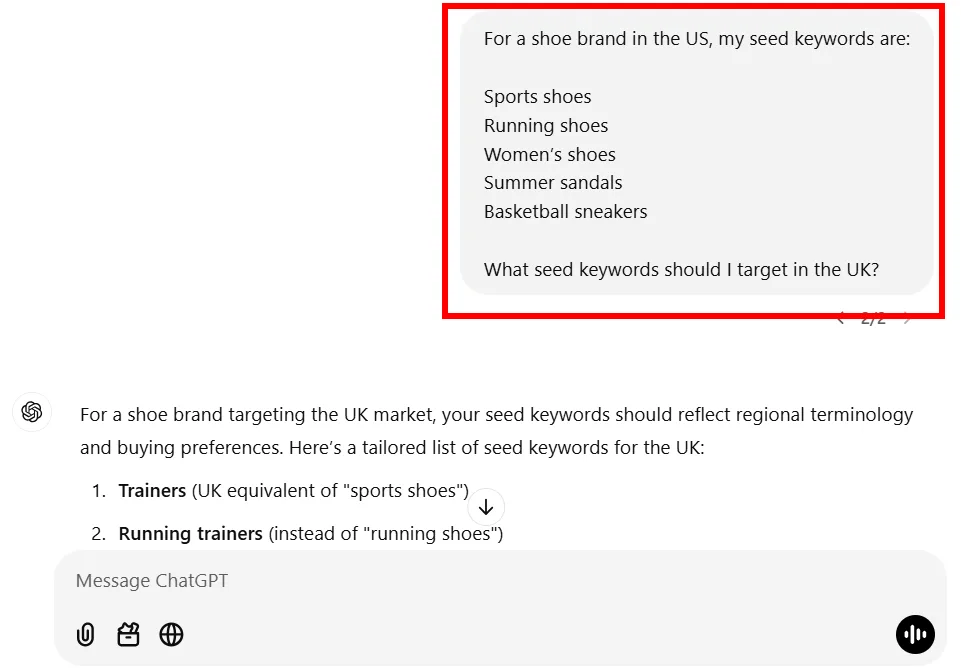
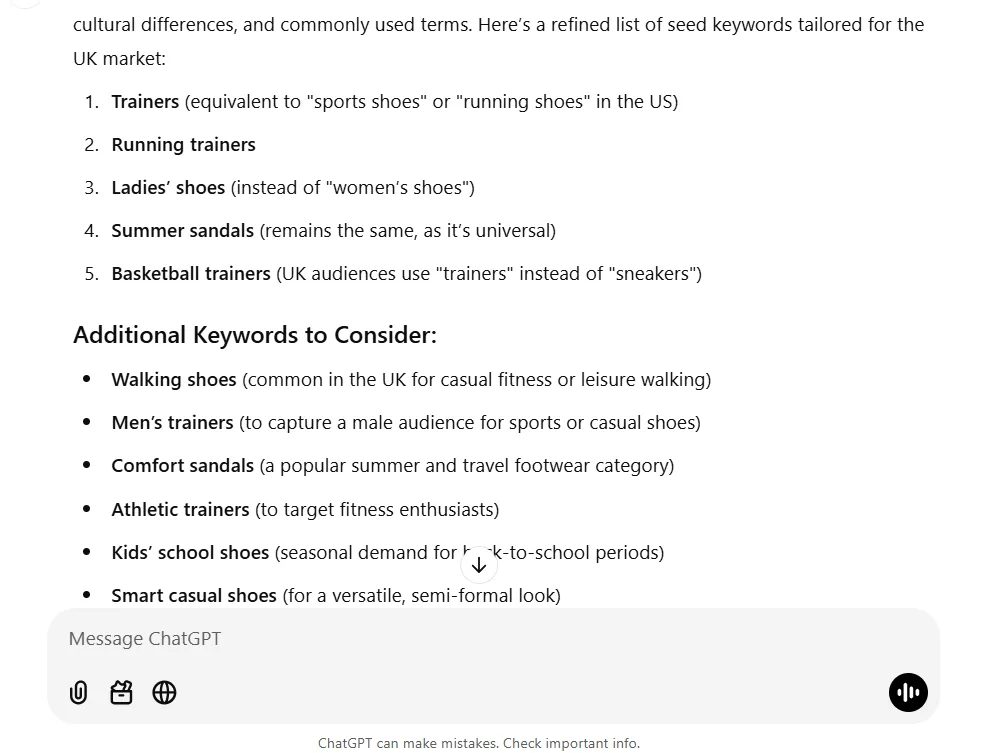
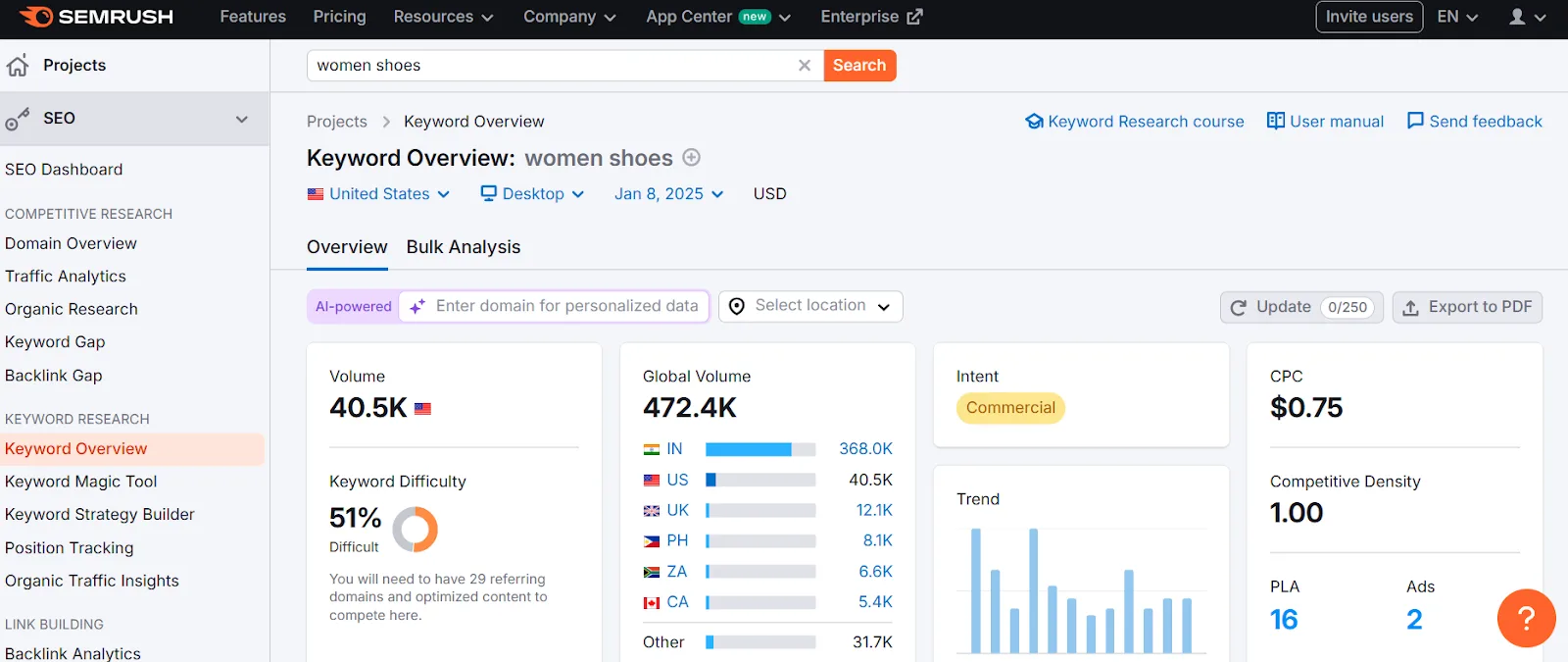
It’s also useful for surfacing language nuances, ChatGPT flagged that the US says “women shoes” while the UK says “ladies shoes.” Worth verifying with real data.
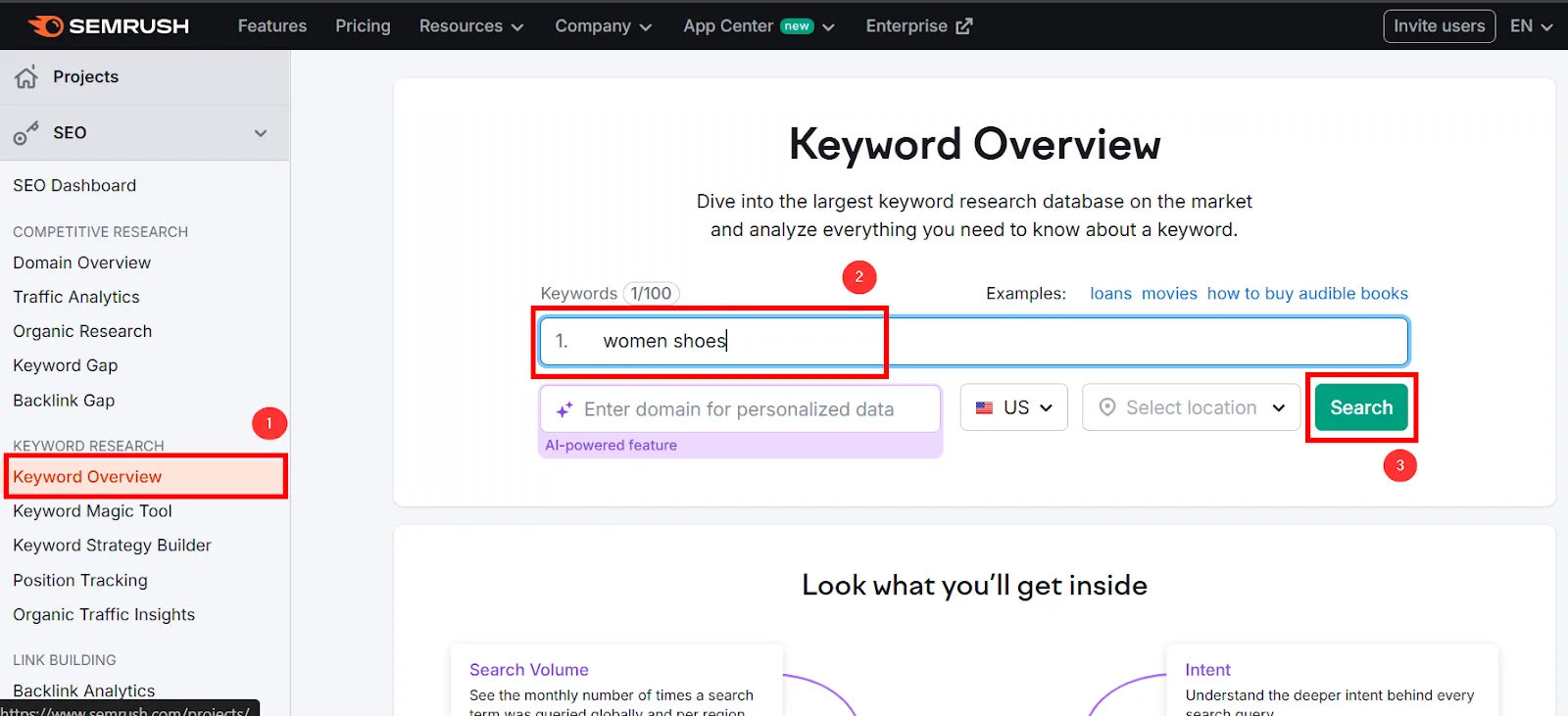
“Women shoes” does have decent UK volume (12K), just not as much as in the US (40K).
“Ladies shoes,” on the other hand, has meaningful volume in the UK but barely registers in the US.
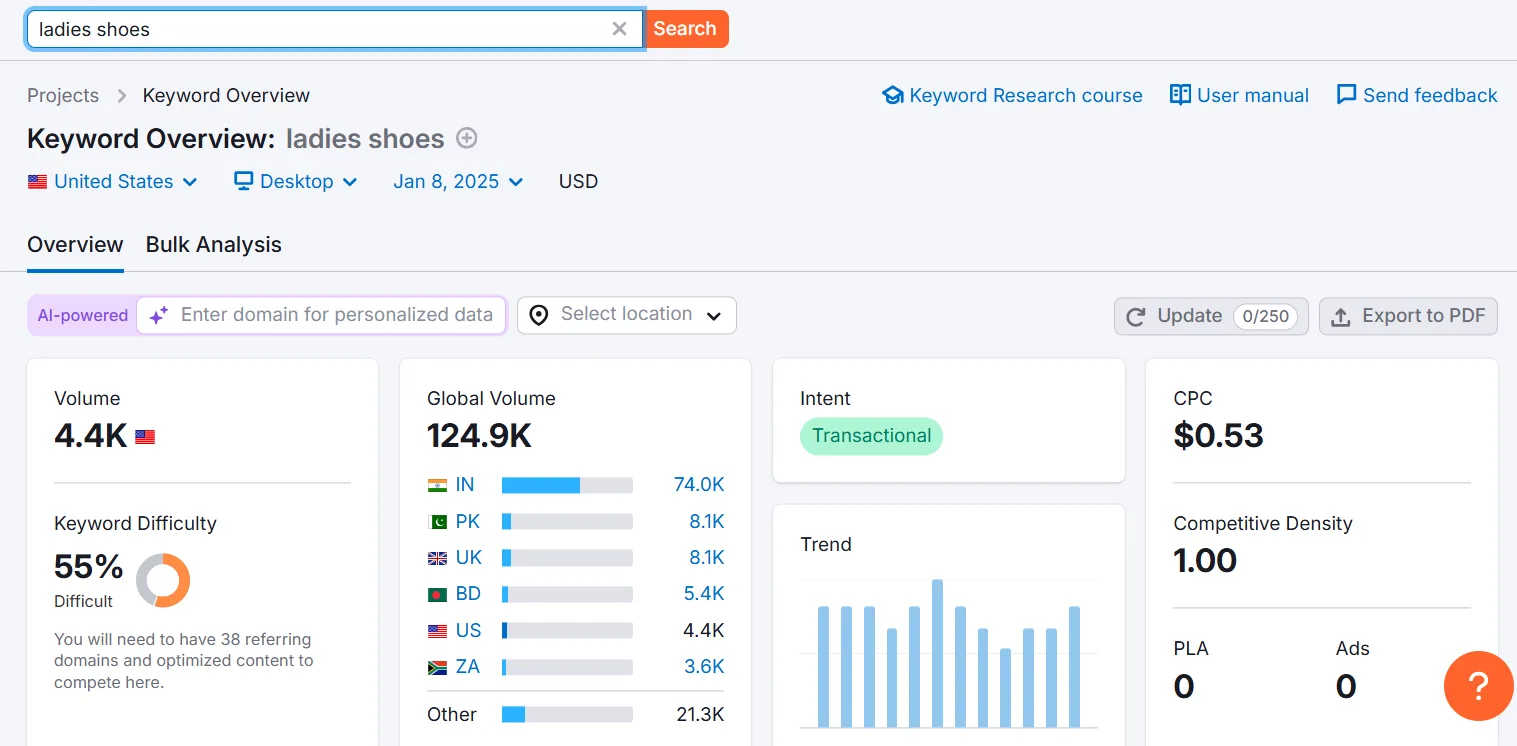
For UK ranking purposes, “ladies shoes” ends up mattering more, even though both terms mean the same thing. That’s exactly why localization matters, more on that shortly.
For a non-English market like Spain, use the same ChatGPT approach, just don’t rely purely on machine translation.
Step 2: Adapt Keywords for Regional Context
Search behavior reflects cultural and linguistic habits, so a straight translation rarely cuts it. You need to localize for spelling, slang, and intent.
Some US-to-UK English shifts:
“Sneakers” → “Trainers”
“Waterproof sneakers” → “Waterproof trainers”
“Best running shoes” → “Best running trainers”
Here’s the US variant’s UK volume:
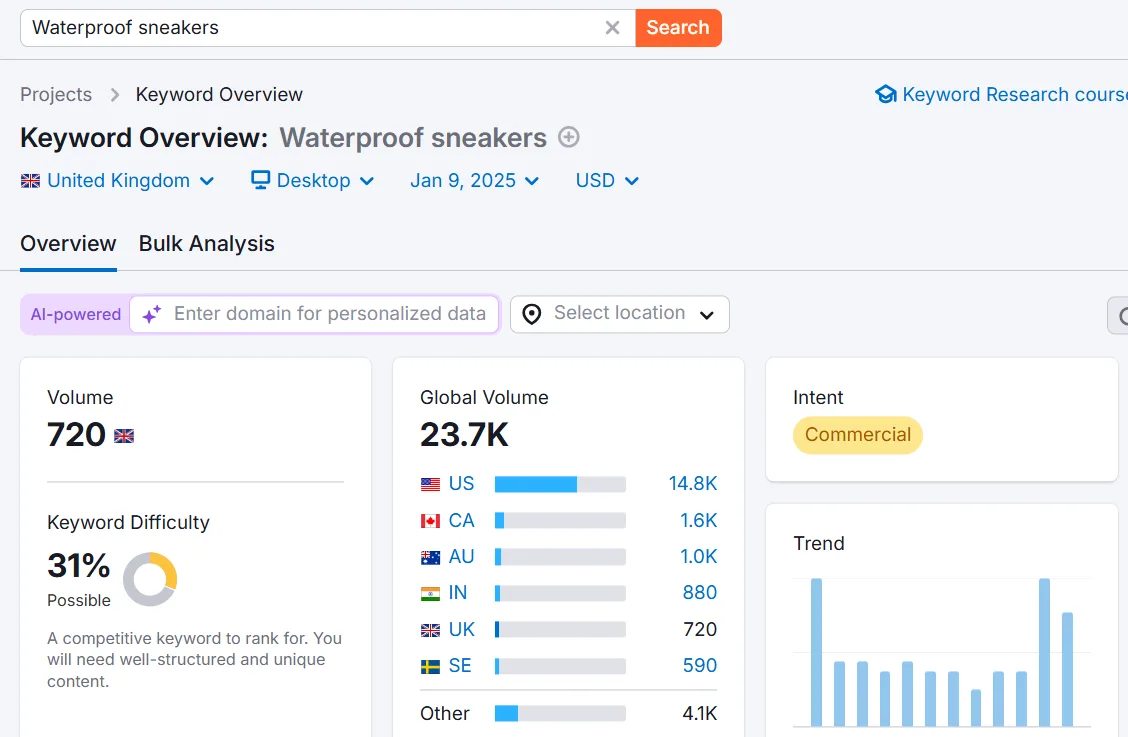
Very low. Now the UK variant:
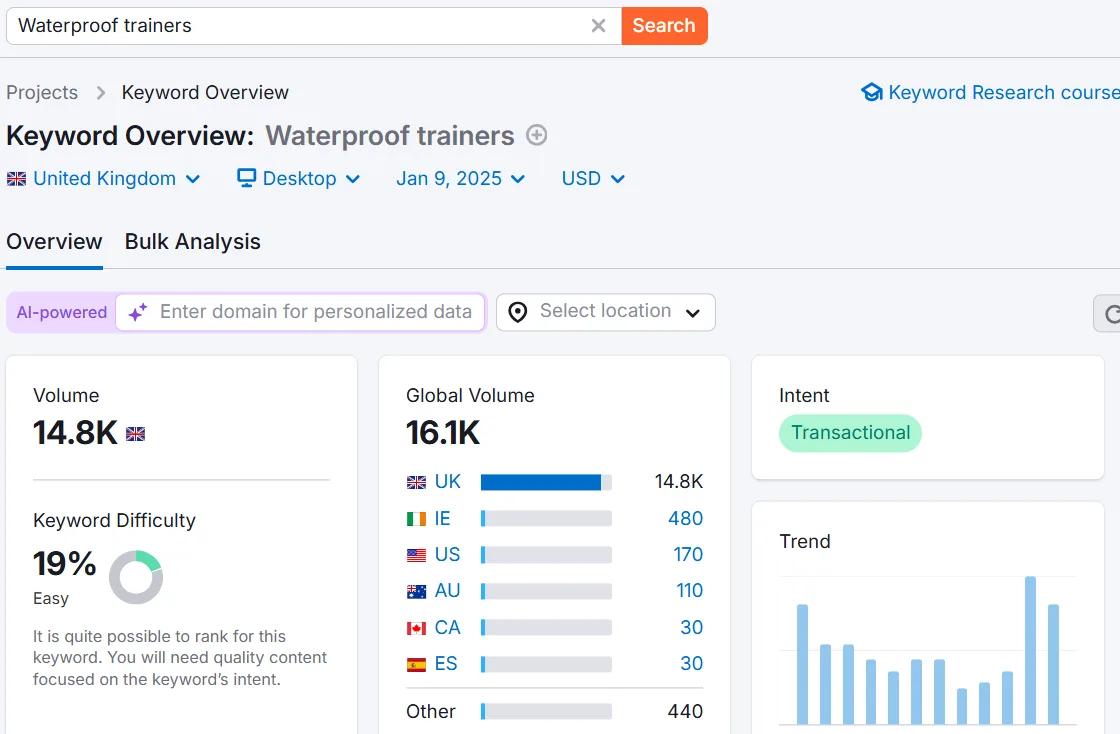
Same meaning, same language even, and a massive volume gap. That’s how much localization matters even within English.
For Spain, where English isn’t primary, focus on:
→ Spanish equivalents like “zapatillas deportivas” for sports shoes.
→ English keywords too, since roughly 11% of Spaniards speak English.
Work with a native speaker from your target country to sanity-check that your keywords actually make sense in context. “Women shoes” showed over 40K volume in the US. In Spain:
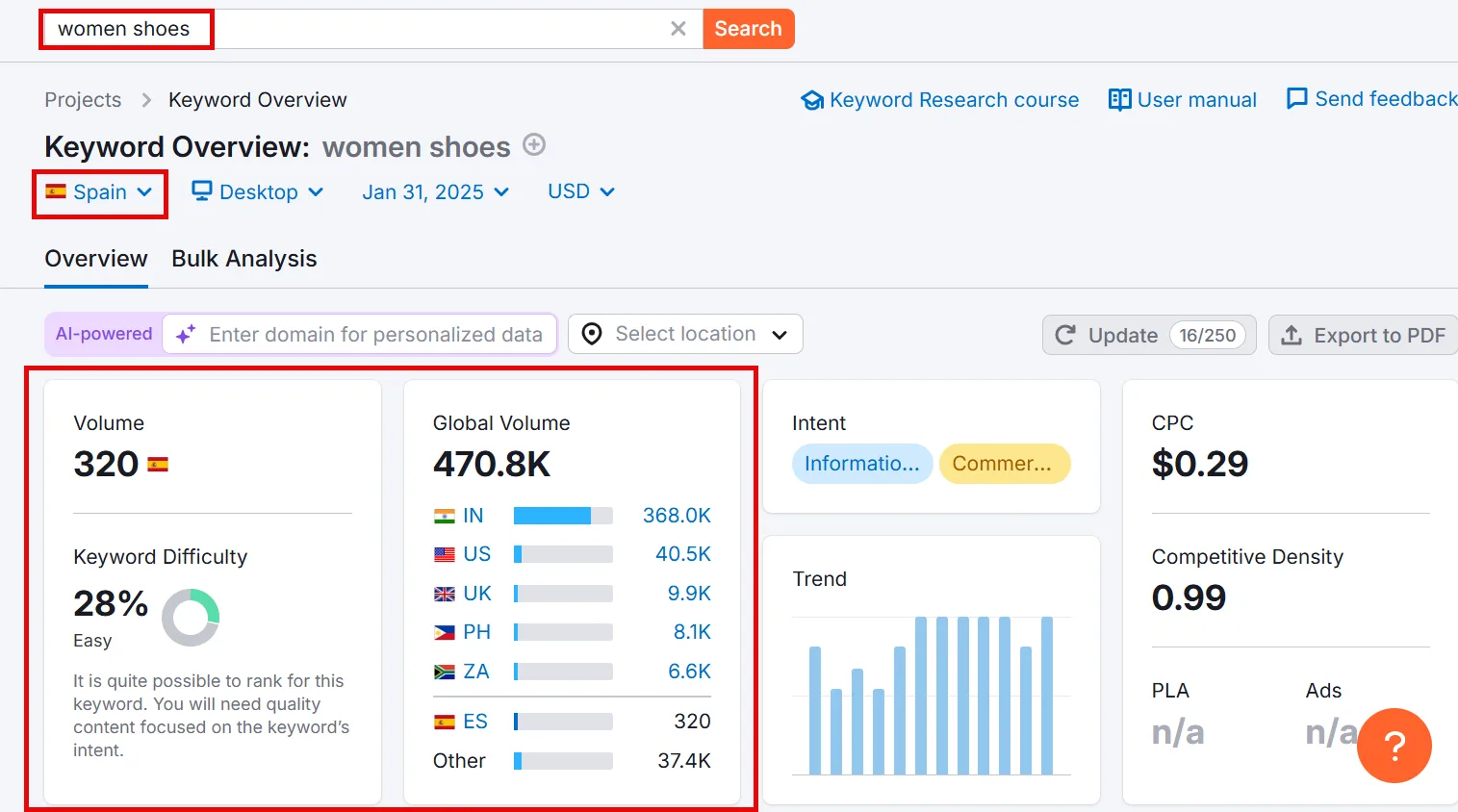
Just 320. Not because Spanish shoppers aren’t interested, they’re just using different words. “Zapatos mujer,” the Spanish equivalent, pulls over 33K.
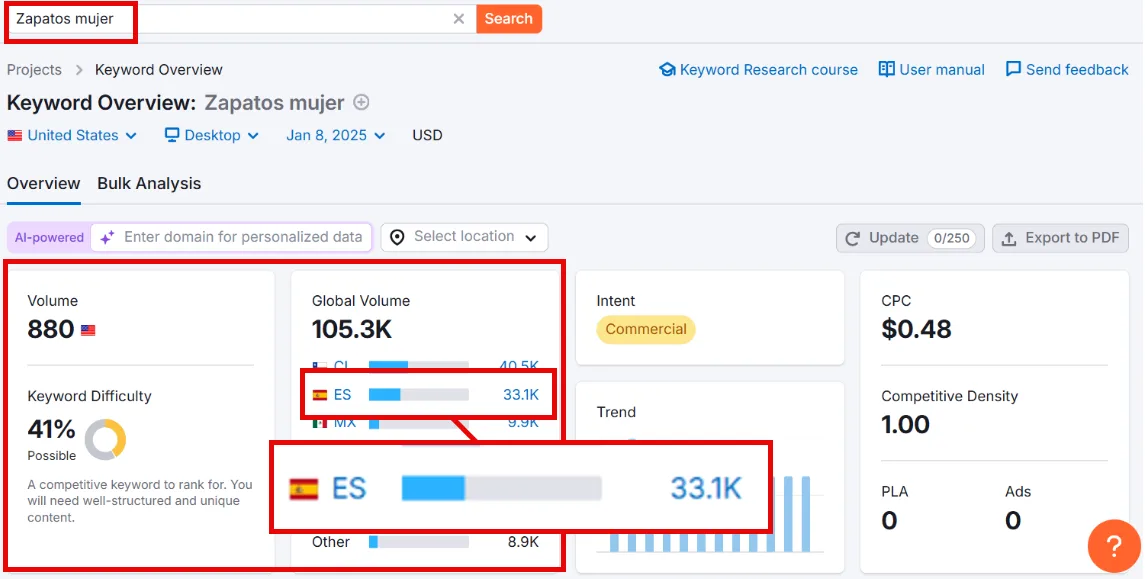
Since around 11% of Spain’s population also speaks English, it’s still worth researching the English seed keywords there too, using the same method.
Step 3: Expand With Semrush’s Keyword Magic Tool
With seed keywords in hand for each market, run each through the Keyword Magic Tool (target country set correctly) to find more.
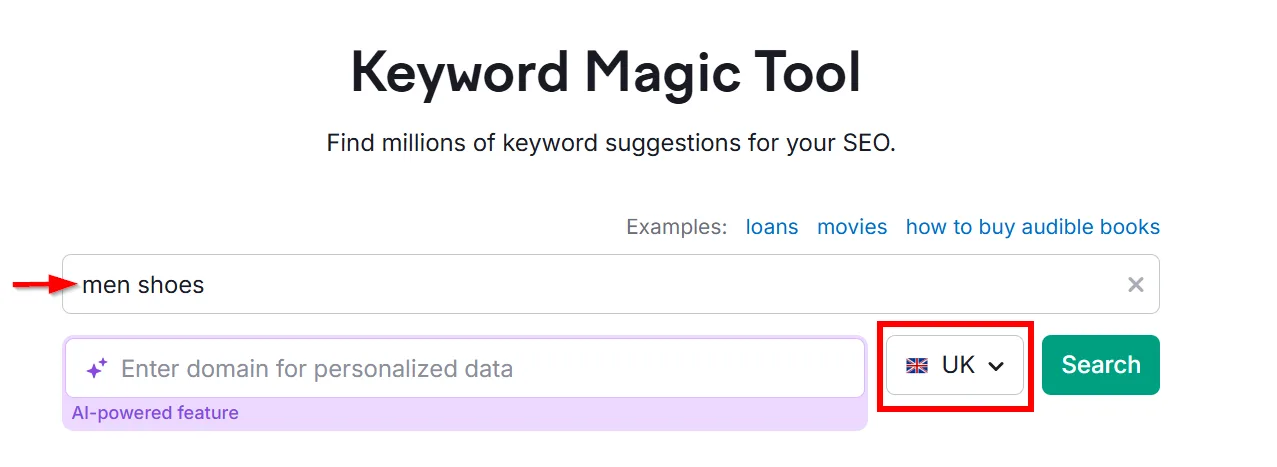
You’ll get a list of related terms, with grouped suggestions on the left for more filtered results.
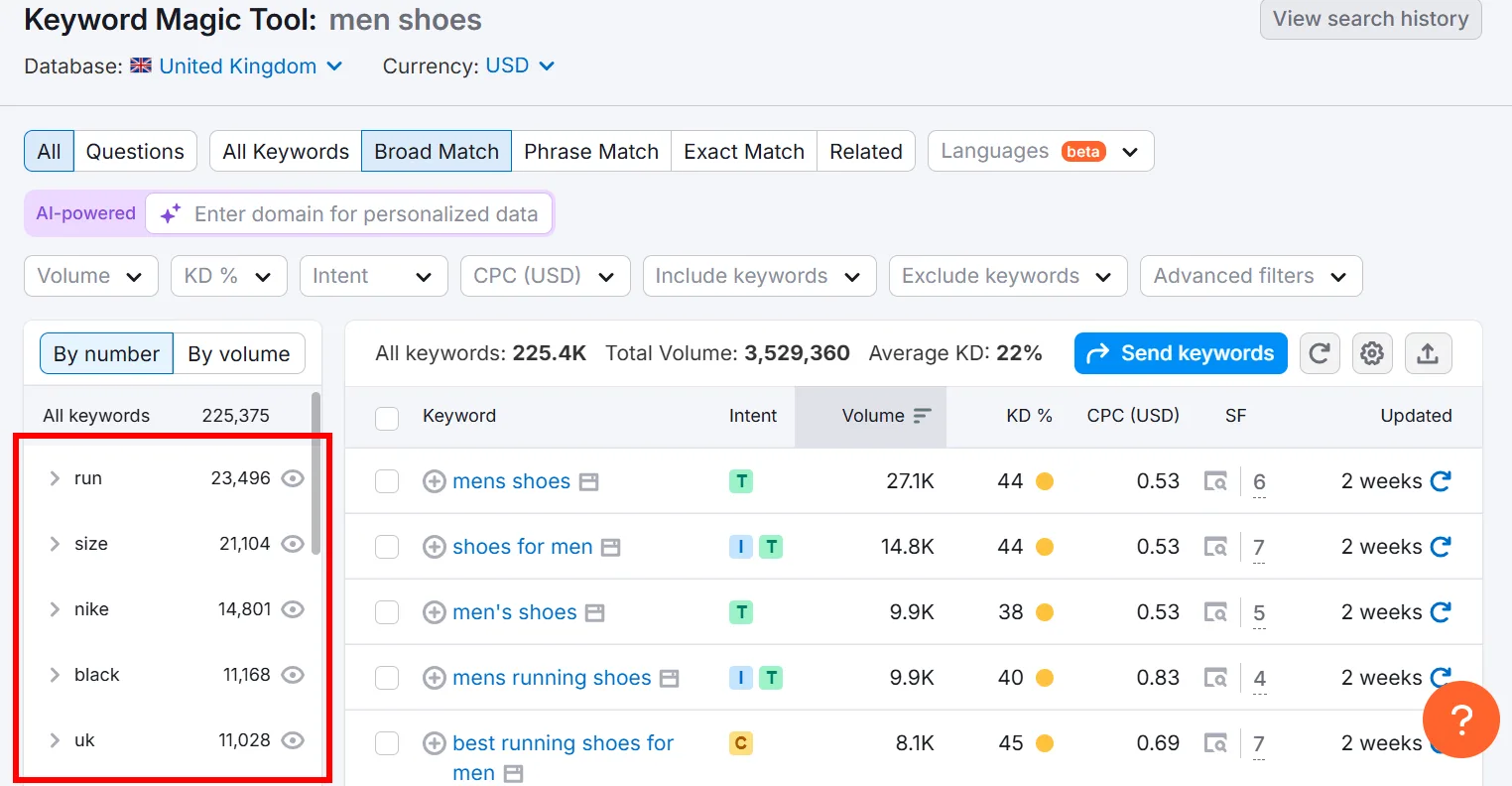
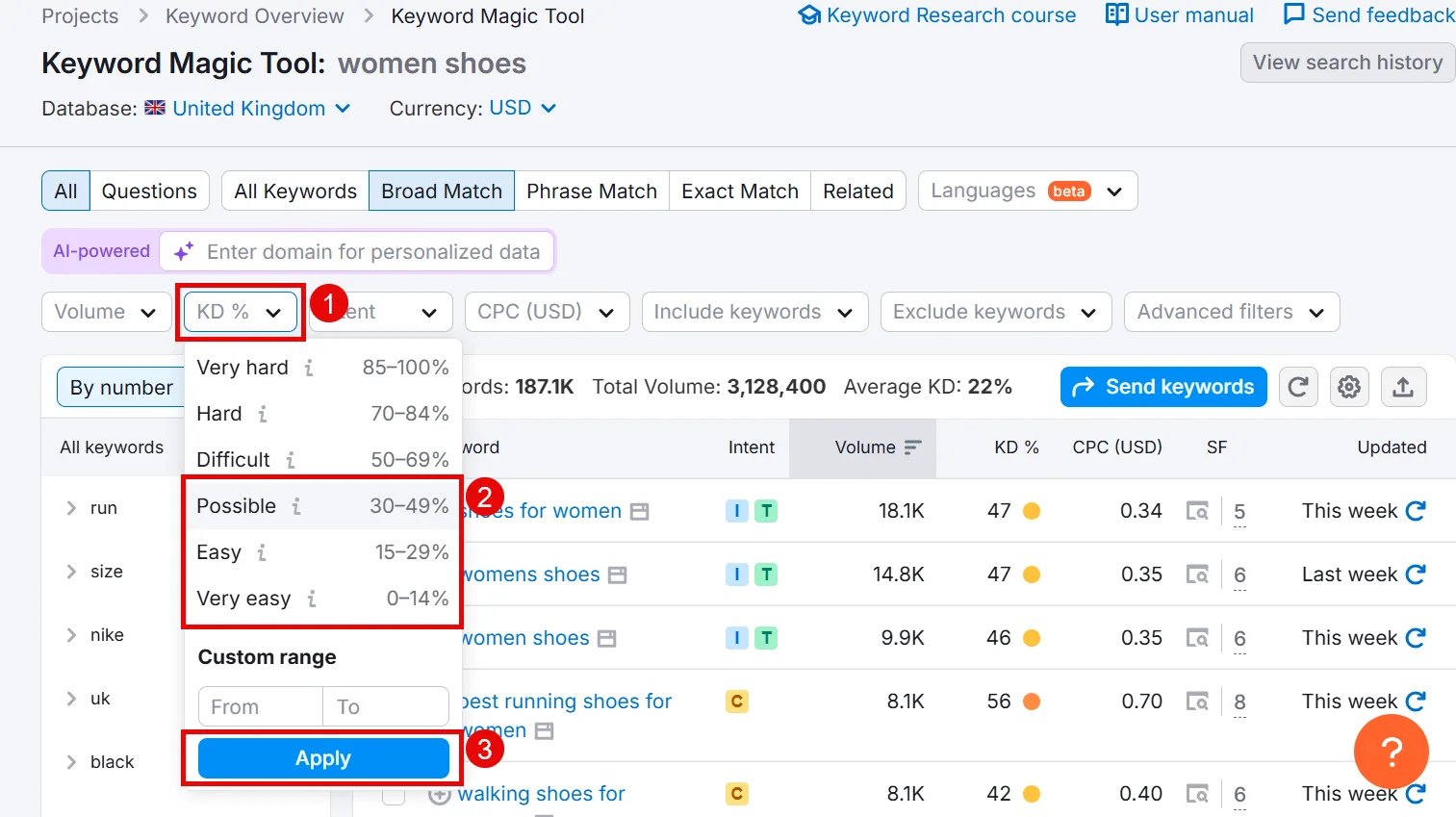
Higher Volume, lower KD% is the sweet spot. Use the KD filter,
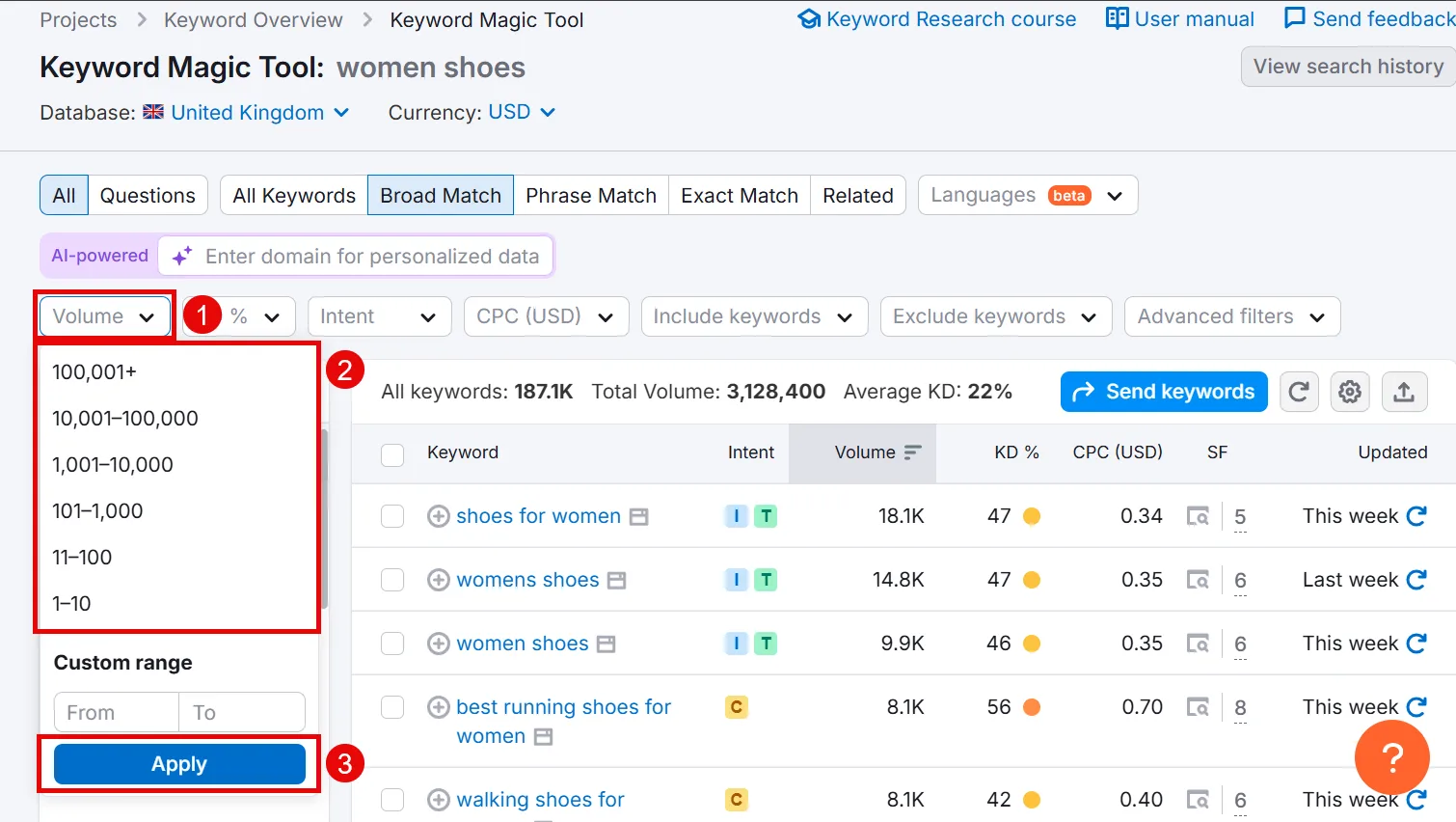
then the Volume filter, to narrow things down further.
Select what’s relevant and export to XLSX.
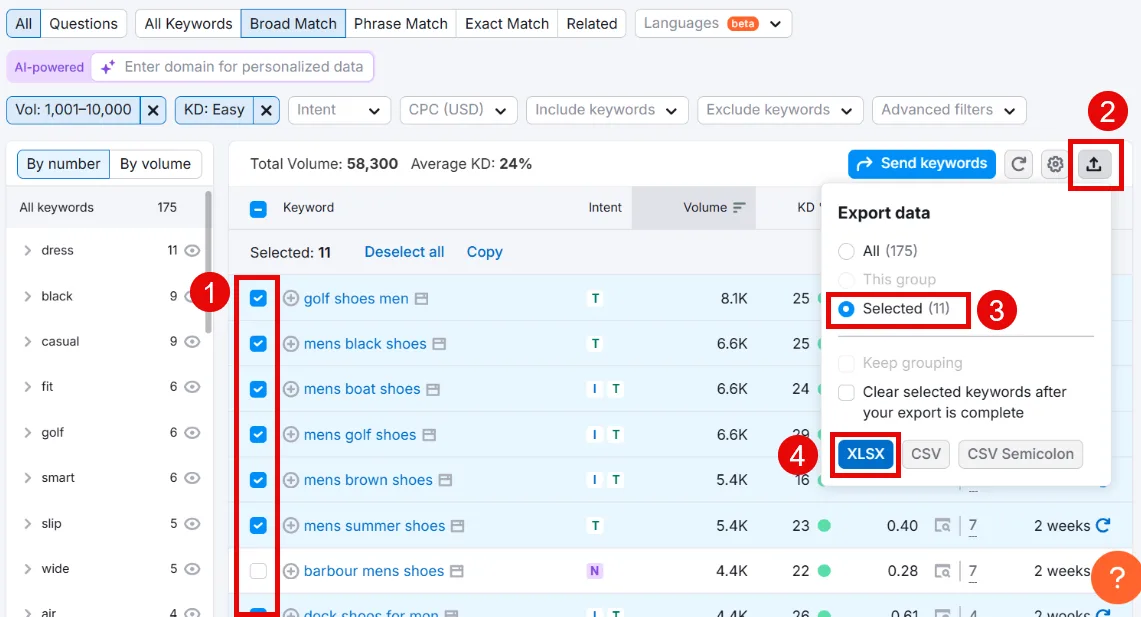
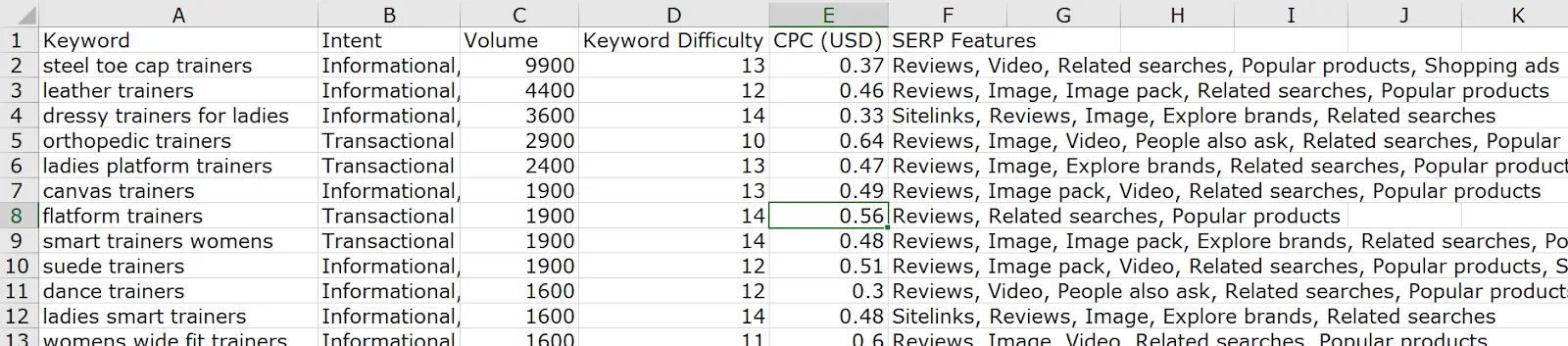
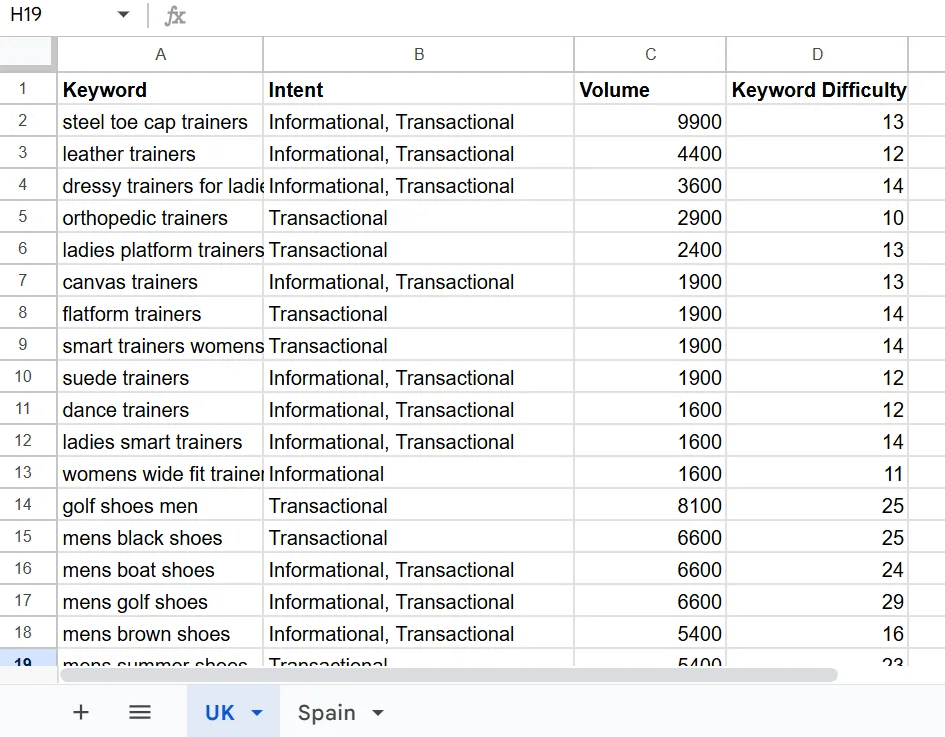
Copy whatever’s relevant into a master spreadsheet, repeat for every seed keyword, and again for each additional market (both English and Spanish for Spain, in this example).
Step 4: See What Competitors Are Targeting
Next, find and analyze competitors in each target market. Semrush’s Open SERP feature shows what a keyword’s SERP looks like in a given country.
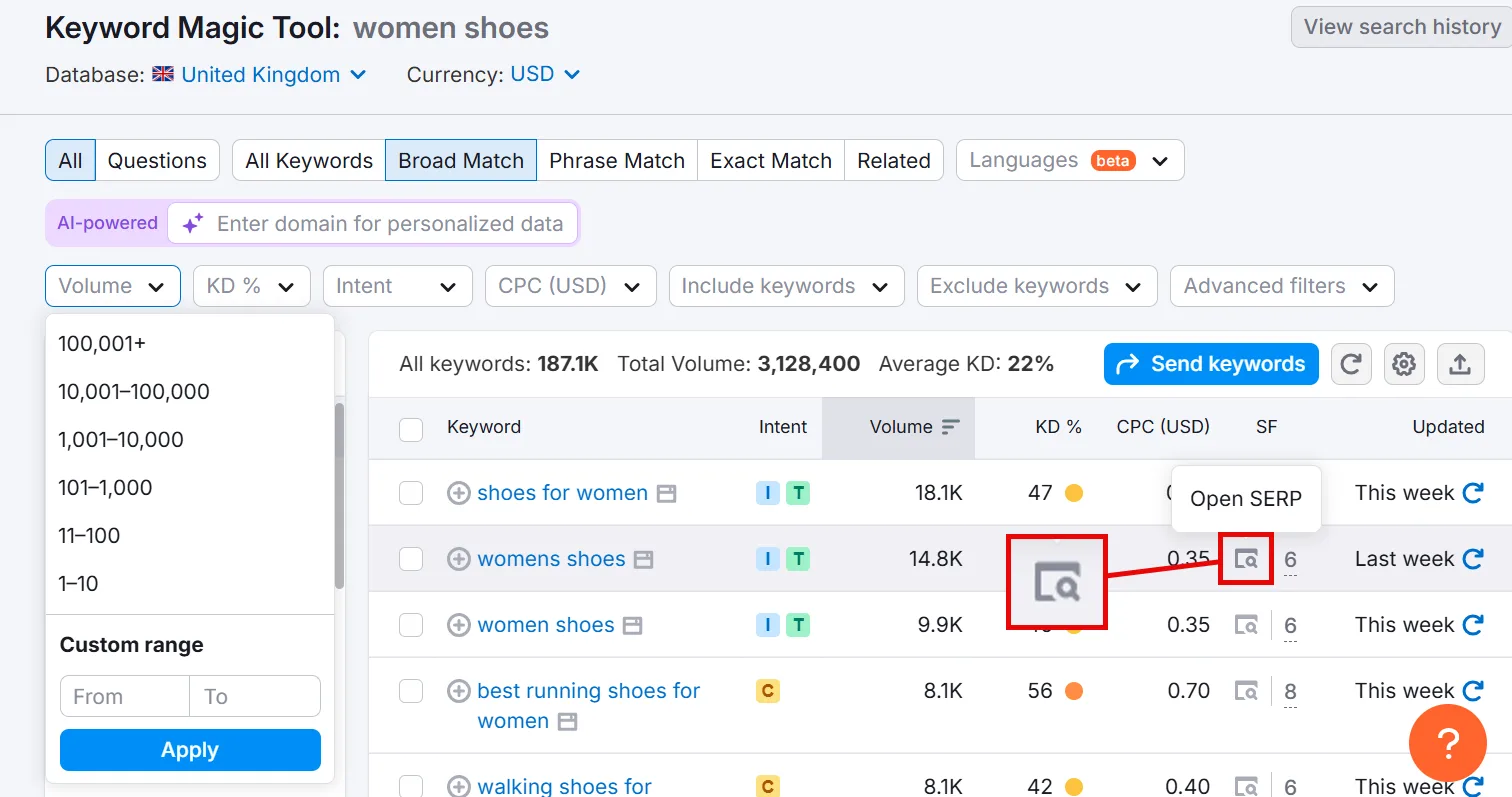
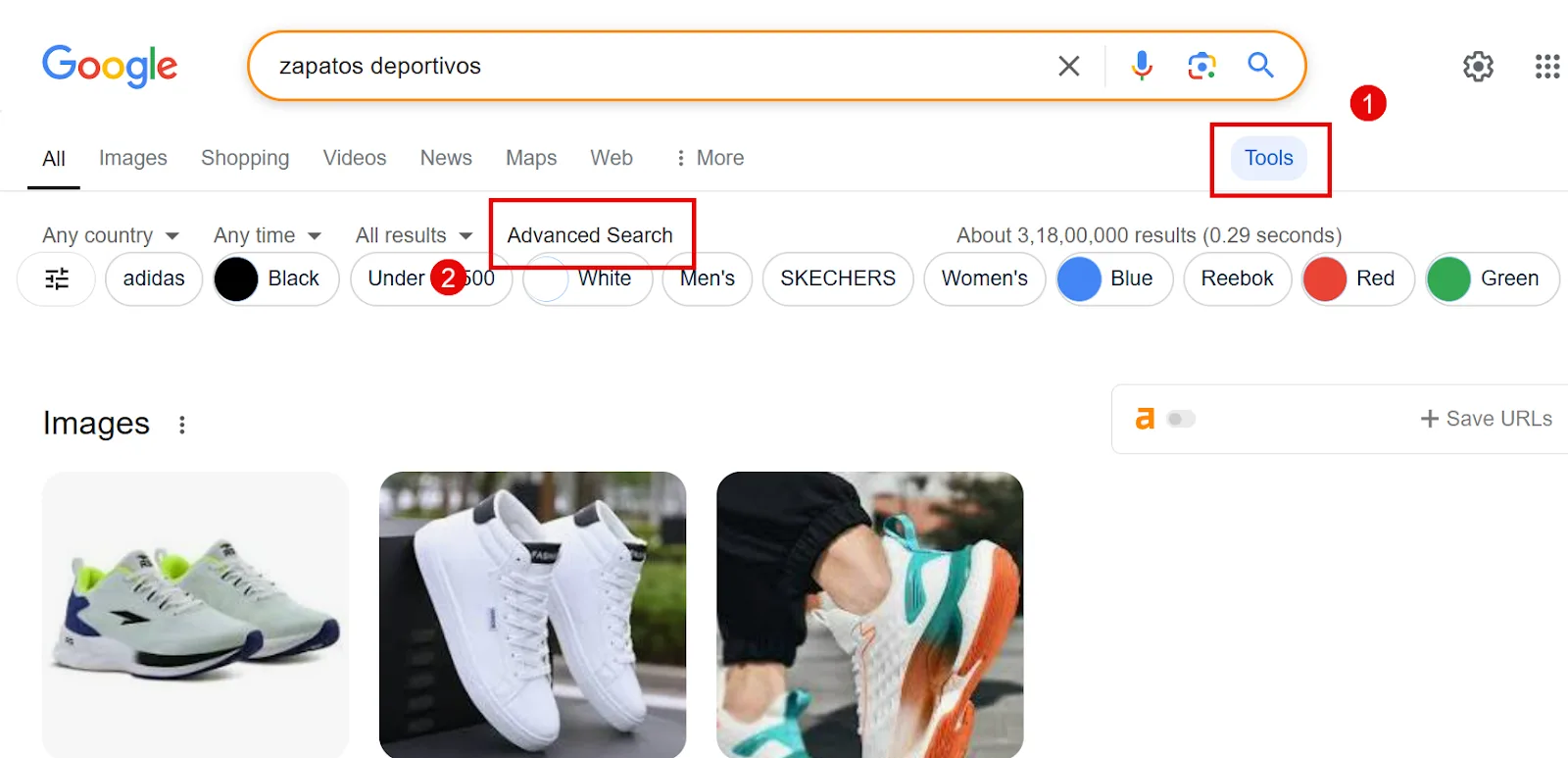
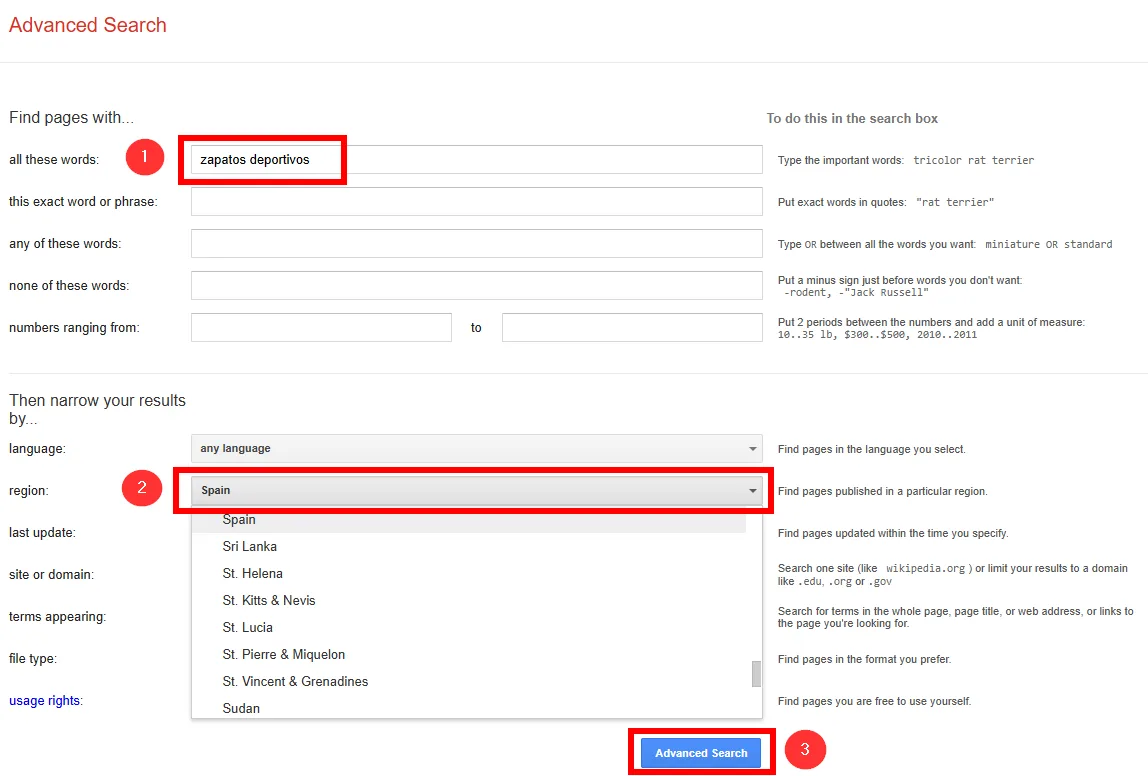
That’s not always fully accurate, though, so location-spoofing tools (Valentin, for one) or Google’s own Advanced Search can help confirm what a searcher would actually see from a specific country or geocode.
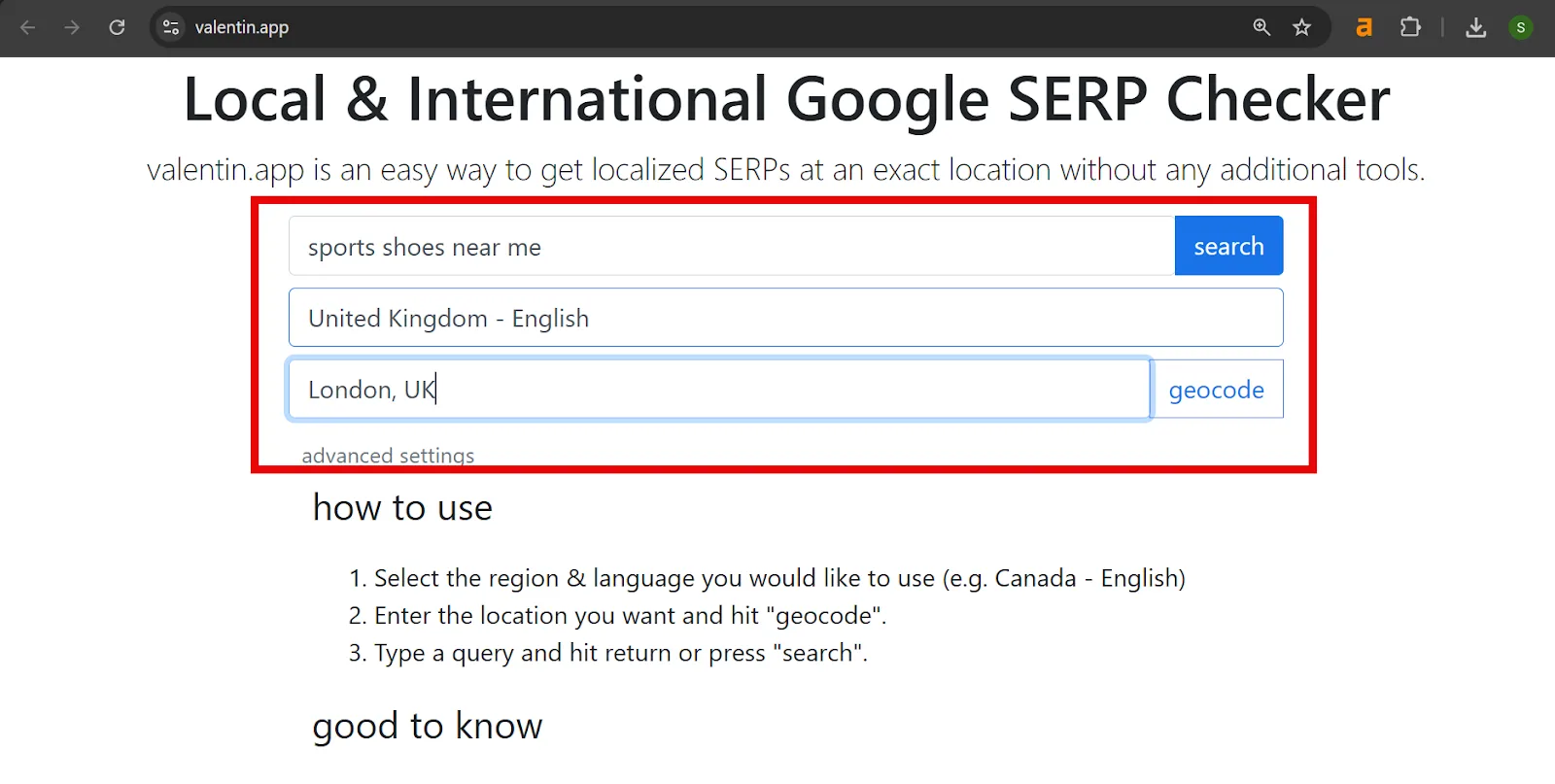
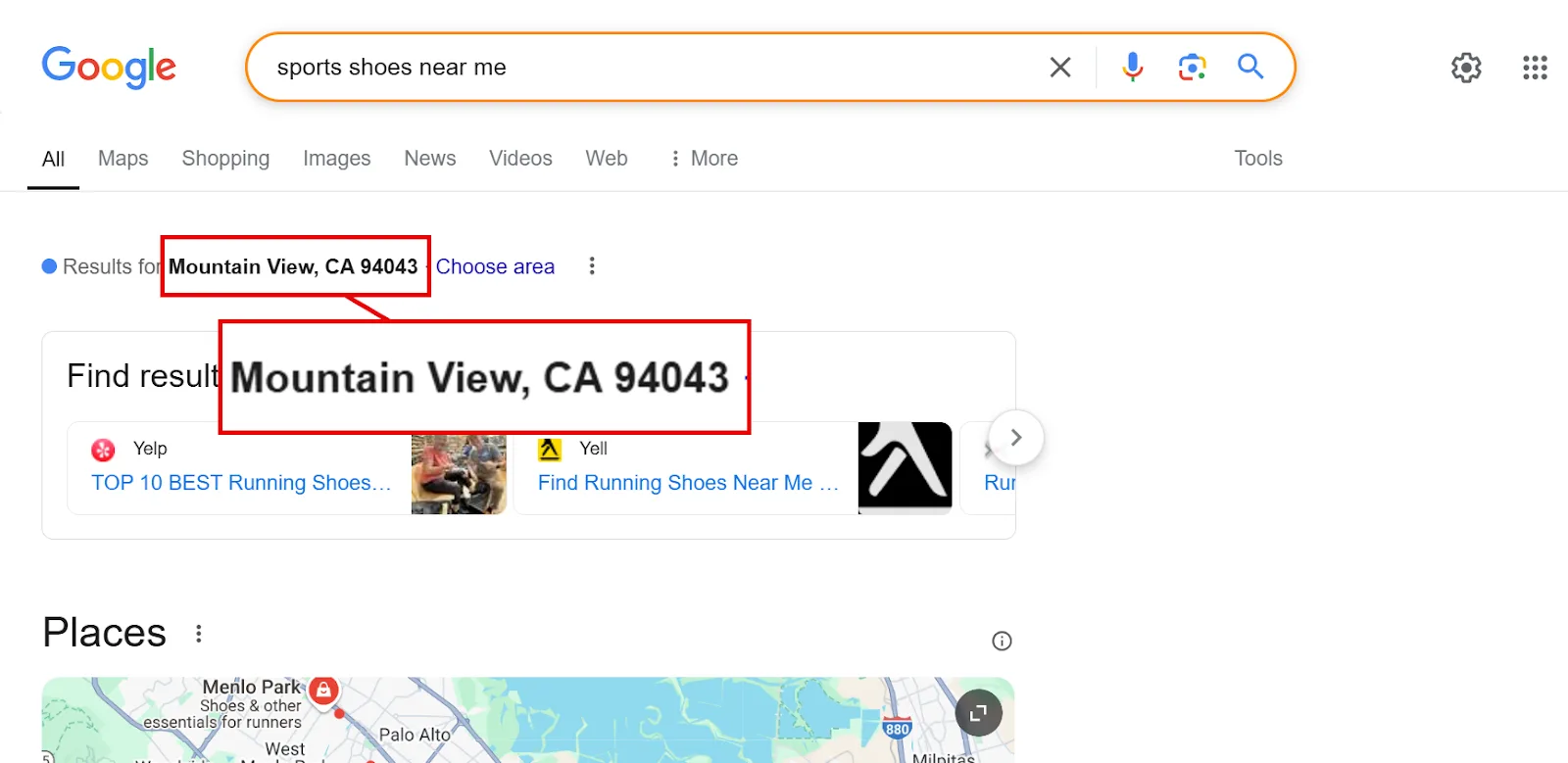
For Google’s Advanced Search: run a normal search, click Tools, select Advanced Search, confirm your keyword and target country.
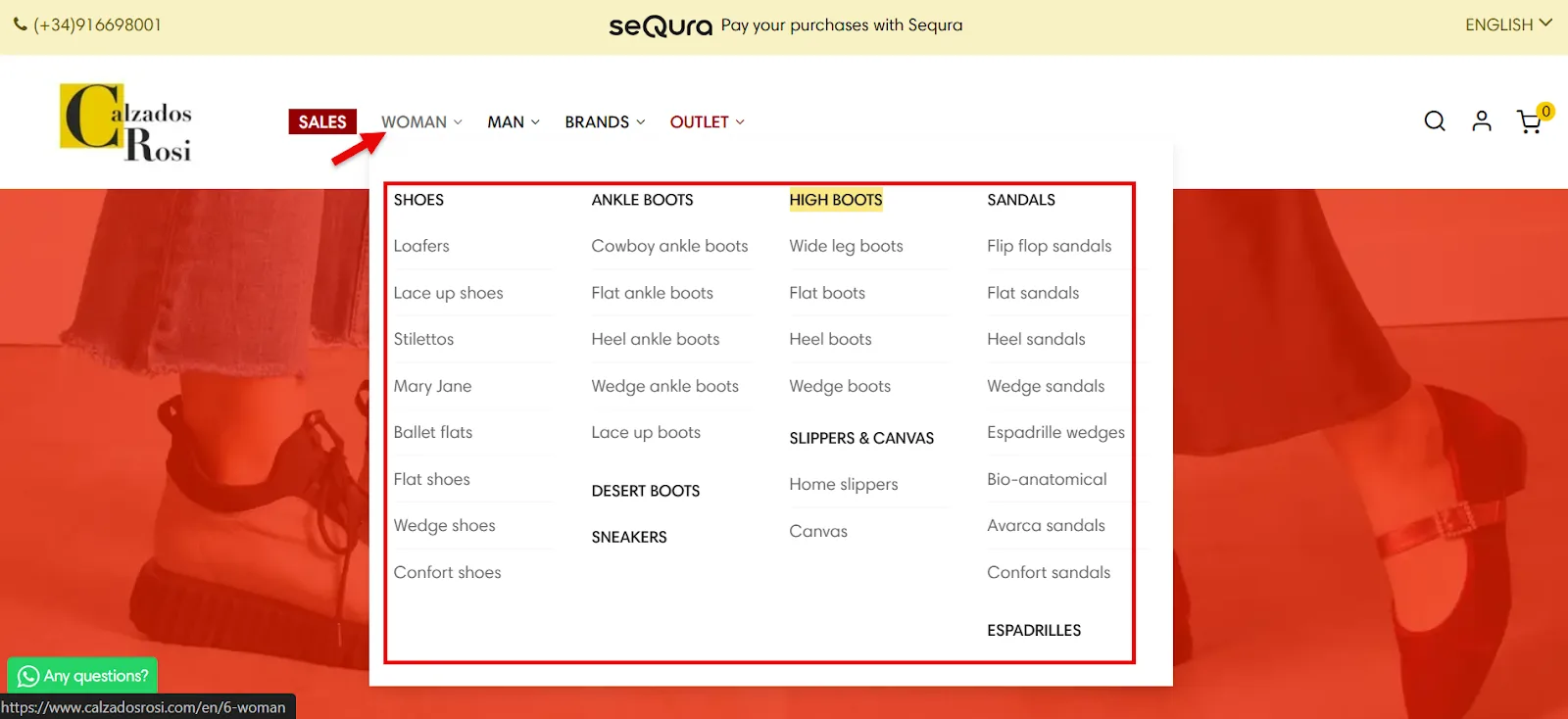
Open a relevant competitor’s site from the results, in Spain, something like Calzados Rosi, and browse its navigation for more keyword ideas straight from their category structure.
From there, run a keyword gap analysis to find what competitors rank for that you don’t: enter your domain, add competitor domains, set the target country, compare.
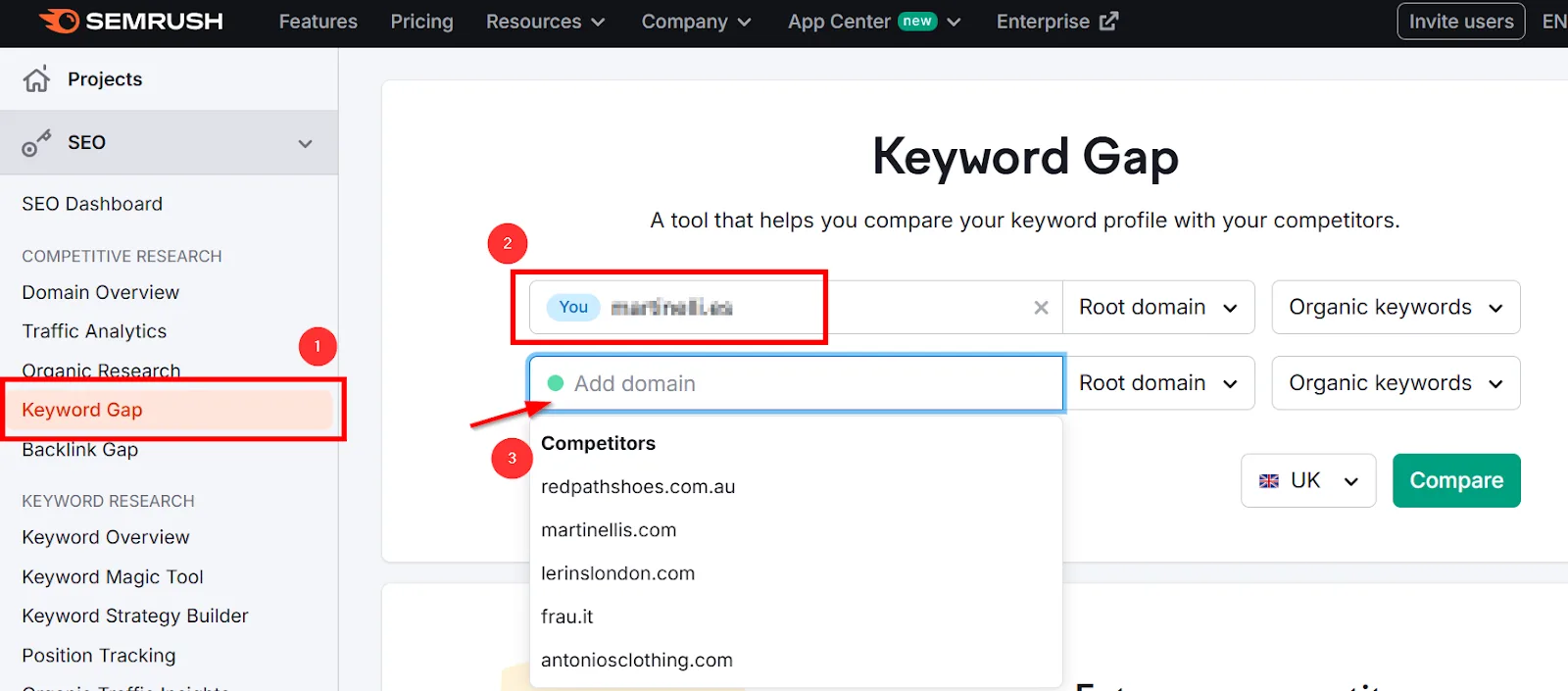
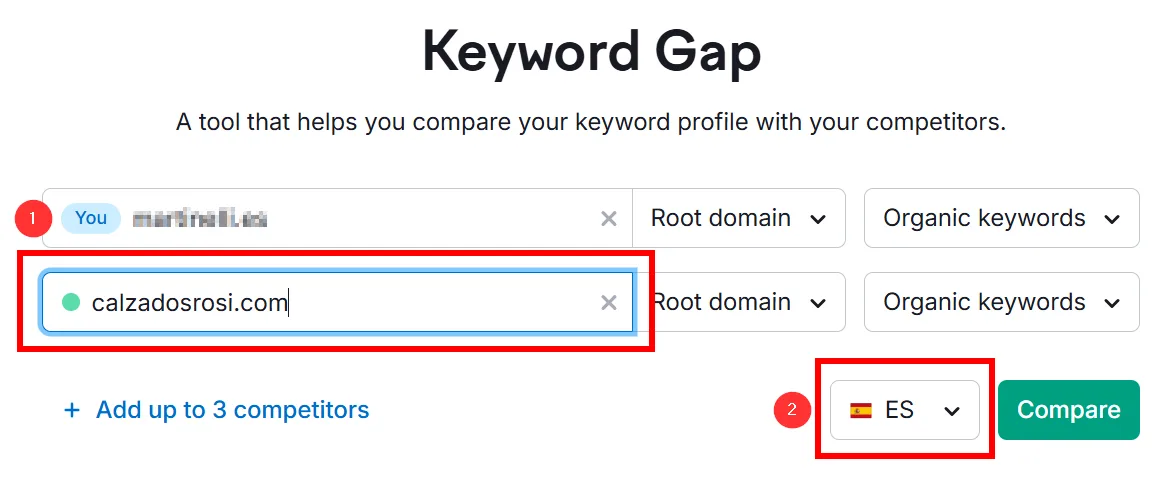
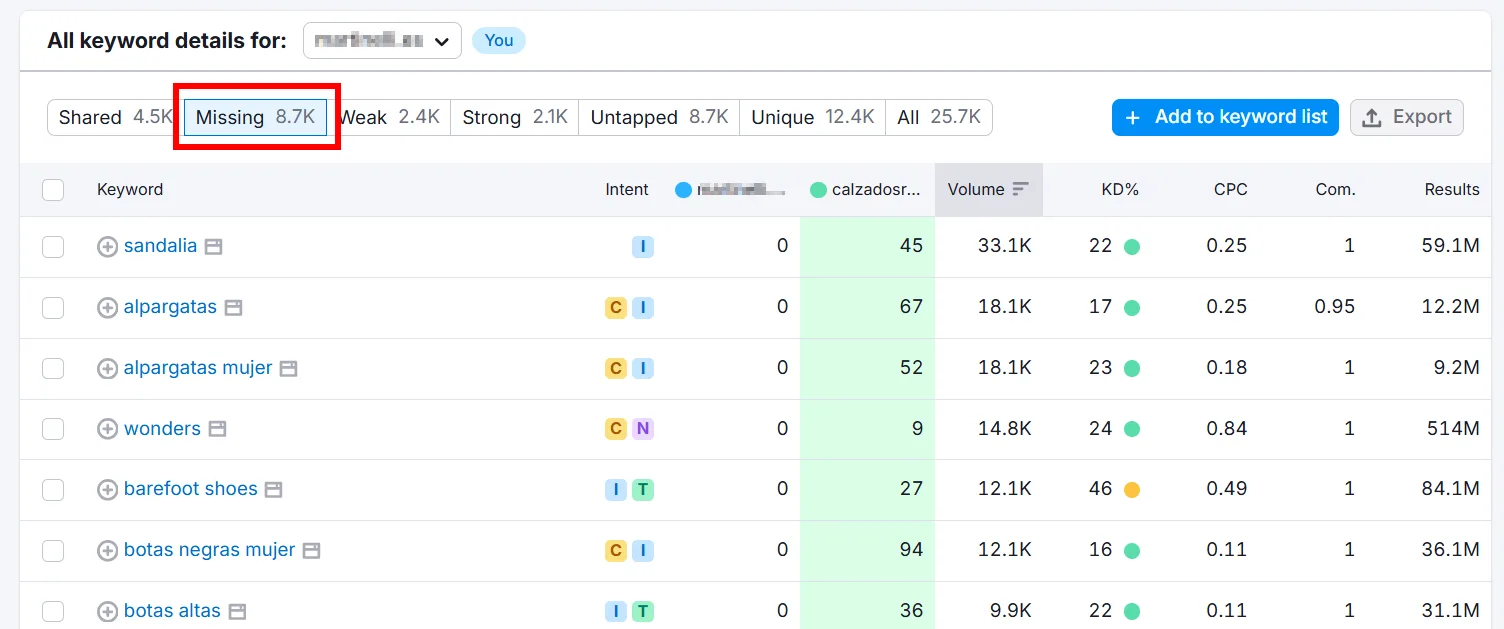
Select Missing for keywords all your competitors rank for that you don’t,
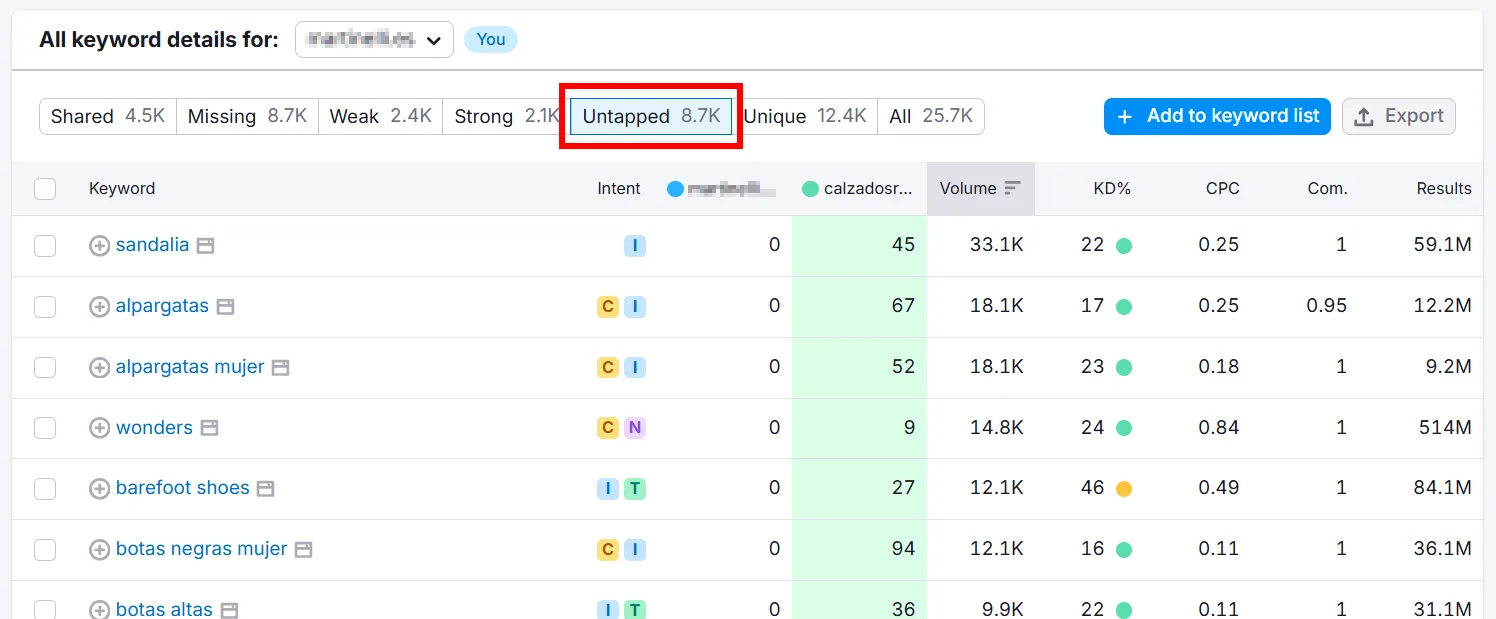
and Untapped for keywords at least one competitor ranks for. Not everything here will be a fit, but there’s usually something useful buried in it.
By this point you’ll likely have hundreds, maybe thousands, of keywords.
Step 5: Organize the List
Group by product category first, sports shoes, sandals, running shoes, whatever fits. ChatGPT can help with this grouping too.
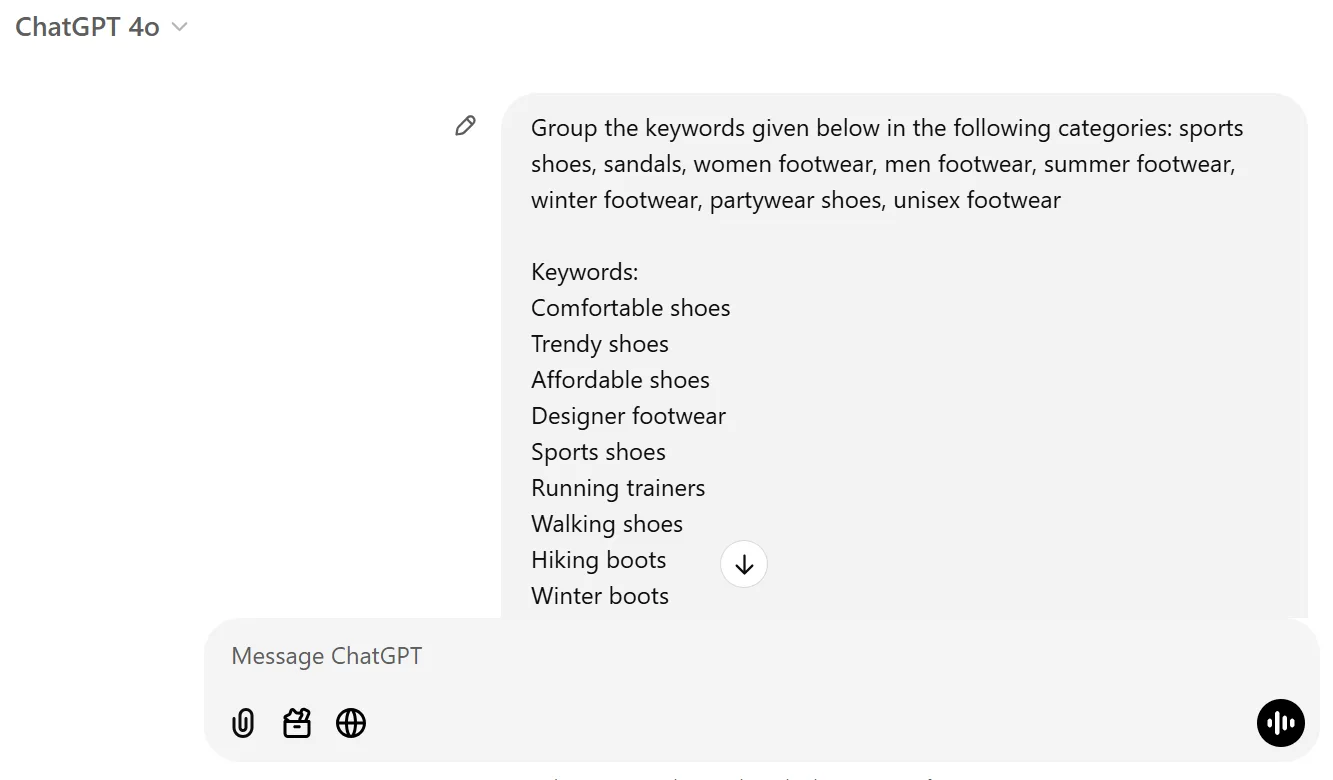
Then group by search intent too, informational (“best running shoes for beginners”), transactional (“buy running shoes online”), and so on. Location-based categories work here as well, add whatever else is relevant to your business. Organize it however makes sense to you, a separate spreadsheet page per category works well.
Step 6: Finalize and Prioritize
Shortlist by checking Search Volume and Keyword Difficulty on Semrush, favoring high-volume, low-difficulty terms. Confirm relevance (“high heels” won’t help a sports-shoe-only seller, regardless of volume), and generally avoid terms dominated by major brands unless you have a real competitive edge.
Your final spreadsheet should end up with columns like: Keyword, Search Volume, Keyword Difficulty %, Search Intent, Product Category, Notes. That’s your finished international keyword list.
International Keyword Research Pro Tips
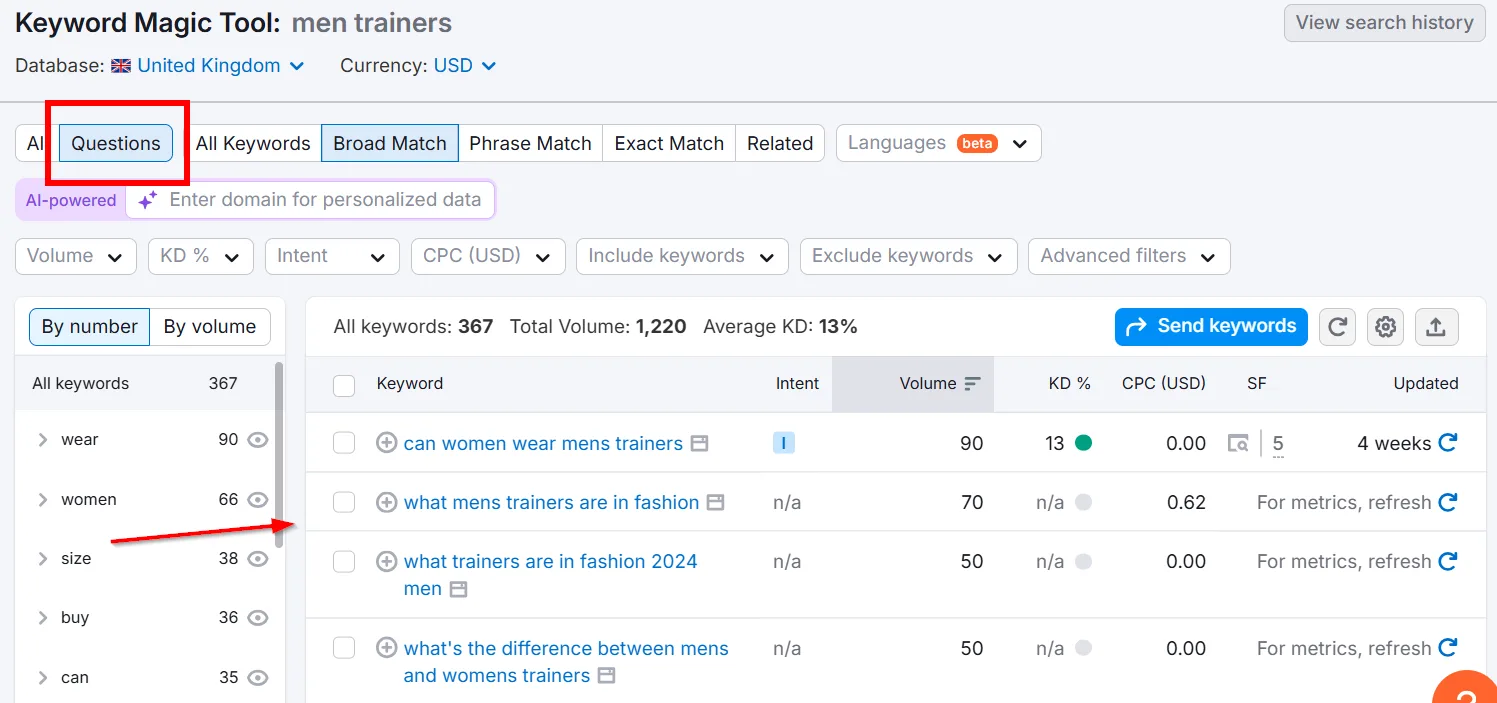
➔ Target long-tail keywords. Something like “buy comfortable running shoes for women” converts better than a generic “running shoes” because the intent is clearer. Long-tail terms can also be question-based or location-specific (“near me,” “in Seattle”), and tend to carry less competition. Turning on the Questions filter in Keyword Magic Tool is a quick way to surface these.
➔ Watch seasonal and cultural trends. “Diwali offers” matters in India the way “Black Friday sales” matters in the US. Even within Europe, UK shoppers might not search summer sandals in winter, while warmer parts of Spain could see traction year-round. Google Trends is useful here.
➔ Mind local language nuances. Even shared-language markets differ, “colour” vs. “color,” “trainers” vs. “sneakers.” Non-English markets like Spain will mostly search in their primary language, “zapatillas deportivas” rather than “sports shoes,” “chanclas” rather than “sandals.”
➔ Don’t rely on Google alone. It dominates most markets, but not all, China and South Korea lean on different search engines, and plenty of other countries have a meaningful share using a local alternative alongside Google. Optimize for whichever engine your actual audience uses.
Your Global Audience Is Waiting
International keyword research is how you actually reach local customers wherever they are. Get the local context right, study local competitors, use the right tools, and prioritize high-intent, niche keywords with real search volume behind them.
Frequently Asked Questions
What is the best international keyword research tool?
Semrush stands out for this specifically: it’s easy to compare how a keyword performs across countries, surface related terms, and its filters allow genuinely focused, market-specific research.
How do I identify target markets and languages for international SEO?
Run your home-market keywords through Semrush’s Keyword Overview and check the Global Volume breakdown. Countries with high search volume for your existing terms are the ones already showing demand, and a good place to start.
What’s the difference between international and domestic keyword research?
International keyword research spans multiple countries and languages; domestic research stays focused on a single country without factoring in language or cultural variation.
Why does localization matter in international keyword research?
It makes content feel native to the audience instead of obviously translated. That means adapting to local language, culture, and preference, not just swapping words.
How do cultural sensitivities affect international keyword research?
Words and phrases can carry different meanings across cultures, so keyword choices need care to avoid misreads or unintended connotations in a given market.
Which search engine is best for international SEO?
It depends entirely on the market. Google leads most places, but Baidu dominates in China, Naver is bigger than Google in South Korea, and Yandex holds real share in Russia alongside Google. Optimize for whatever your target audience actually uses.
What are common international keyword research mistakes?
Directly translating keywords instead of localizing them, ignoring cultural context, overlooking local competitors, and not accounting for how people in that region actually search.
How do I make my international SEO strategy relevant to local trends and seasonality?
Follow local news and events, use Google Trends to track seasonal interest, and align your content calendar with the target country’s own holidays and seasons rather than your home market’s.