


Your competitors are ranking for keywords you’re missing out on, keywords that are bringing them traffic, leads, and customers.
Why let them have all the wins?
Keyword gap analysis shows you exactly where you’re falling behind and how to close it. Steal your competitors’ best keywords, outrank them, and take back your share of the market. Here’s how it’s done.
What Is Keyword Gap Analysis?
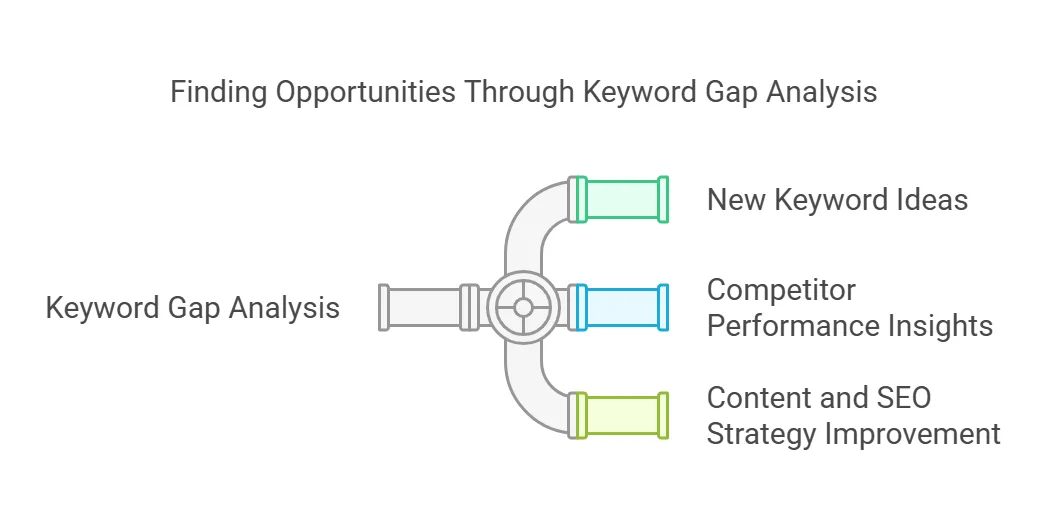
Keyword gap analysis is the process of finding keywords your competitors rank for that you don’t. It surfaces missed opportunities to drive traffic to your site. Doing this lets you:
➜ Find new keyword ideas to target.
➜ Spot ways to improve your content and SEO strategy.
➜ Understand where competitors are outperforming you.
Say you own an online shoe store. Your competitor ranks high for phrases like “best running shoes for flat feet,” “waterproof hiking boots,” and “stylish sneakers for teens.” You carry these exact products, but your site isn’t targeting or ranking for any of those terms, so you’re missing out on a lot of potential customers.
That’s where keyword gap analysis comes in: it identifies these gaps so you can create content or optimize product pages to target them, pulling in more customers and staying competitive in search.
Disclaimer: don’t confuse keyword gap analysis with content gap analysis. Keyword gap analysis identifies keywords your competitors rank for that you don’t, helping you target missed opportunities. Content gap analysis finds missing topics or content types on your site compared to competitors, making sure you cover user needs comprehensively. This post focuses on keyword gap analysis only.
How to Do Keyword Gap Analysis as a Beginner
Keyword gap analysis breaks down into two parts: identifying your competitors, and finding the keyword gaps between you.
A: Identify Your Competitors
Competitors are whoever competes to rank for the same keywords you’re after. So how do you find them? Simple, see who’s already ranking.
First, Google your target keywords one by one and note who ranks. Second, use a reliable SEO tool (I use Semrush) to cover the ground more thoroughly.
Step 1: Google Your Keywords
Go to Google and search something related to your product or service. If you run a handmade jewelry business, that might be:
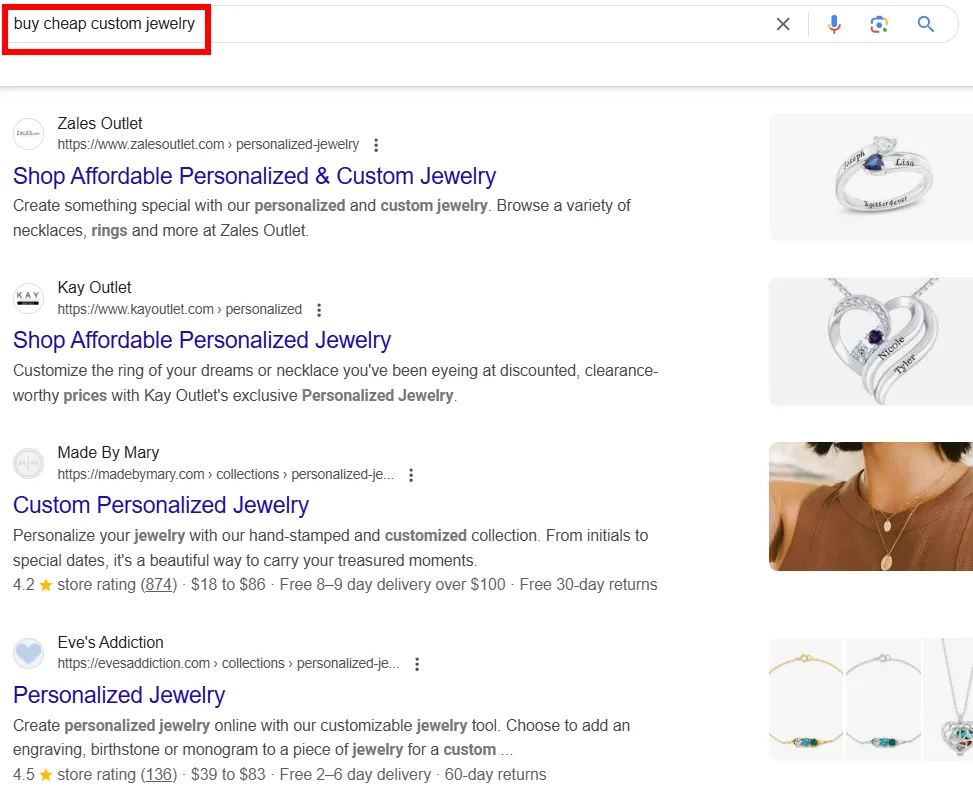
Note the top-ranking sites, these are your competitors. Also check the Google Local Pack listing, click a business to find its website via the Website button.
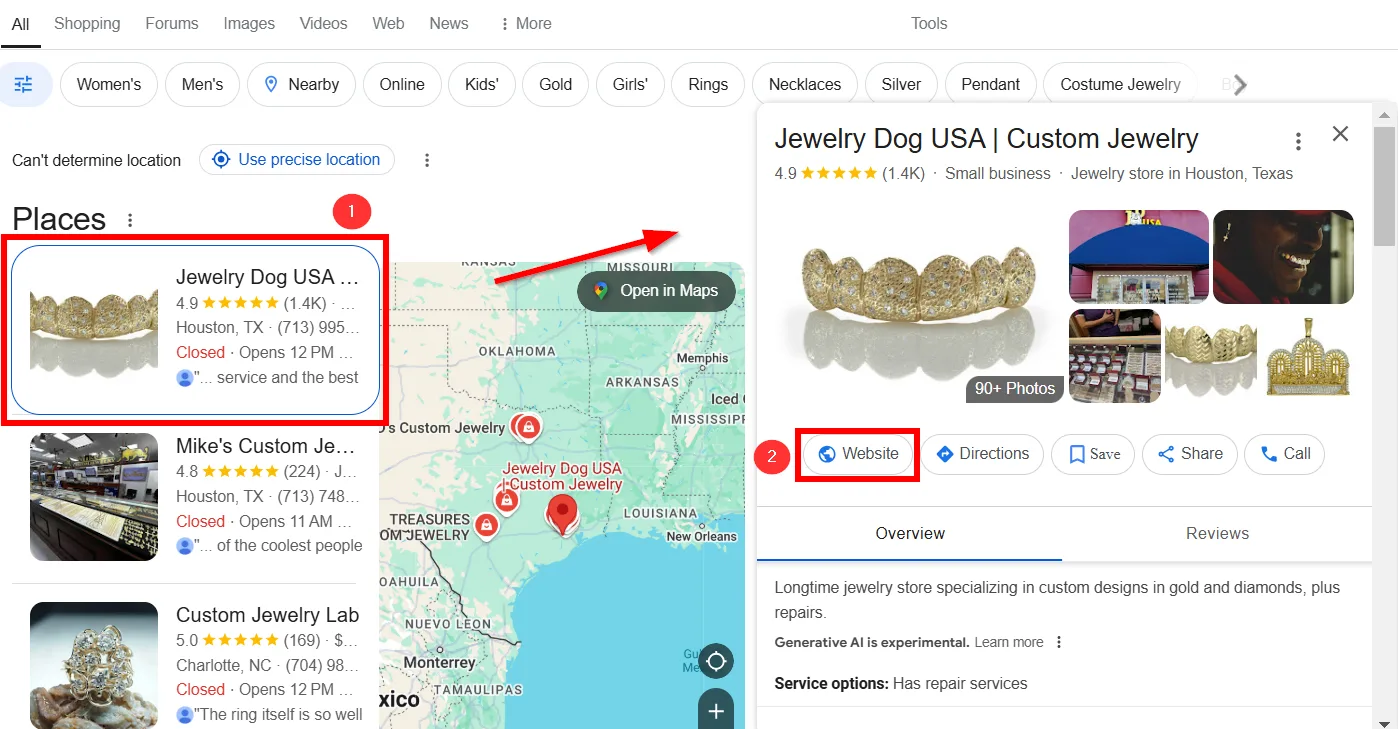
Repeat this across different primary keywords tied to your product or service to build out your competitor list.
Step 2: Use Semrush’s Organic Research
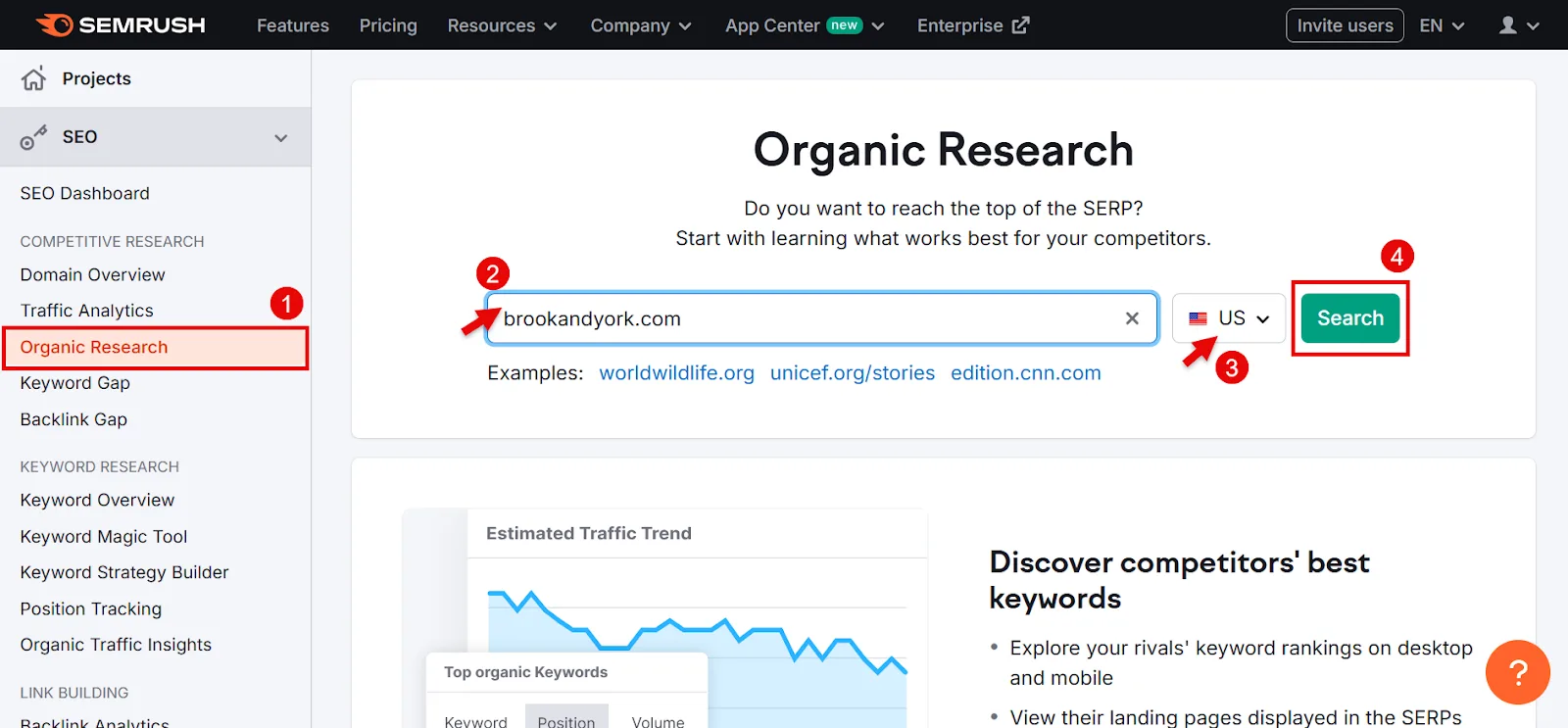
To find direct competition, use the Organic Research tool on the left of your Semrush dashboard. Enter your website URL, select your target country, and hit Search.
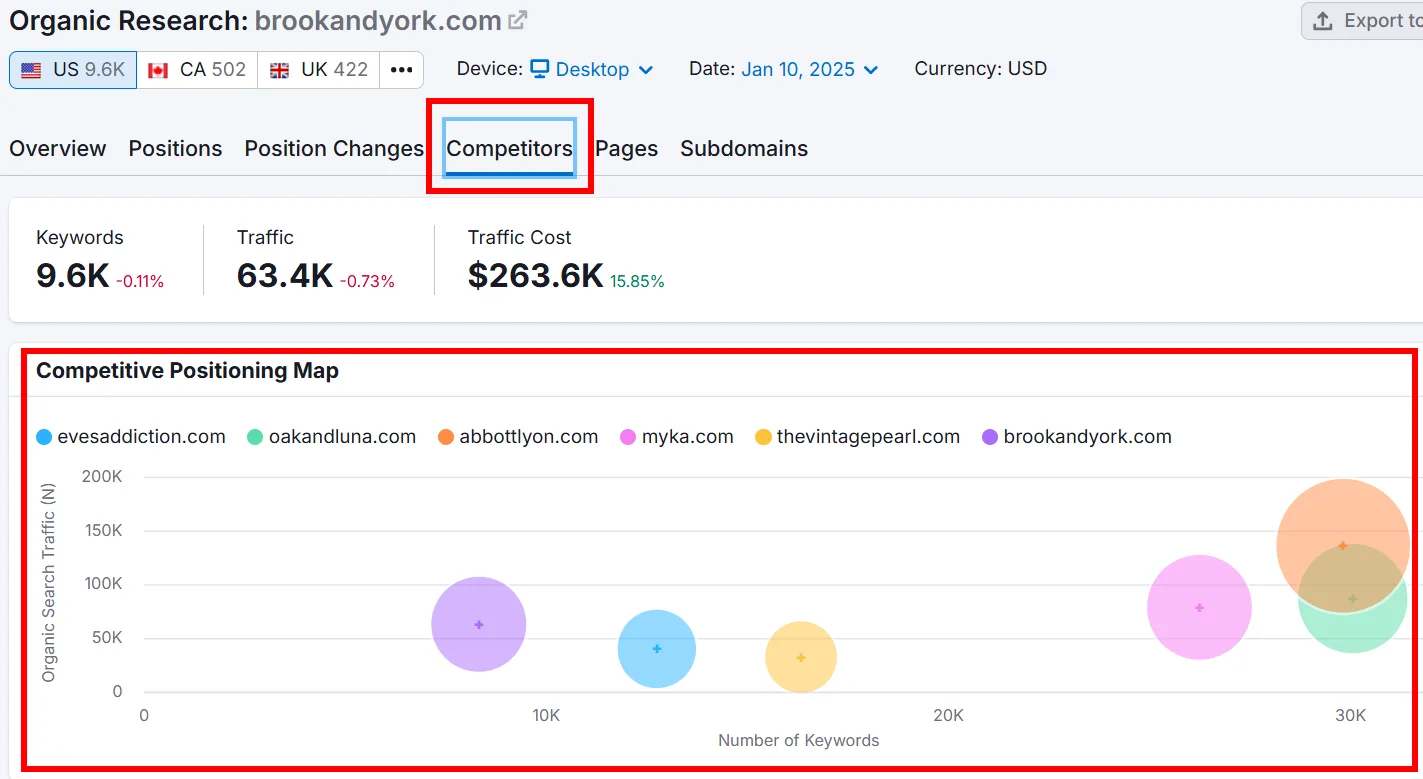
Select the Competitors filter for a visual overview of your competition.
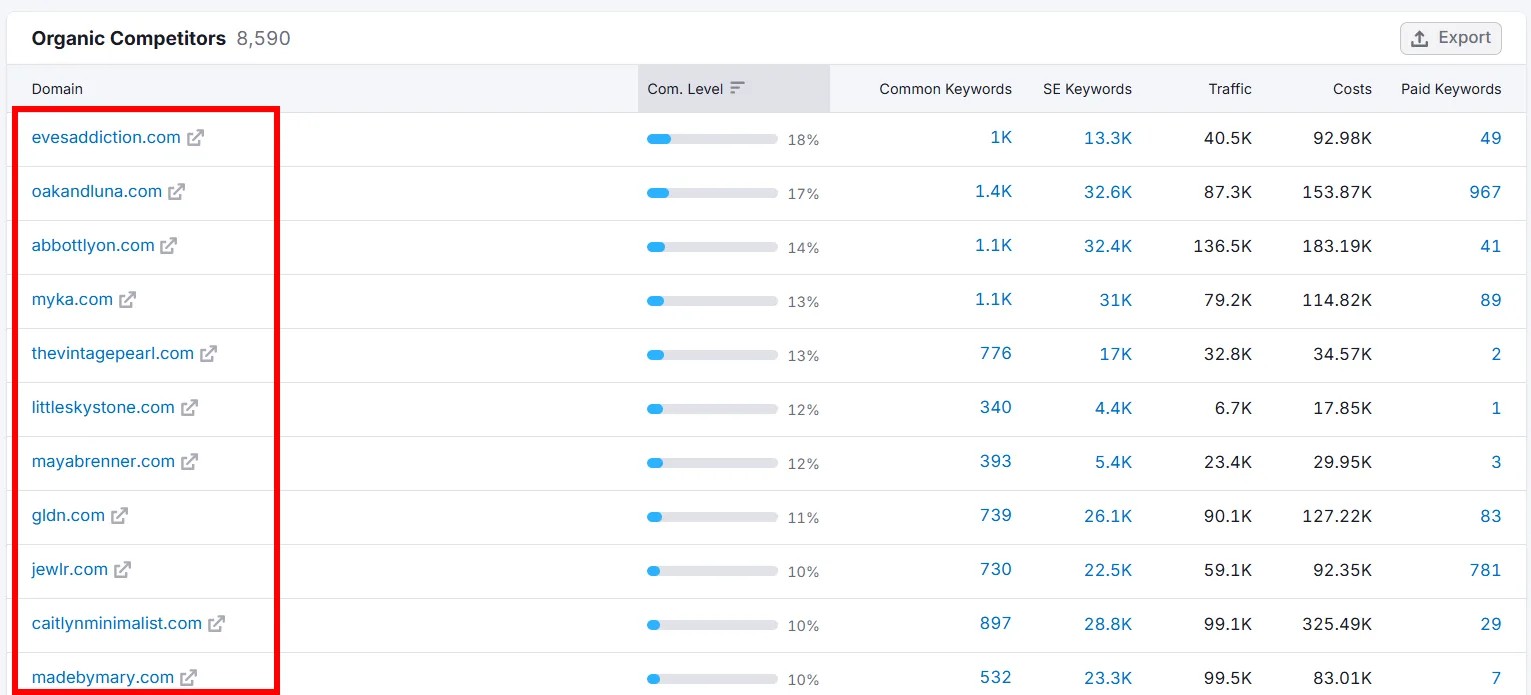
Scroll down for your list of Organic Competitors.
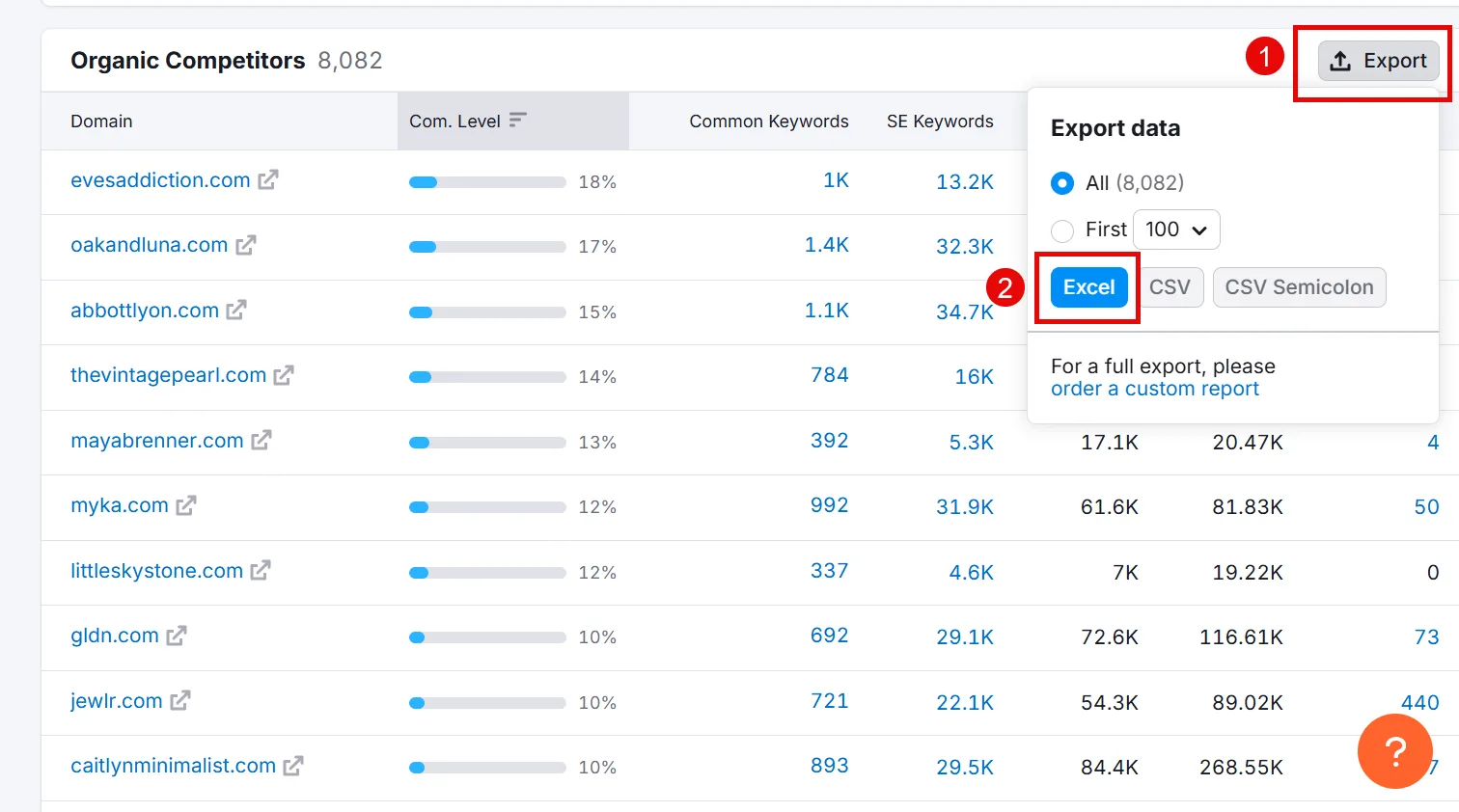
Copy it manually, or click Export and download as Excel.
Step 3: Use Semrush’s Market Explorer
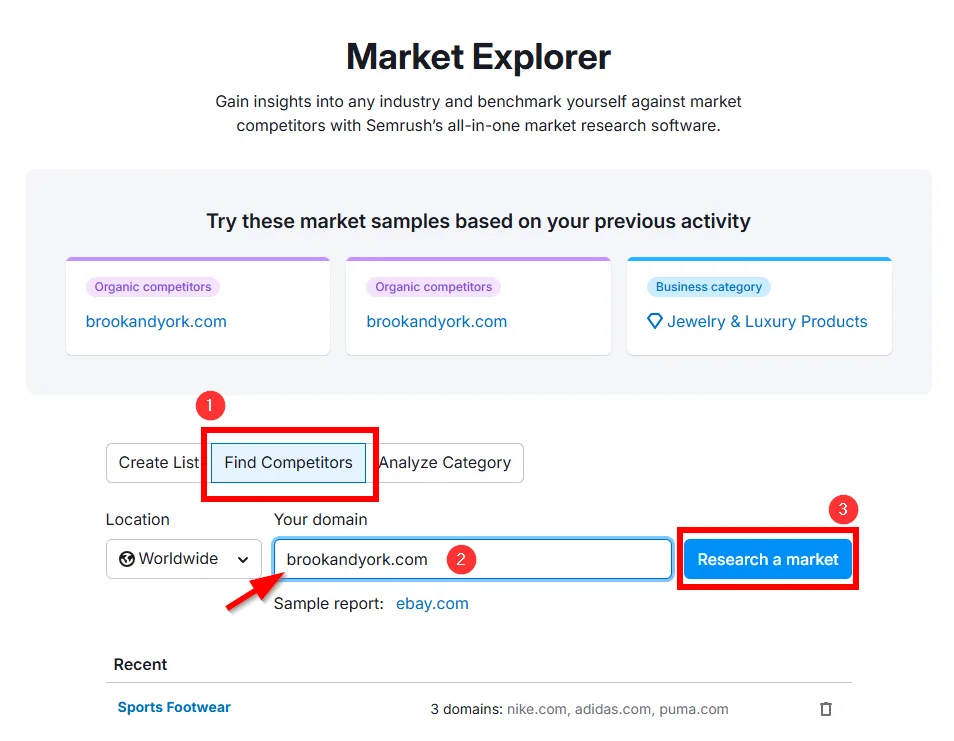
Organic Research only covers organic search competitors. Semrush’s Market Explorer widens that to your overall industry. On the dashboard, click Trends > Market Explorer > Find Competitors, enter your website, then hit Research a market.
You’ll get an overview report. Click All Domains to see every online competitor in your industry and how much traffic they pull from different channels.
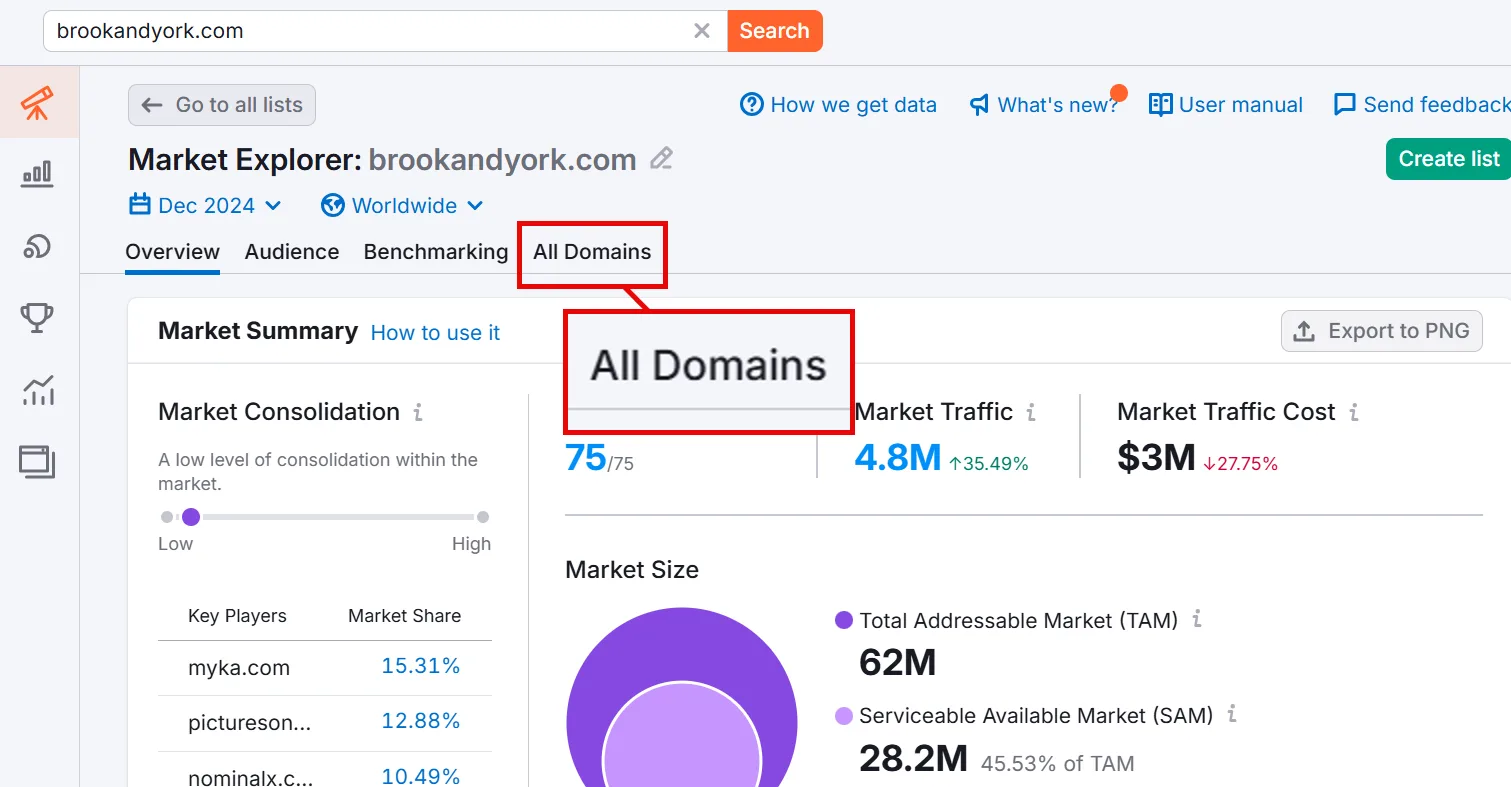
Note down anything relevant.
B: Gather Keyword Data
With your competitor list in hand, it’s time to see which keywords they rank for that you’re missing.
Step 4: Use Semrush’s Keyword Gap Tool
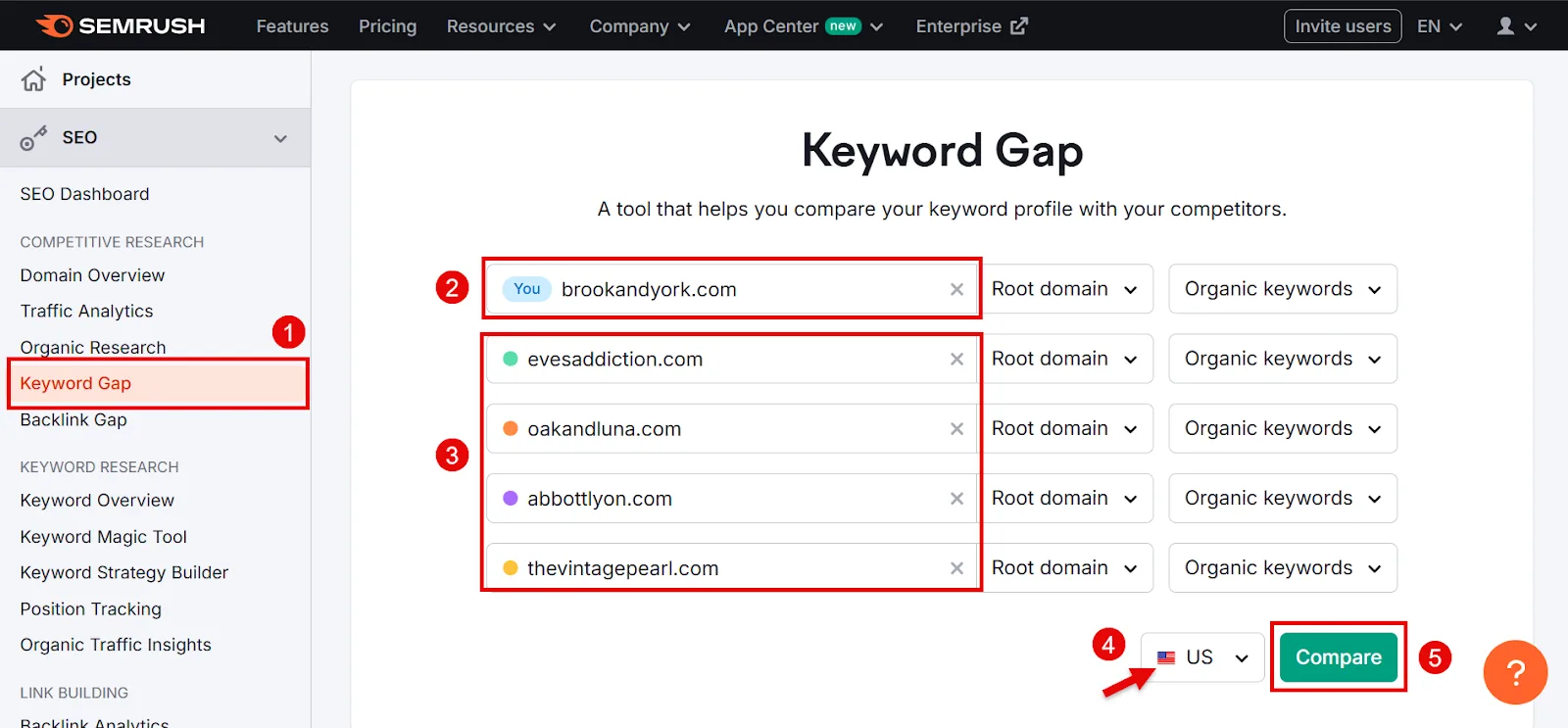
Open the Keyword Gap tool from the dashboard. Enter your website in the first box, competitors in the next, select your target country, and hit Search.
You’ll see top keyword opportunities, split into:
➜ Missing: keywords your competitors rank for that you don’t.
➜ Weak: keywords where you rank lower than your competitors.
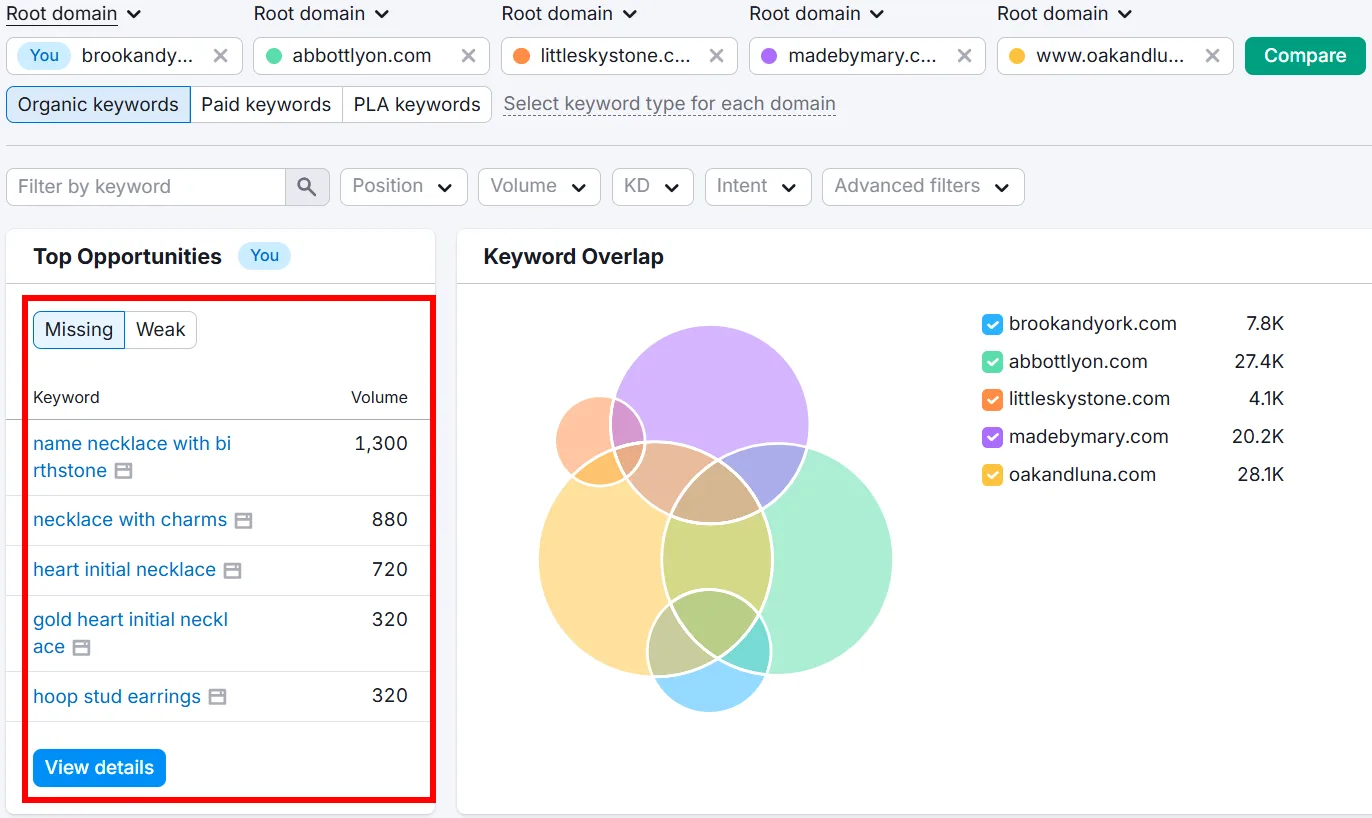
Scroll to the keyword list and click Missing to see everything your selected competitors rank for that you don’t.
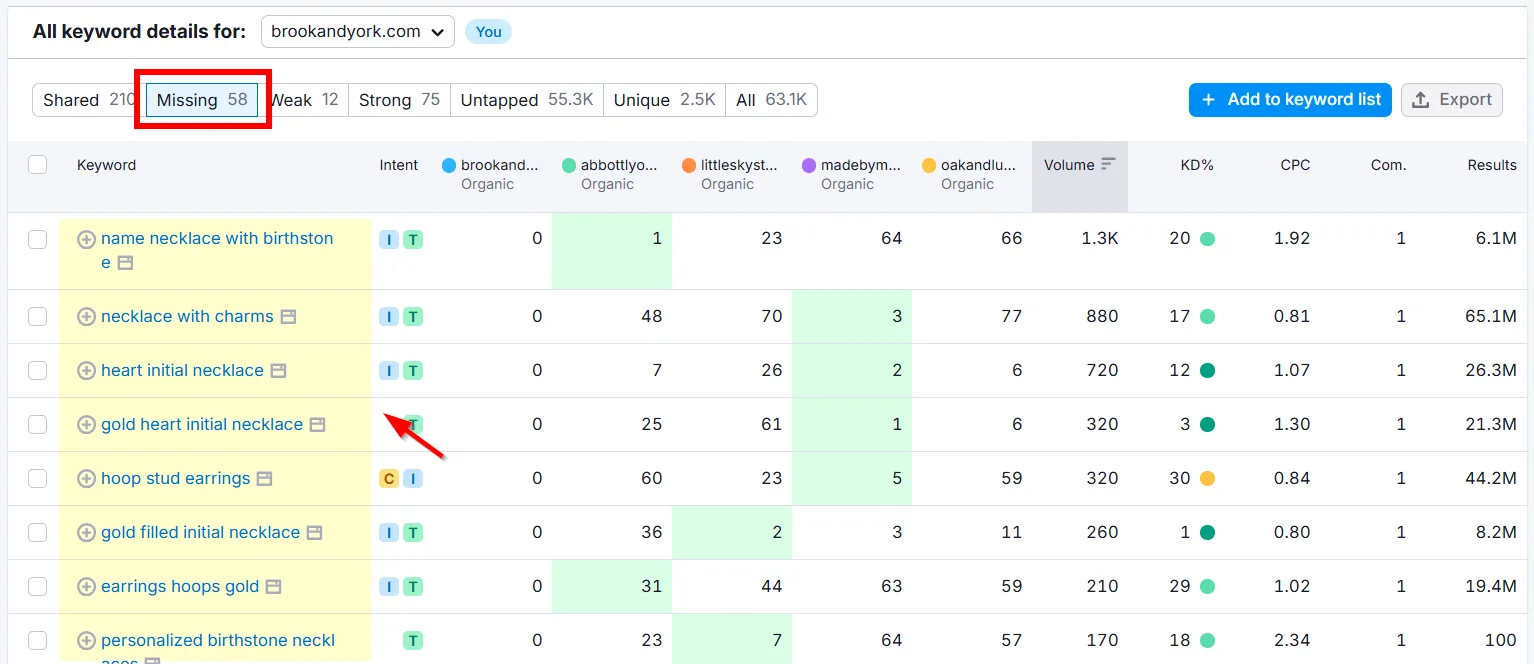
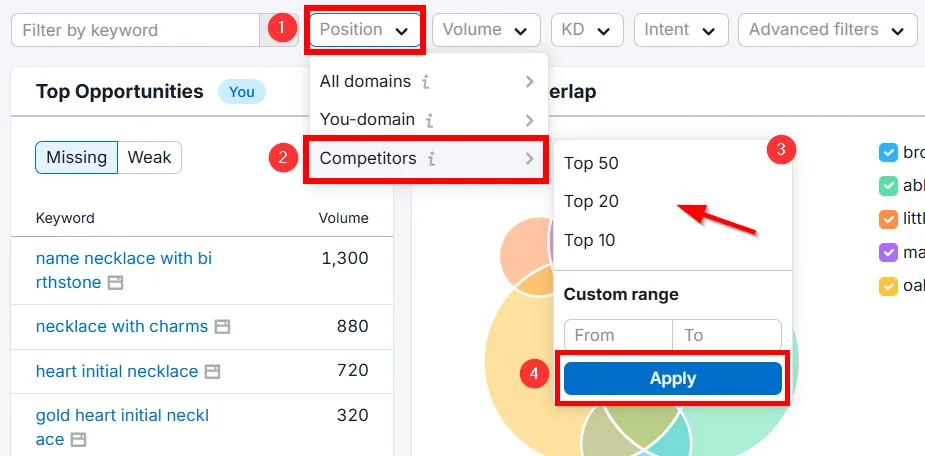
Filter for even more impactful terms. Click Position > Competitors, select a range, and hit Apply.
Other useful filters:
➜ KD: set a range for keyword difficulty.
➜ Volume: set a range for search volume.
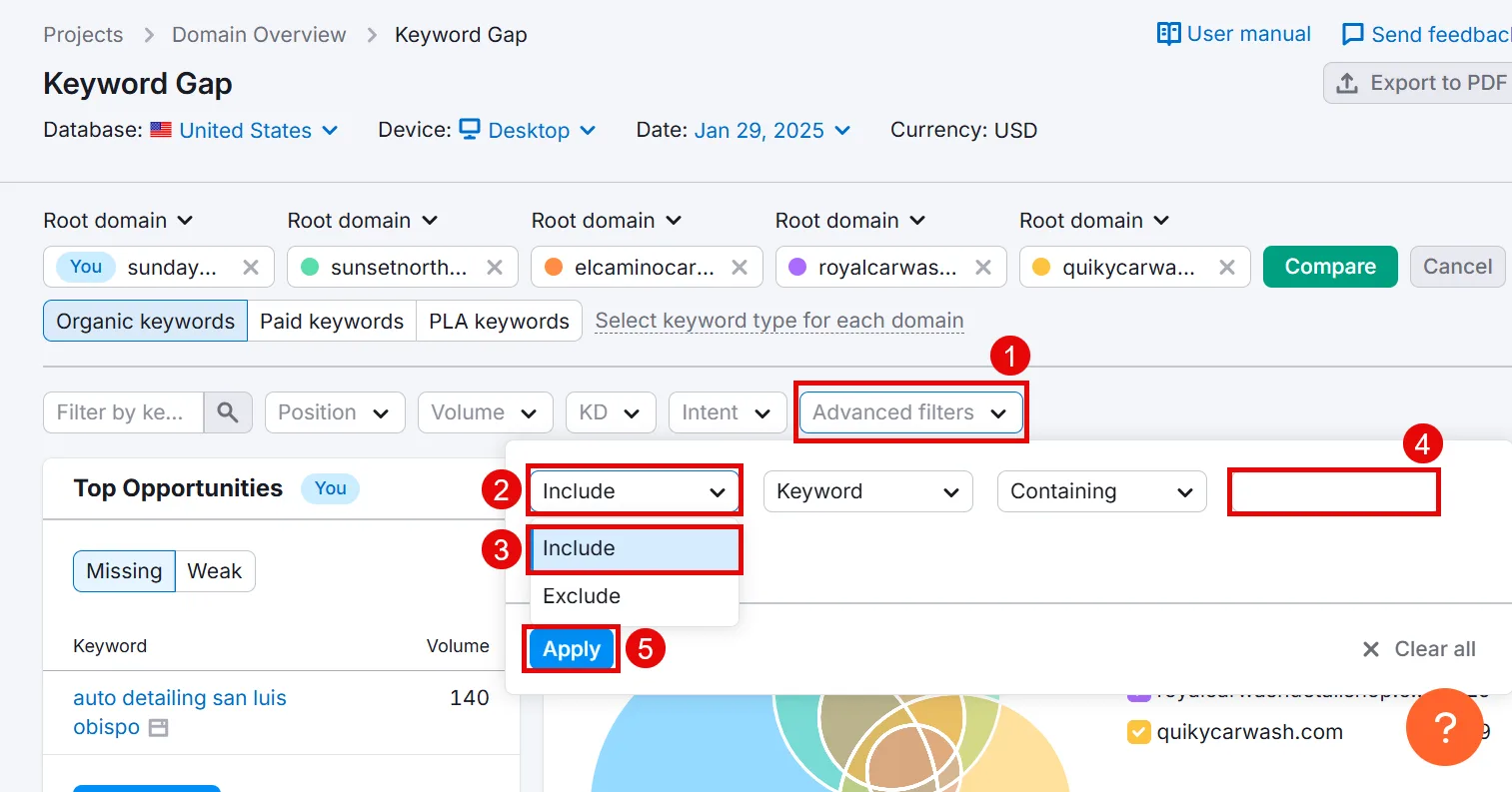
➜ Advanced filters: include or exclude specific terms.
➜ Intent: filter by informational, commercial, and so on.
Target keywords with high or decent volume paired with lower difficulty. Select what’s relevant, then Export > Selected > Excel.
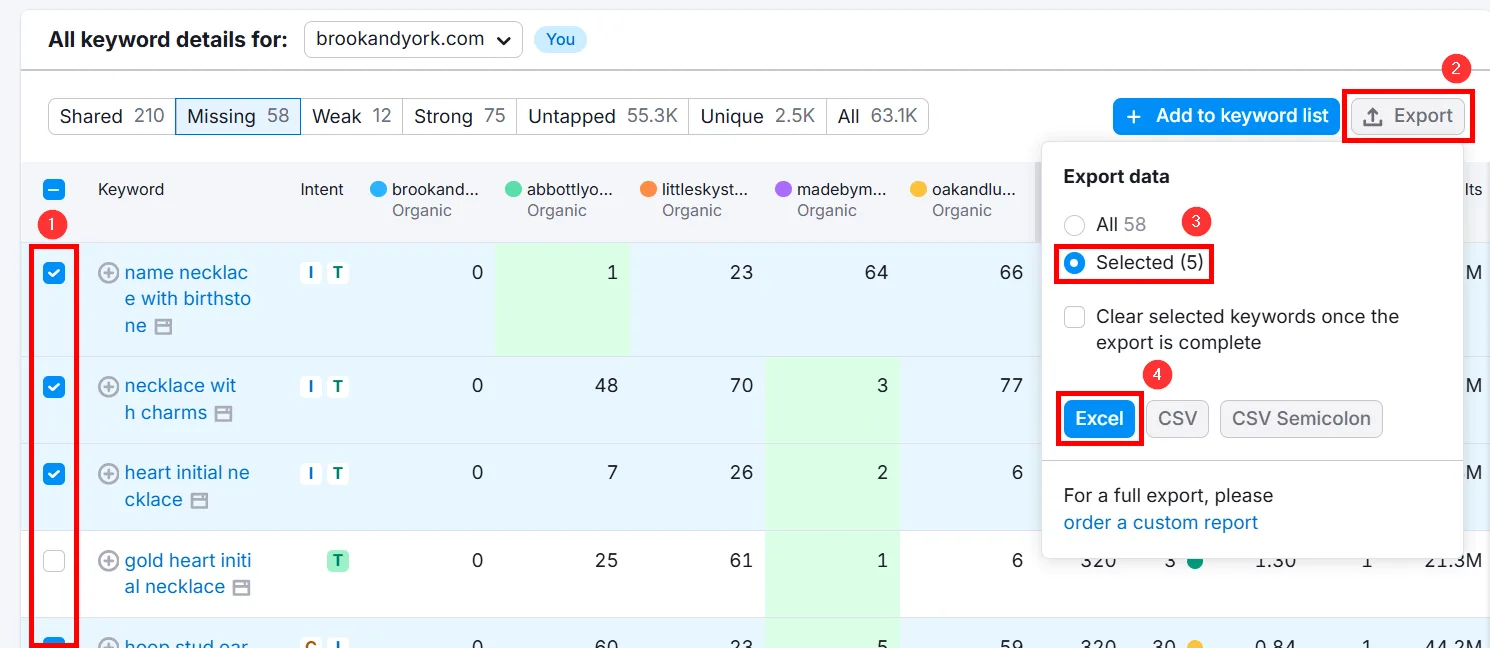
This downloads your selected keywords as an Excel sheet, ready to paste into your master keyword gap analysis spreadsheet.
Next, set the Untapped filter for keywords at least one selected competitor ranks for but you don’t.
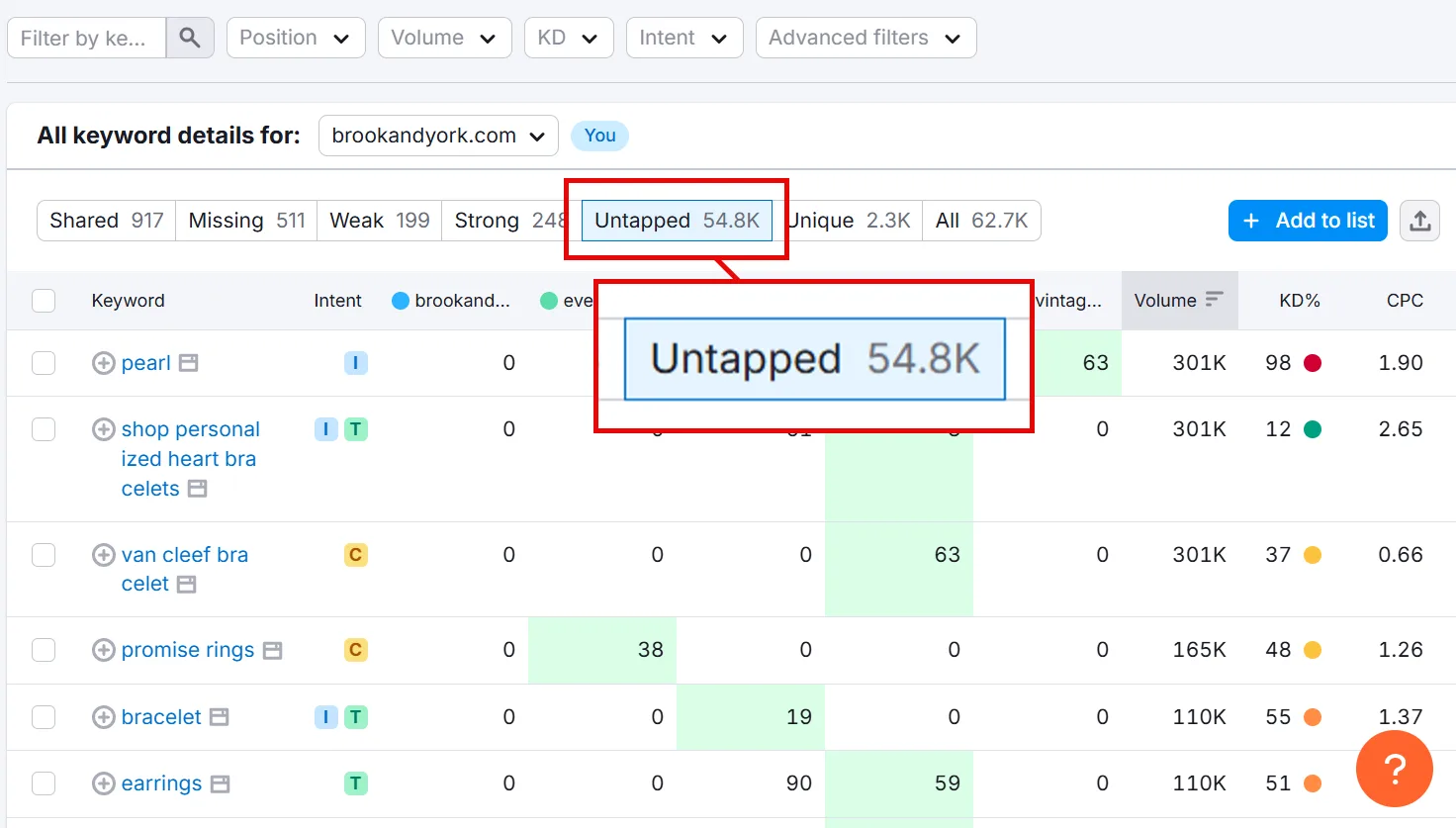
These might not always be highly relevant, but occasionally you’ll find a real hidden gem. Repeat the select-and-export process and save everything to your mastersheet.
Step 5: Create Keyword Clusters
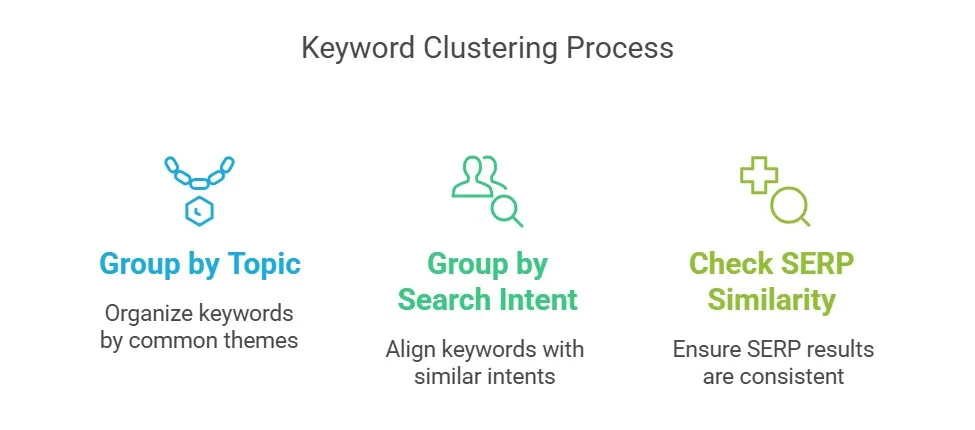
Once you’ve identified your keyword gaps, group them into clusters, terms with similar meanings, search intents, or SERP results. This keeps content focused and avoids overlap between pages.
↳ Group by topic. For “custom necklaces,” cluster keywords like “silver name necklace,” “gold-plated custom necklace,” and “best personalized jewelry” together.
↳ Group by search intent. Keep all keywords in a cluster aligned to the same intent, don’t mix “buy custom necklace online” (transactional) with “how to clean silver necklaces” (informational).
↳ Check SERP similarity. Google each keyword to see if the top-ranking pages overlap with the rest of the cluster. If the SERPs are entirely different, split them out.
What to Do With Your Keyword Gap Analysis
Now you’ve got a list of maybe thousands of keywords your competitors rank for and you don’t. So what do you actually do with it? Here’s how to start closing the gap.
↳ Analyze competitor pages. Google the keywords you found and see exactly which competitor pages rank for them, then use those keywords on the corresponding pages on your own site. Searching “custom silver necklace with name,” for instance:
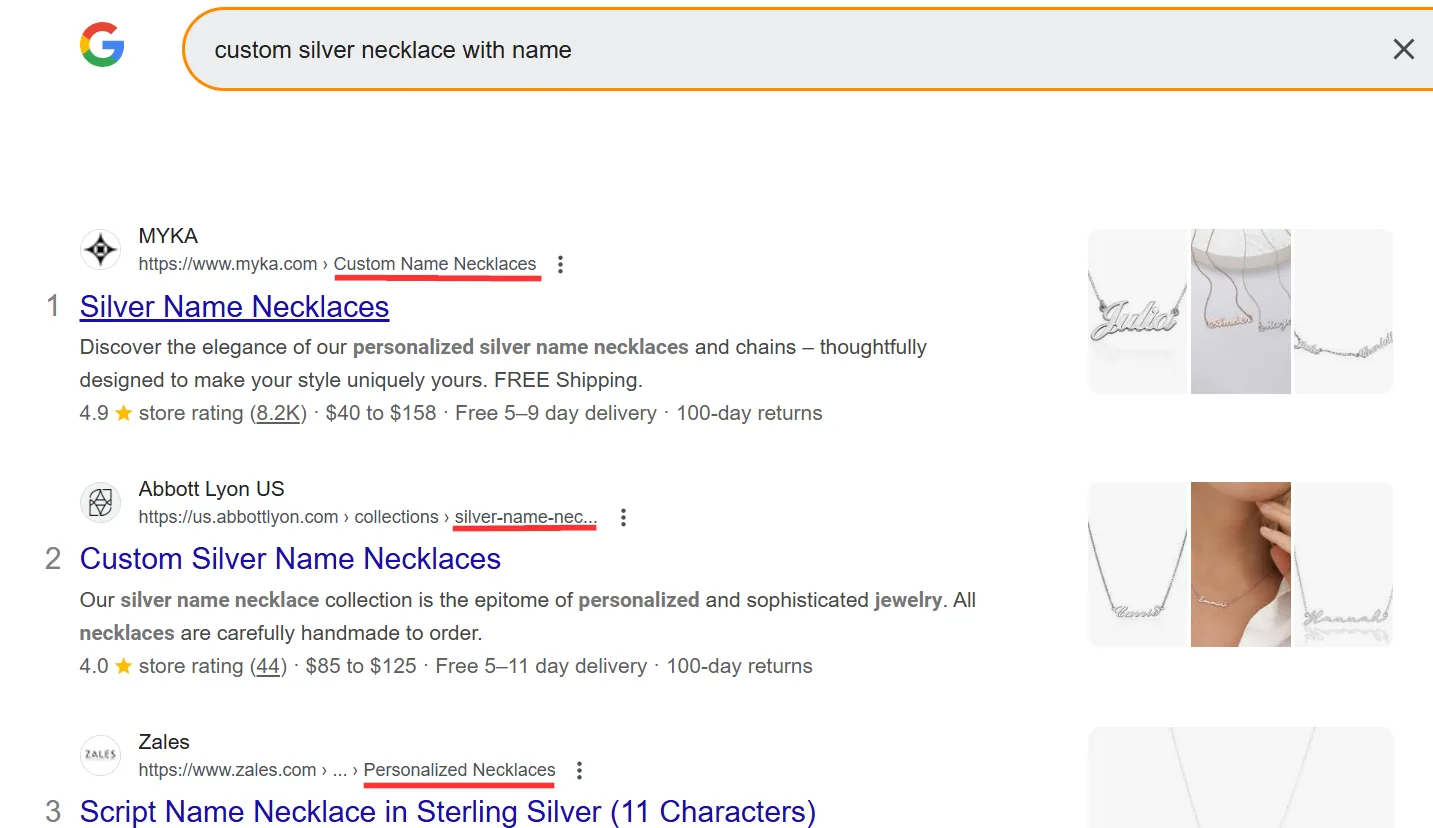
The top results are pages dedicated to personalized necklaces. Open them to see how competitors used the keyword, and study the structure, depth, and format of their content to understand what’s working.
↳ Audit your existing content. If you already have a page on a similar topic, work the keyword in there. Update the page to better match user intent and keyword relevance, and make sure it’s more comprehensive and valuable than what competitors have.
↳ Fill content gaps. If you don’t have a relevant page but the keyword genuinely fits your products or services, create a new one. Expand your topic clusters with new subtopics tied to these gaps to strengthen topical authority.
↳ Optimize and track. Work target keywords naturally into titles, meta tags, headers, and body content. I also like folding question-based keywords into FAQs and summaries. Structure content to target featured snippets, People Also Ask boxes, and other rich results, then monitor performance regularly and refine as needed.
Stay Ahead of Your Competitors with Keyword Gap Analysis
Keyword gap analysis only gets you the keywords, implementing them the right way is what makes the difference. Target intent correctly, and prioritize long-tail keywords with lower difficulty but good search volume for the best results.
A few guides to tailor your keyword research further:
↳ How to Do Keyword Research for eCommerce
↳ How to Do Keyword Research for SaaS
↳ How to Do Keyword Research for B2B
Frequently Asked Questions
Which is the best Keyword Gap Analysis tool?
I find Semrush the best for this. It makes finding keyword gaps straightforward, and you can also find competitors with its Organic Research and Market Explorer tools so you don’t miss any opportunities.
What is keyword gap?
The difference between the keywords your site ranks for and the ones your competitors rank for. Identifying it lets you target keywords already working for them, boosting your site’s visibility and organic traffic.
Keyword gap vs content gap: what’s the difference?
Keyword gap analysis identifies keywords competitors rank for that your site doesn’t, so you can target those terms. Content gap analysis identifies missing topics or content types on your site compared to competitors, so you can create content to fill those voids.
What is a gap in SEO?
A missed opportunity, keywords, content, or backlinks your competitors have that you don’t. Identifying and closing these gaps improves your site’s search performance and overall visibility.
What is a search gap?
The disparity between the terms your potential customers actually search and the keywords your site targets. Closing this gap means optimizing content to better match user intent and attract relevant traffic.
What is keyword gap in SEMrush?
A tool that compares your website’s keyword profile against your competitors’. It surfaces keywords they rank for that you don’t, highlighting opportunities to expand your keyword strategy.
How to do keyword gap analysis for free?
Use a tool like Google’s Keyword Planner. It lets you research competitors’ keywords and identify terms they rank for that you don’t, helping you uncover opportunities without any cost.