


B2B keyword research isn’t about chasing high-volume terms. What you actually want are low-volume, high-intent, niche keywords that connect directly with what your audience is trying to solve.
Here’s a step-by-step walkthrough of what that process actually looks like in practice, ending with a list of keywords mapped straight to your content strategy.
Checklist: Your B2B Keyword Research Workflow
Understand your market and audience
- Define your Ideal Customer Profile (ICP).
- Identify pain points, challenges, and goals across stakeholders (executives, managers, end-users).
- Gather insight from customer surveys, CRM data, and support tickets.
- Research forums (Reddit, Quora) and competitor reviews (G2, Capterra) for recurring themes.
Generate seed keywords
- Brainstorm core terms describing your product, service, or industry.
- Use ChatGPT for inspiration, but validate anything it suggests with real SEO data.
- Pull more ideas from Google Autocomplete, People Also Ask, and Related Searches.
Analyze competitor keywords
- Identify your competitors.
- Run a keyword gap analysis to spot untapped opportunities.
- Note high-performing keywords competitors rank for that you don’t.
Categorize by search intent
- Sort each keyword: Informational, Commercial, Transactional, or Navigational.
Prioritize keywords
- Use Semrush’s Keyword Overview to filter by Search Volume, Keyword Difficulty, and Relevance.
Cluster into related groups
- Group keywords that share a theme or intent.
Map to funnel stages and content types
- Assign each cluster to ToFu, MoFu, or BoFu.
- Build content tailored to that stage.
Validate with SERP analysis
- Check the SERP for each target keyword to confirm intent actually matches.
Step 1: Understand Your Market and Audience, Build ICPs
B2B buyers go through a longer, more layered journey than B2C ones, which is exactly why an Ideal Customer Profile matters so much here. A good ICP doesn’t just describe your best prospects in general, it guides how you target them at every stage of the funnel.
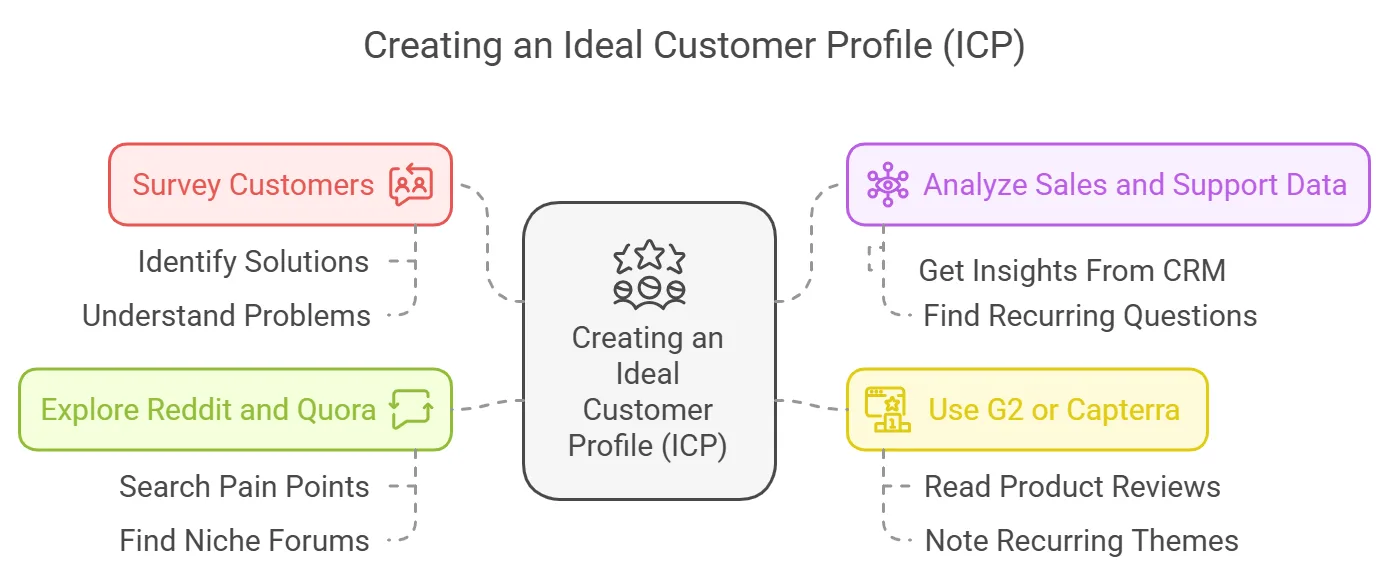
a. Define Your ICP
Start by identifying the companies and decision-makers most likely to actually benefit from what you offer. Ask yourself:
↳ Which industries thrive with your solution, and what size companies have the budget and need for it?
↳ Where are your ideal customers located, and what level of spend can they commit to?
↳ What are their pain points and buying habits?
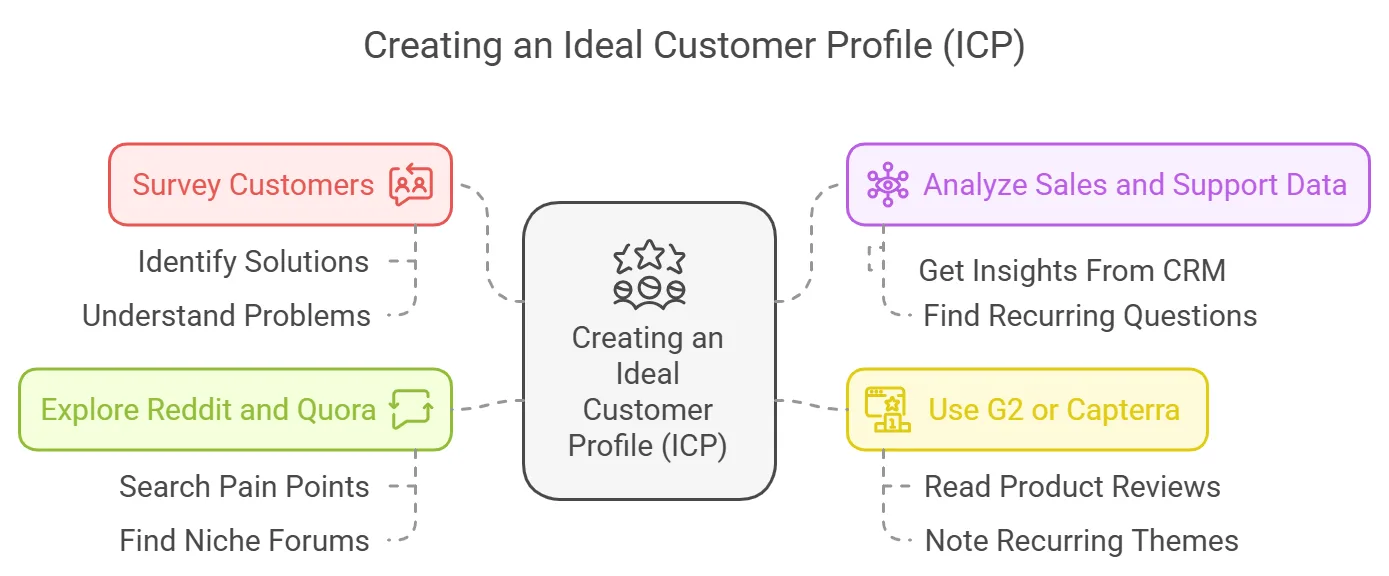
To gather these insights:
➜ Survey customers. Ask existing or past customers how they found you and what problem they were trying to solve.
➜ Analyze sales and support data. Pull recurring questions or objections from your CRM team.
➜ Check G2 or Capterra. Read reviews of your product and competitors’ for recurring themes and language.
➜ Explore Reddit and Quora. Look for threads where your audience discusses their pain points, and dedicated niche forums if you can find them.
If you sell a cloud management tool, for instance, you might find companies repeatedly talking about wanting to “reduce cloud costs” or “optimize SaaS spending,” pain points that translate directly into seed keywords like “cloud cost optimization tools” or “SaaS budget management software.”
b. Map Your ICP to the Buyer’s Journey (ToFu, MoFu, BoFu)
Top of Funnel: Awareness. Cast a wide net for prospects who don’t yet know they need your solution but are already feeling the underlying problem.
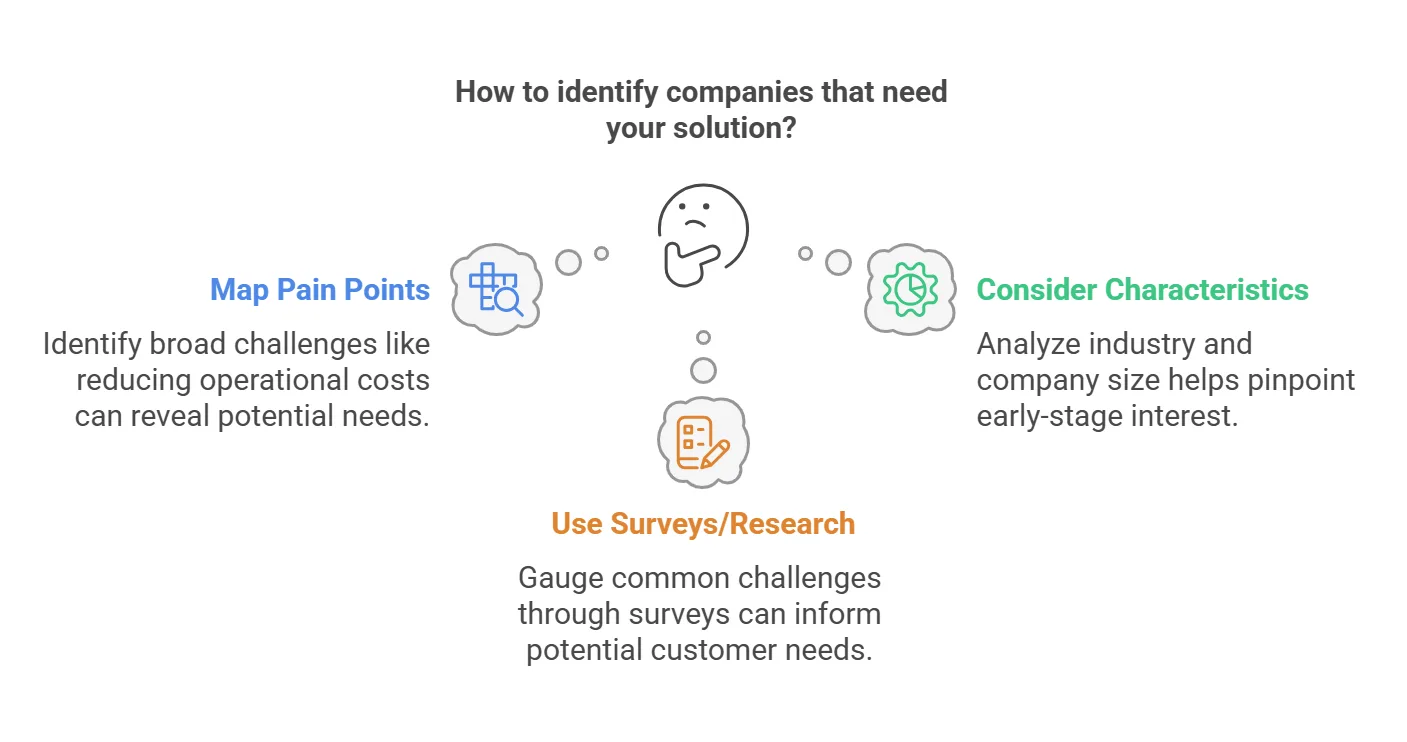
↳ Map broad pain points (“how to reduce operational costs”).
↳ Note industry and company size as early-interest signals.
↳ Use surveys and market research to understand common pre-purchase challenges.
Middle of Funnel: Consideration. Now you’re engaging people actively comparing options. Zero in on the decision-makers and influencers at your target accounts, and build out detailed buyer personas for each role.
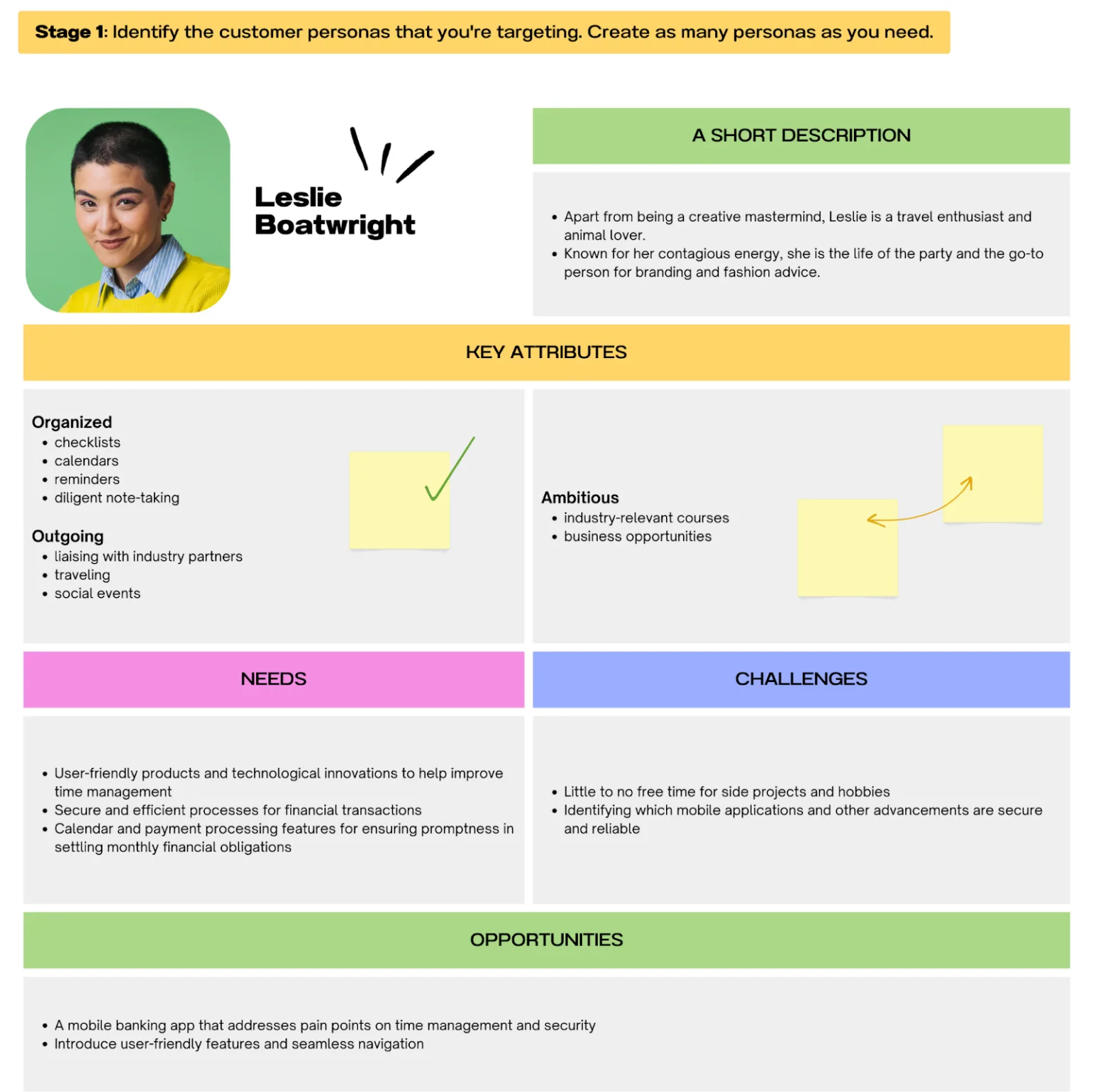
↳ Interview current customers or industry experts to understand what an IT manager, operations director, or procurement specialist actually cares about.
↳ Mine CRM and support data for the questions these roles keep asking.
↳ Write messaging that speaks to their specific role: “How can our tool streamline your project management?” rather than something generic.
Bottom of Funnel: Decision-making. This is where you address the final objections, budget, ROI, risk, before someone commits.
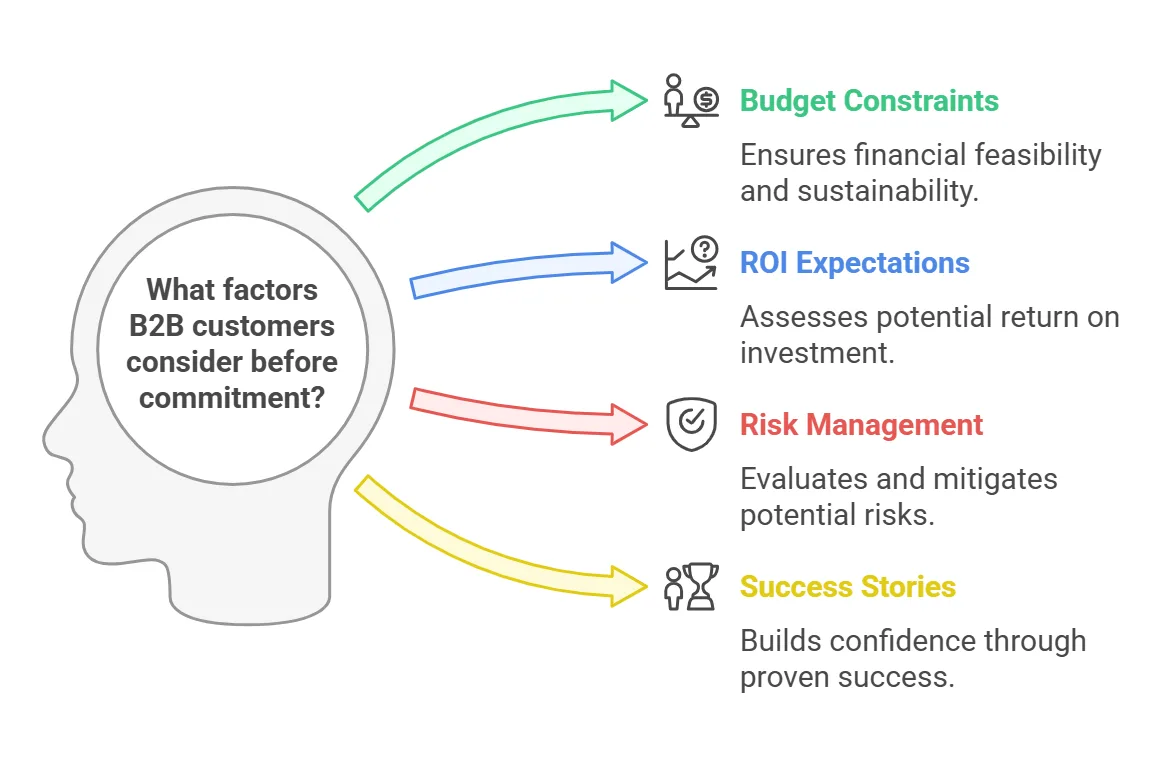
↳ Collect success stories, case studies, and testimonials that resonate with decision-makers.
↳ Track common objection-style questions (“why does our SaaS cost optimization tool offer unmatched ROI”).
↳ Build content, demos, free trials, feature comparisons, that helps prospects feel confident committing.
Put together, these ICPs sharpen your keyword research and your broader marketing and sales effort at every touchpoint along the way.
Step 2: Generate Seed Keywords
Seed keywords are the broad terms that describe what you offer, and where keyword research actually starts.
a. Brainstorm Core Terms
Think in 2–3 word phrases that describe your offering. For a project management tool, that might be:
➜ project management software
➜ team collaboration tools
➜ project tracking for enterprises
➜ agile task management tools
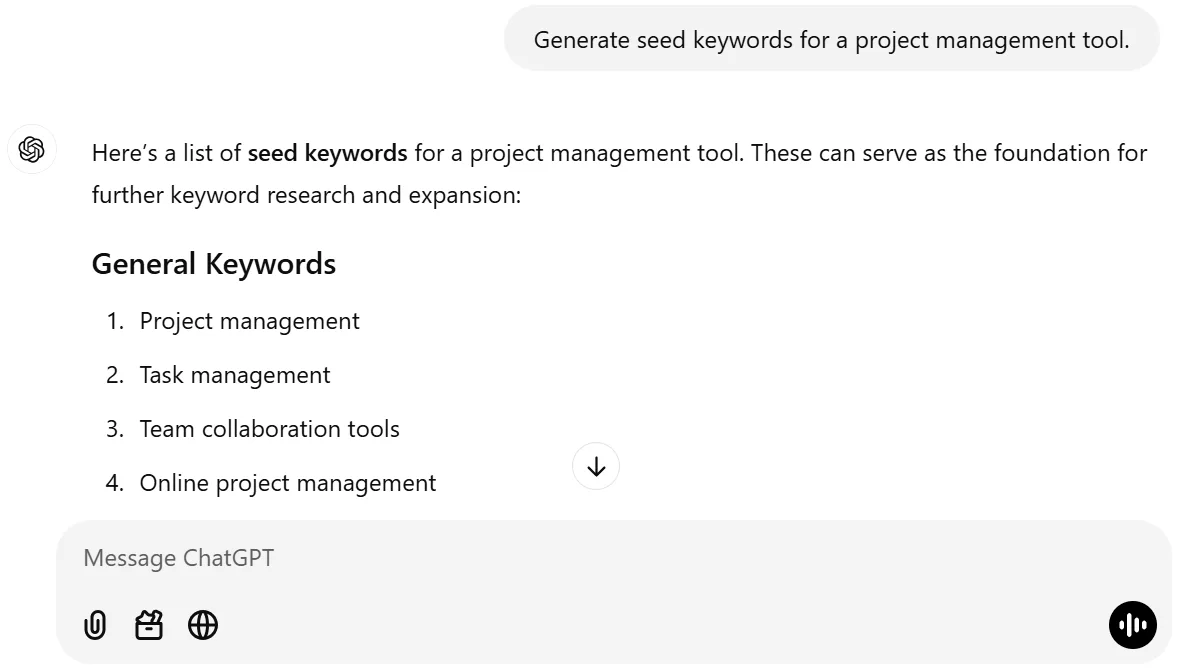
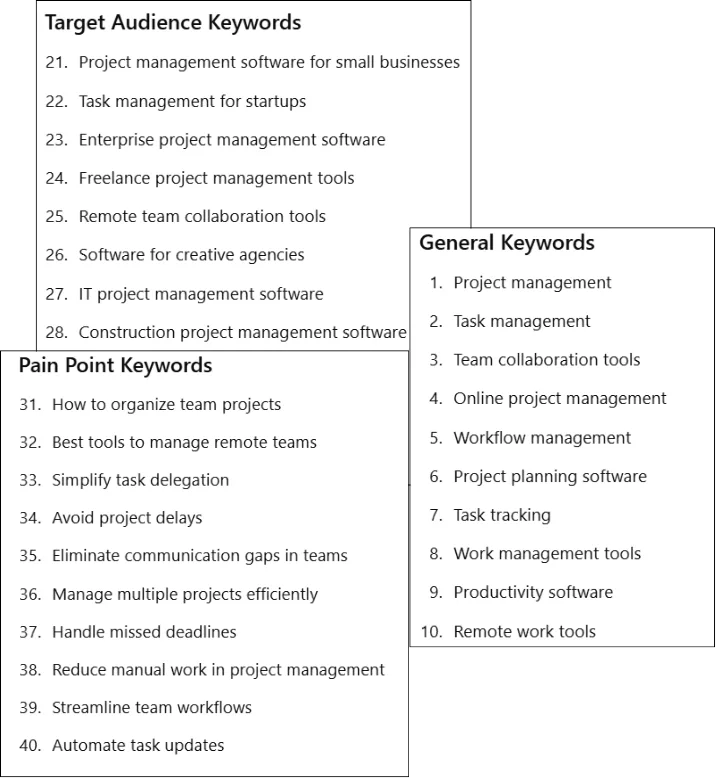
ChatGPT can help brainstorm here too (“generate seed keywords for [your B2B product/service]”), though its suggestions aren’t backed by any real SEO data, so treat them as inspiration only.
b. Google Autocomplete
Start typing your seed keyword into Google and note what’s relevant. These suggestions carry more weight since they’re grounded in what people are actually searching.
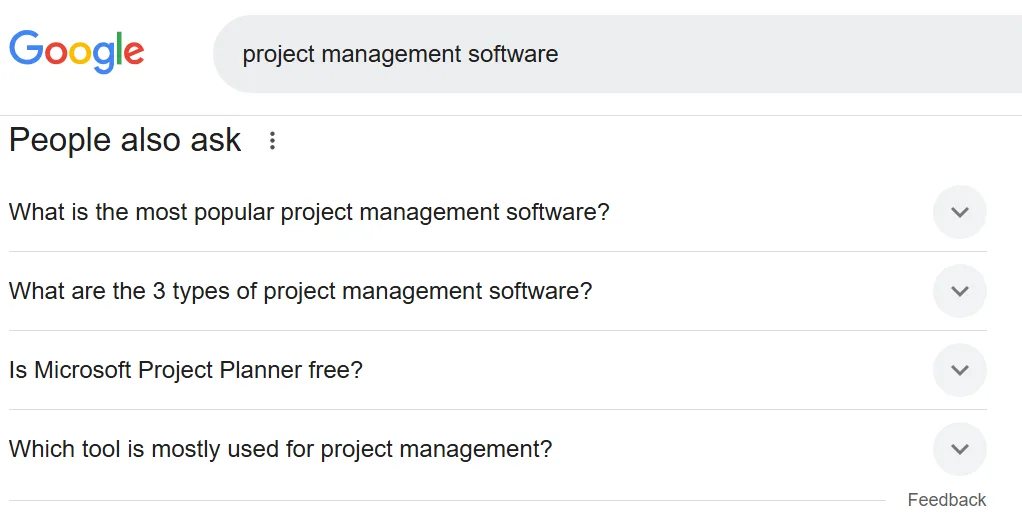
c. People Also Ask
Search your seed keyword, scroll to PAA, and note relevant questions, then click into them to reveal even more.
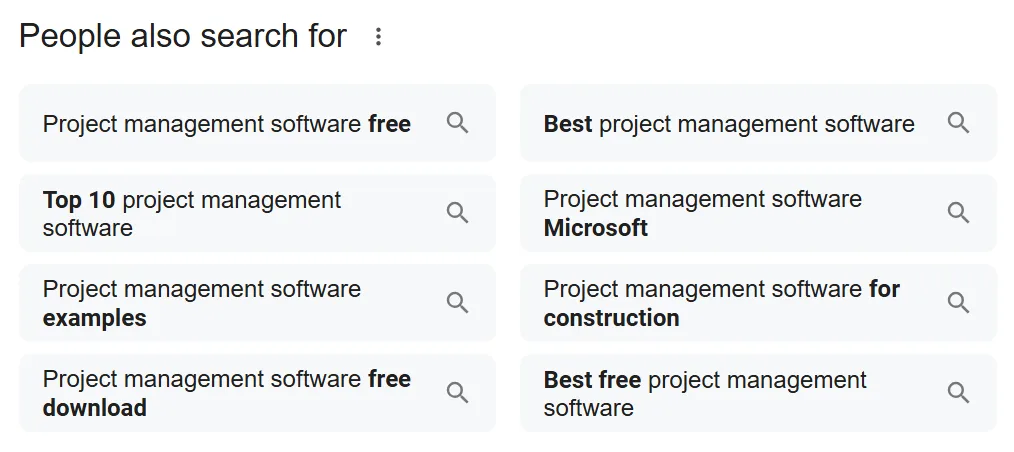
d. Related Searches
At the bottom of the SERP, “People also search for” surfaces more queries connected to your term.
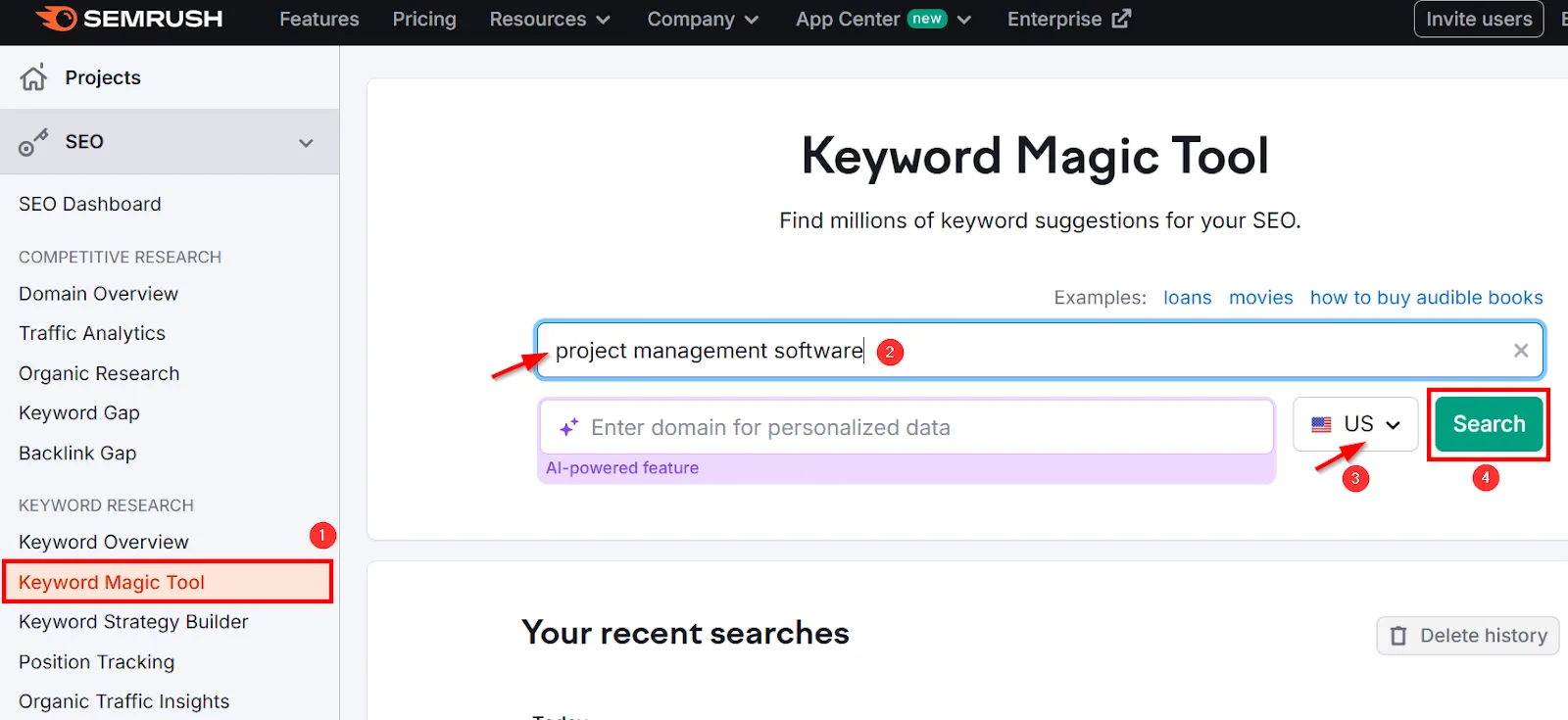
e. Semrush’s Keyword Magic Tool
Open the tool, enter a seed keyword, pick your target country, hit Search.
You’ll get suggestions with Volume, KD, and related metrics attached.
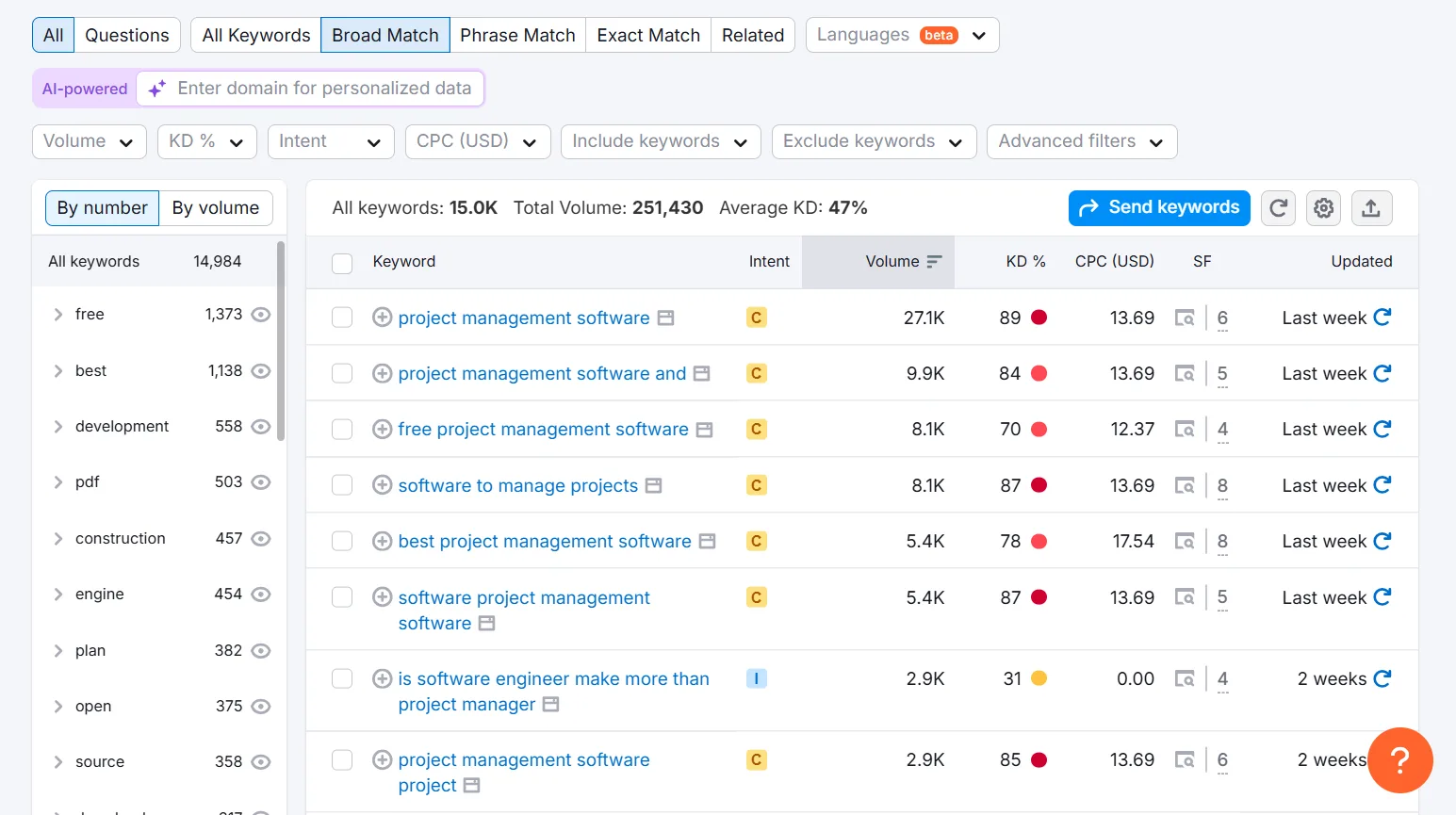
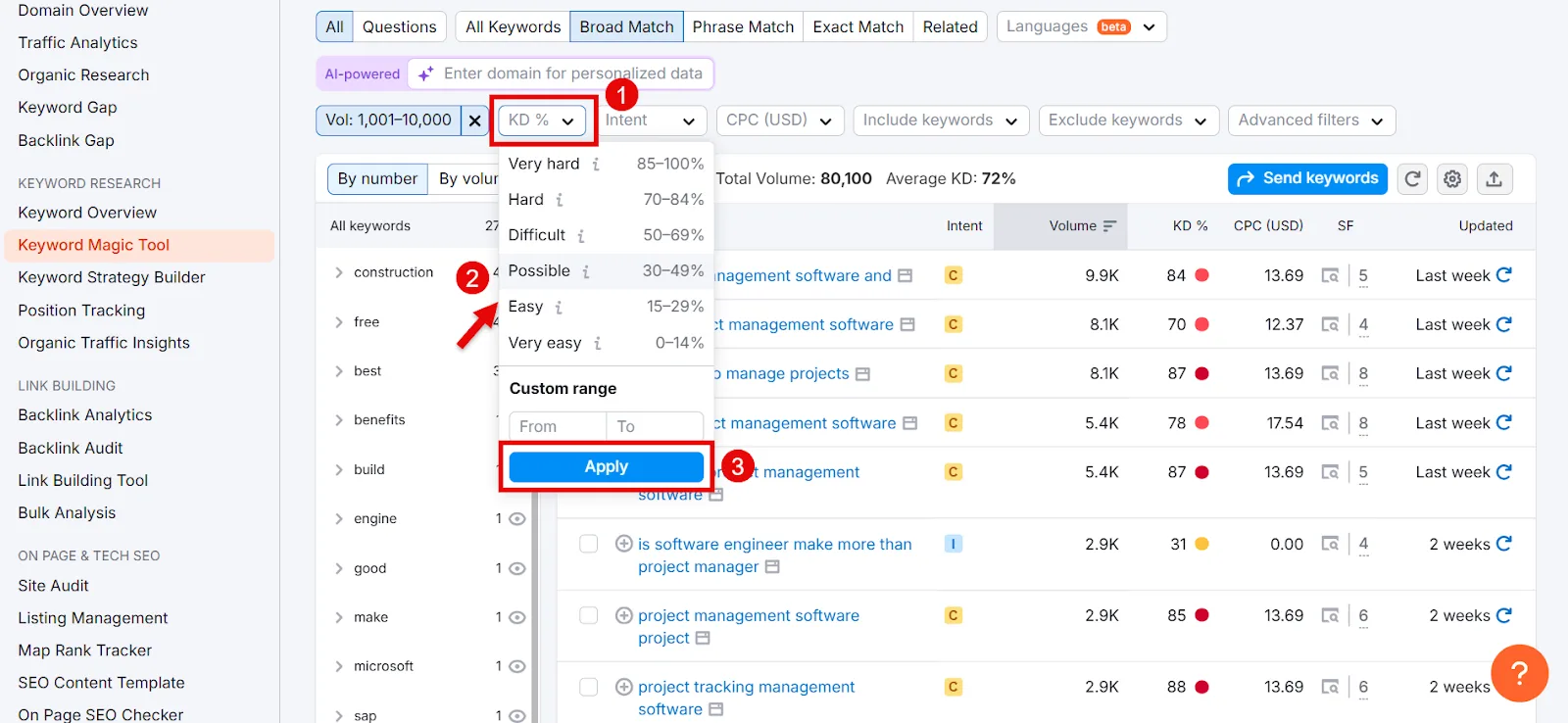
If KD is high across the top results (with something like 15K broad matches), narrow down using the filters. Set a lower KD% range and apply it.
Then set the Volume filter to a good-to-decent range and apply that too, adjusting both until you land on a genuinely targetable list.
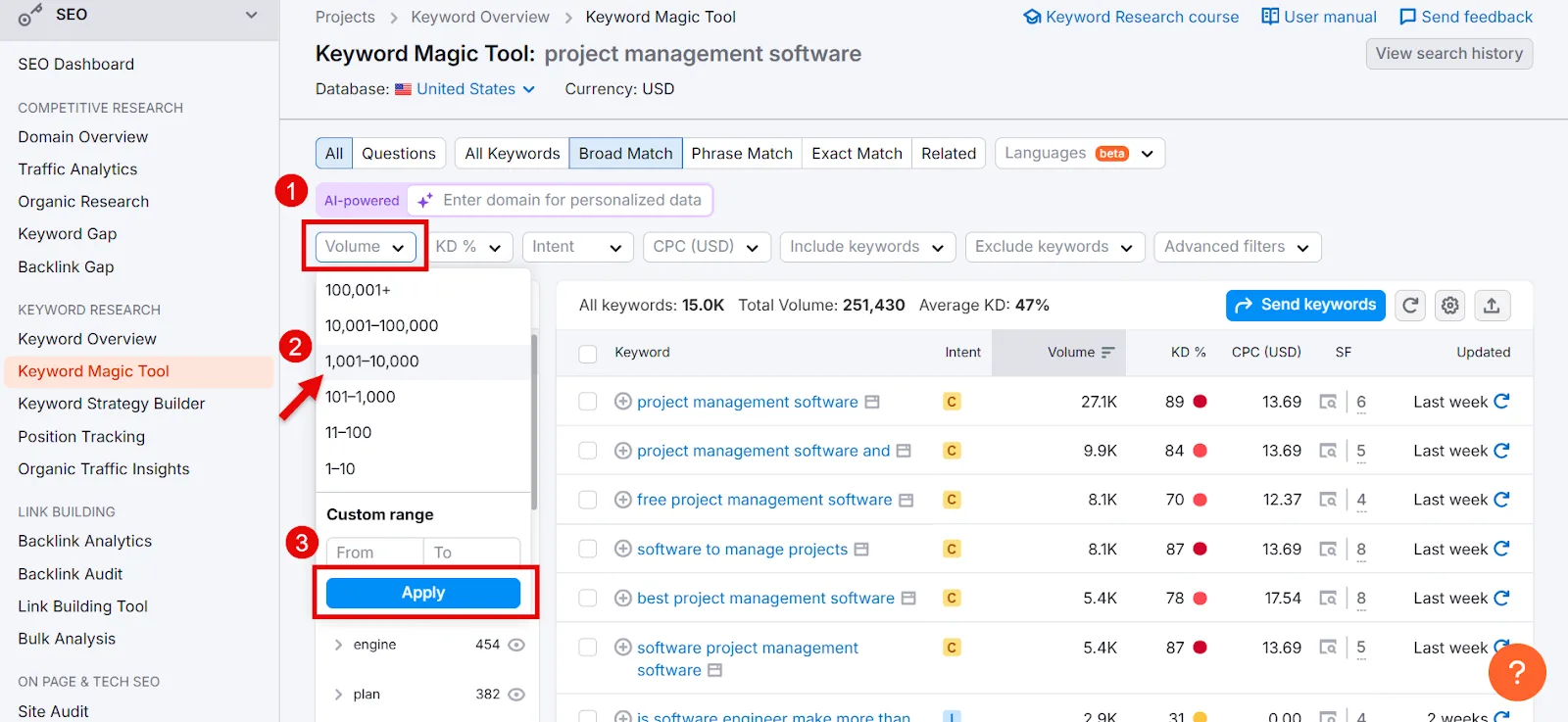
Select what’s relevant and export to XLSX.
Step 3: Analyze Competitor Keywords
a. Spot Competitors on the SERP
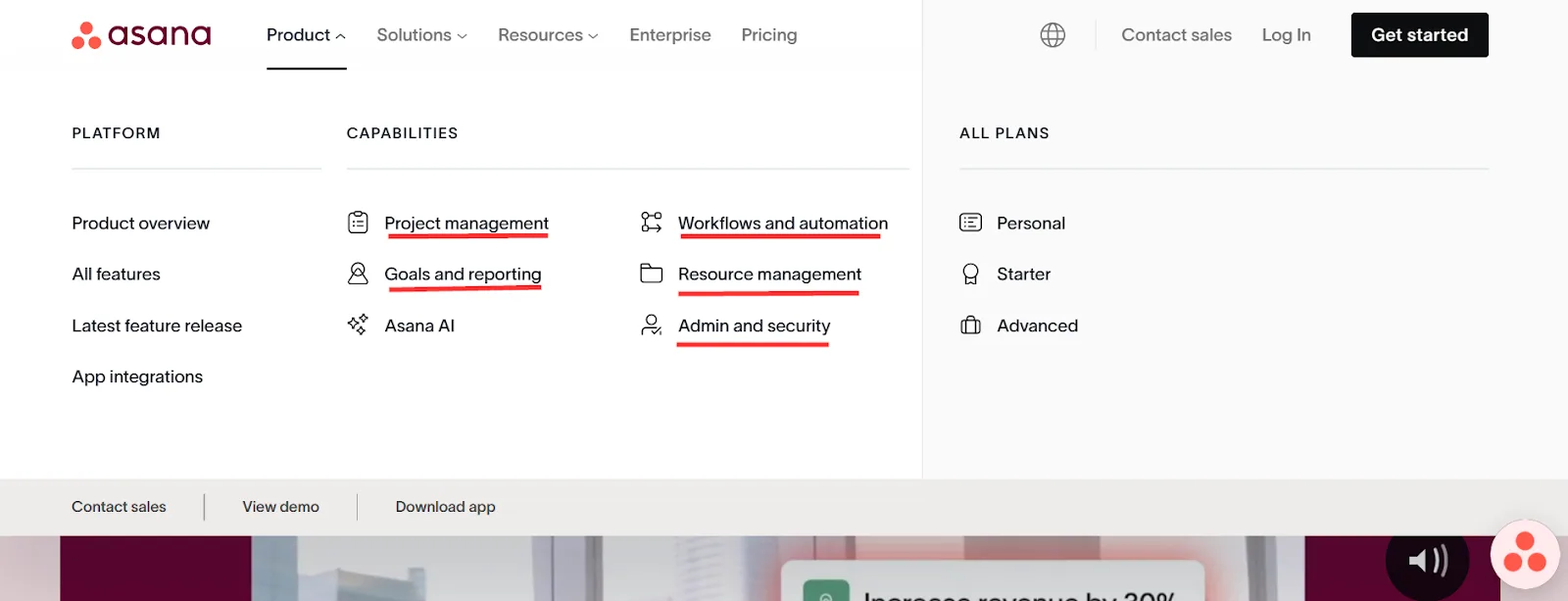
Your competitors are whichever domains keep showing up for your product or service searches. Open one of the top results and you’ll usually find keyword ideas immediately, just by looking at how they describe their own product categories.
b. Find Competitors With Semrush
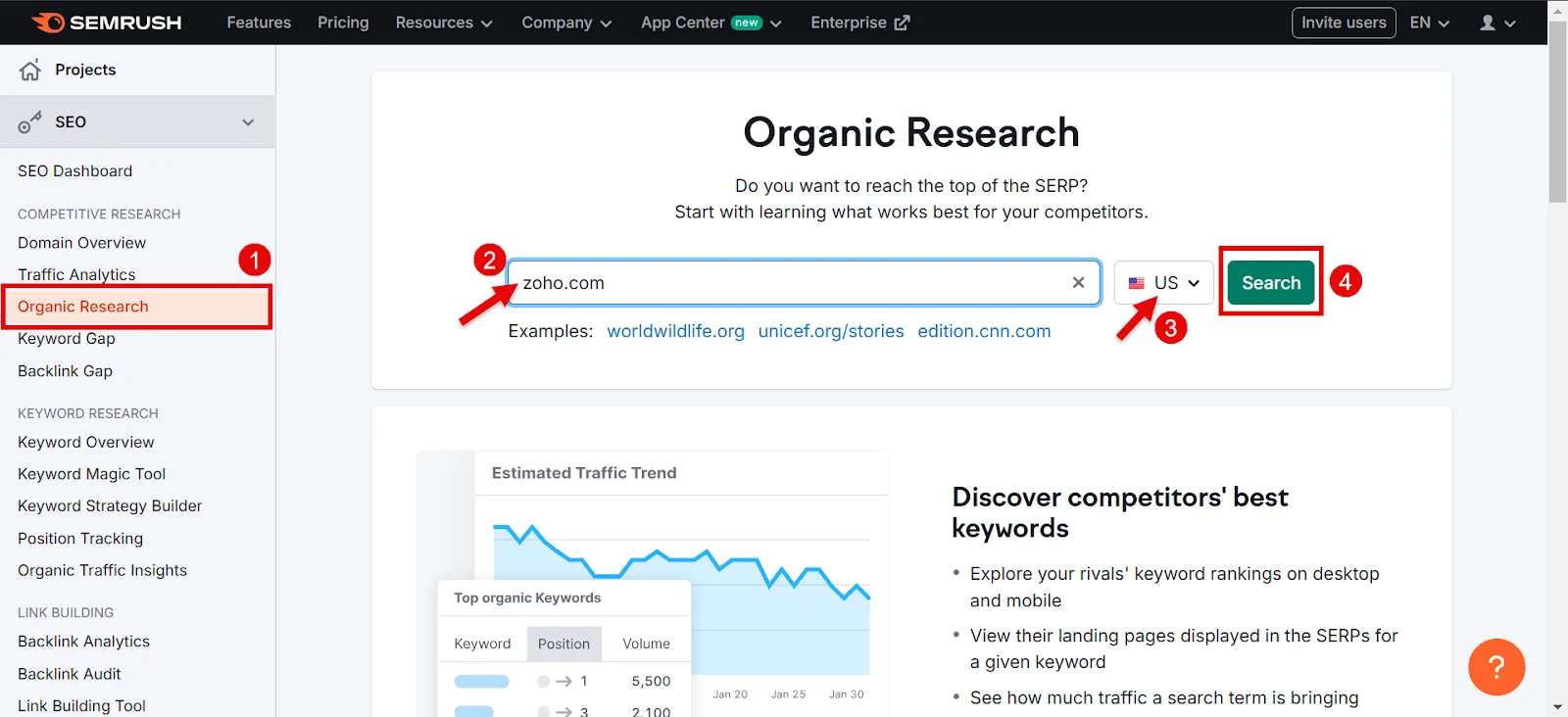
A plain SERP only gives you a rough picture. Semrush’s Organic Research fills in the rest: enter your domain, confirm your target country, hit Search.
Click Competitors.
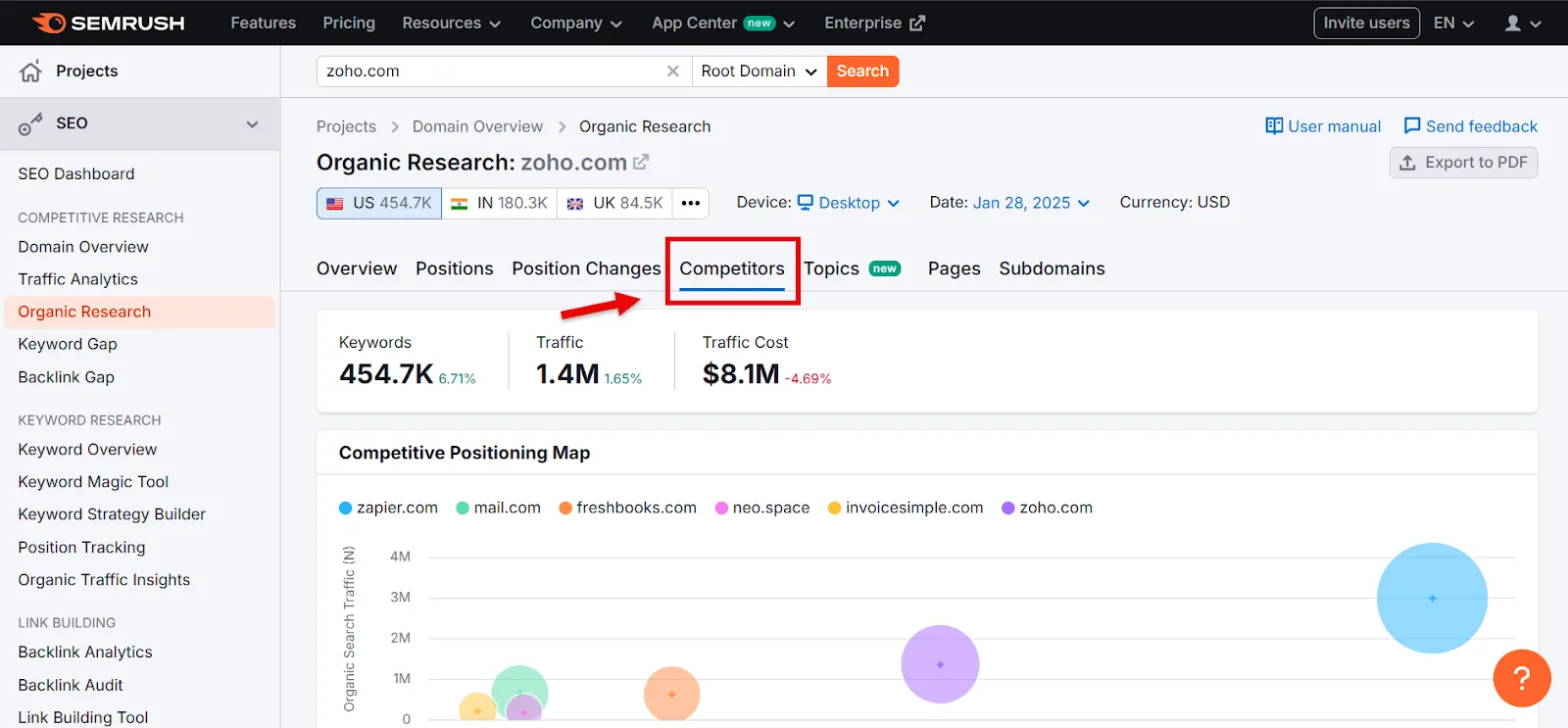
Scroll to Organic Competitors for a ranked list, highest to lowest competition.
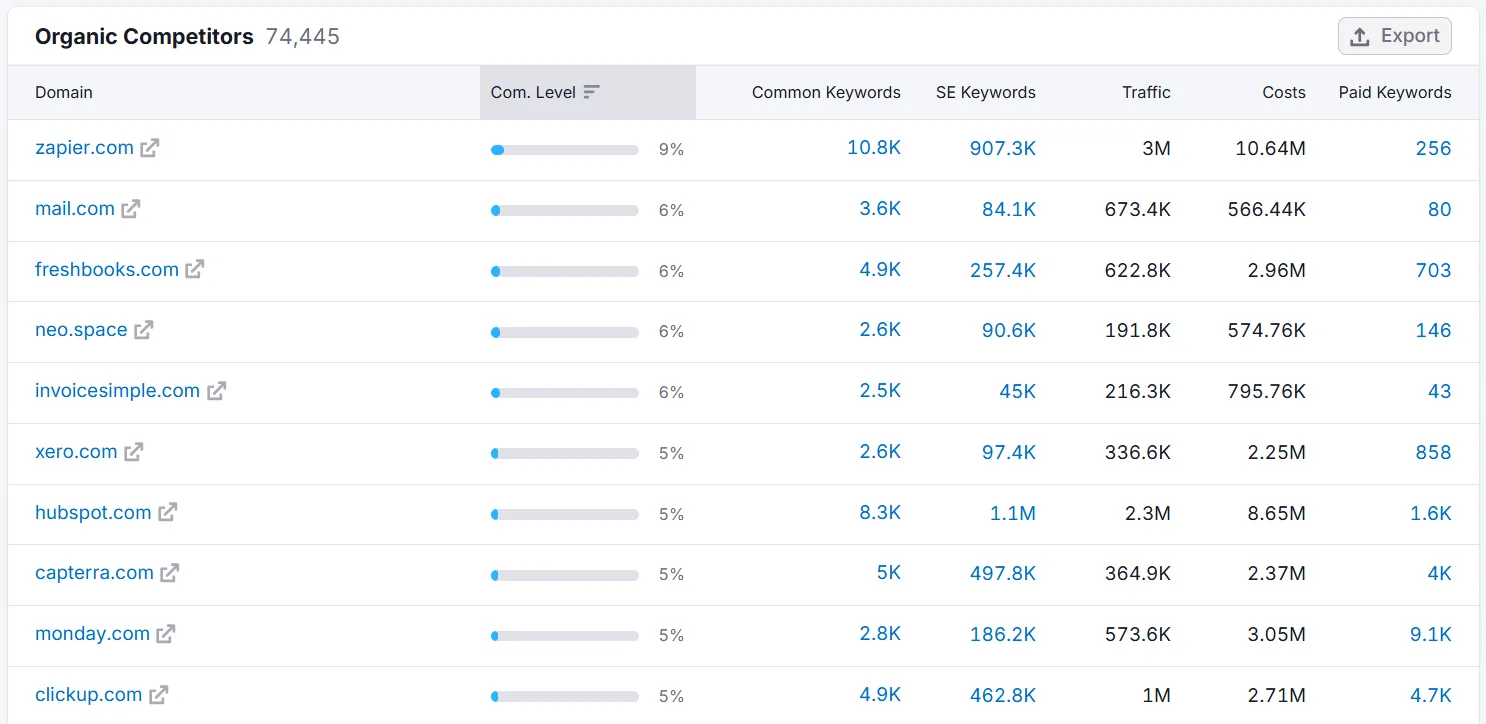
Note the ones that genuinely match your offering and target customer.
c. Run a Keyword Gap Analysis
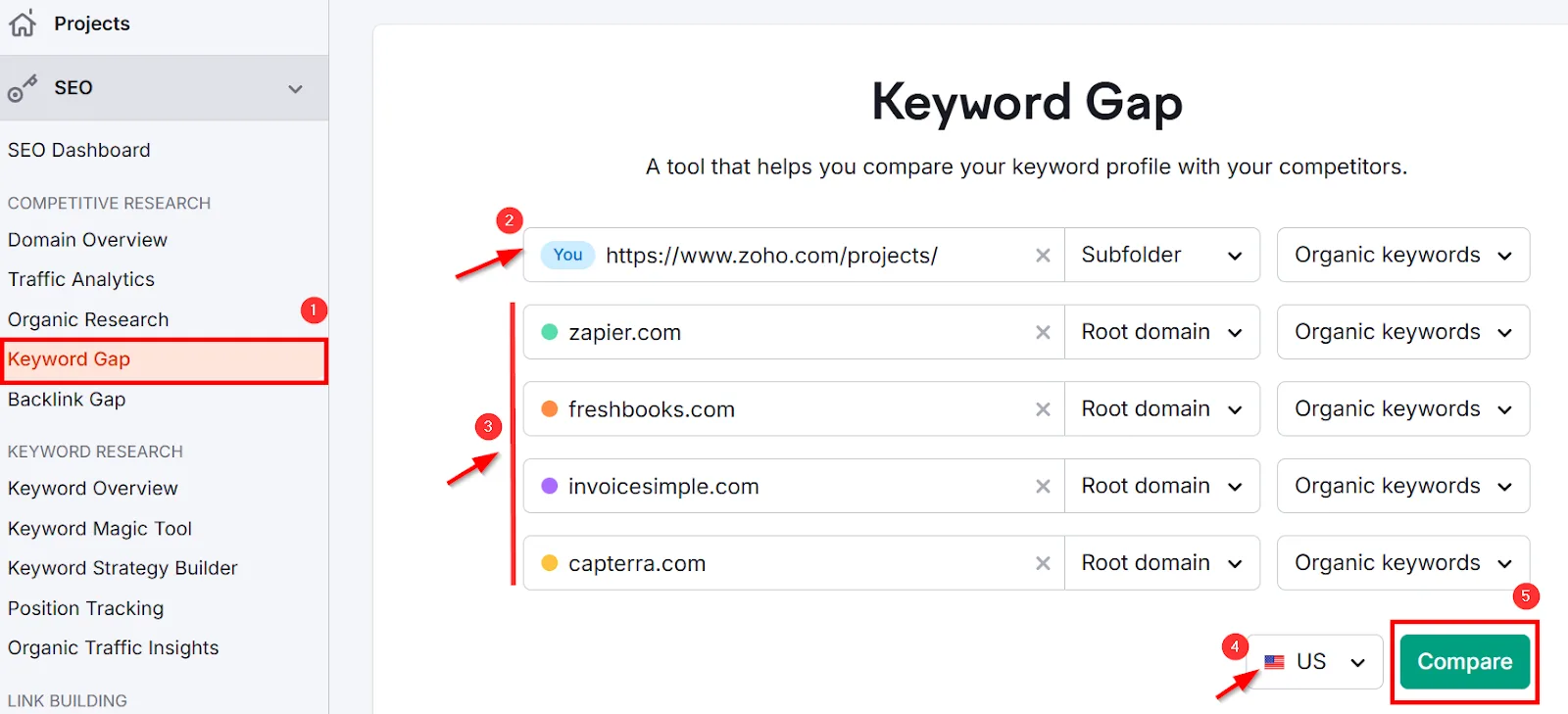
Open Semrush’s Keyword Gap tool, enter your domain first, then up to 4 relevant competitors, confirm your country, and click Compare.
You’ll get top opportunities right away, keywords with a solid volume-to-difficulty ratio that you could realistically rank for.
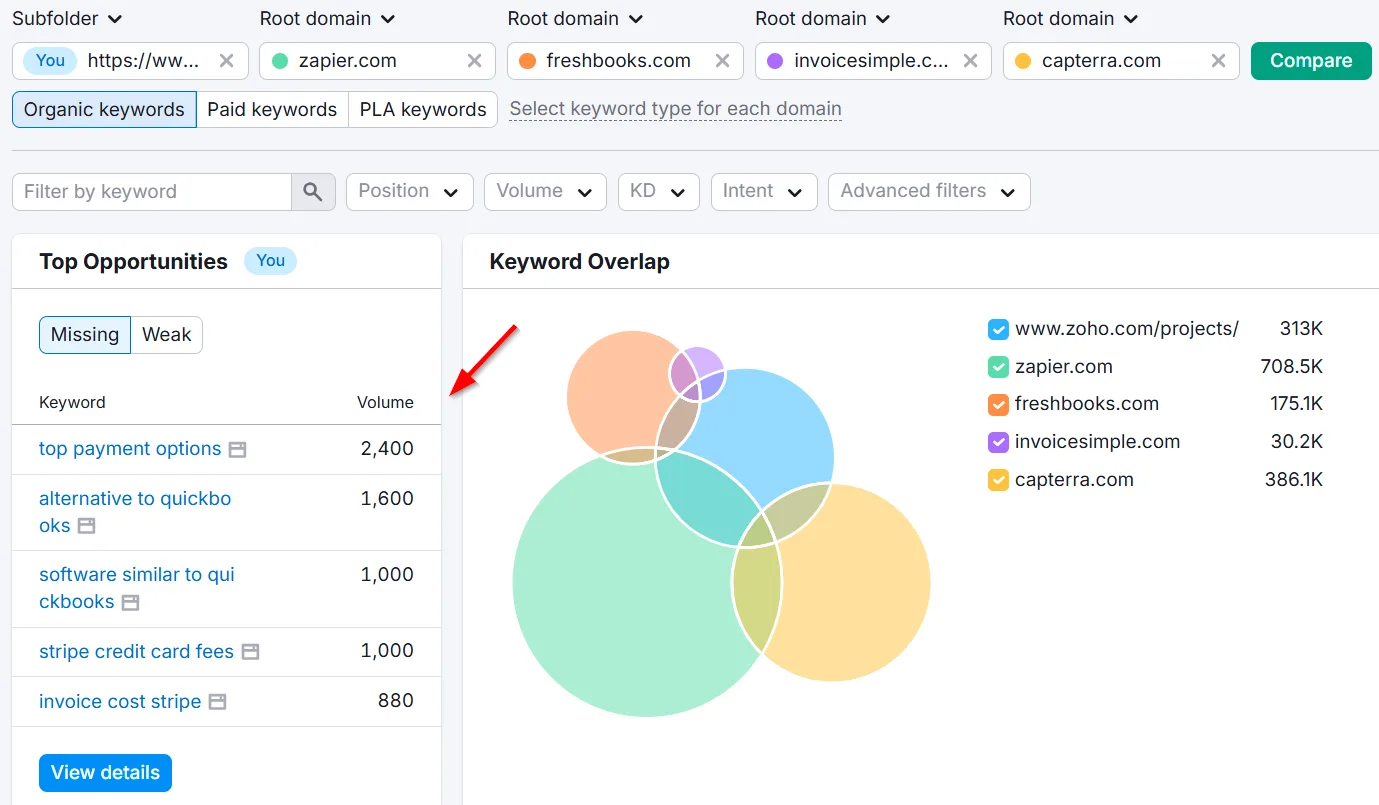
Scroll for the full list and select Missing to find keywords your competitors rank for that you don’t. Filter by Volume and KD if you want to narrow further, select what fits, and export to XLSX.
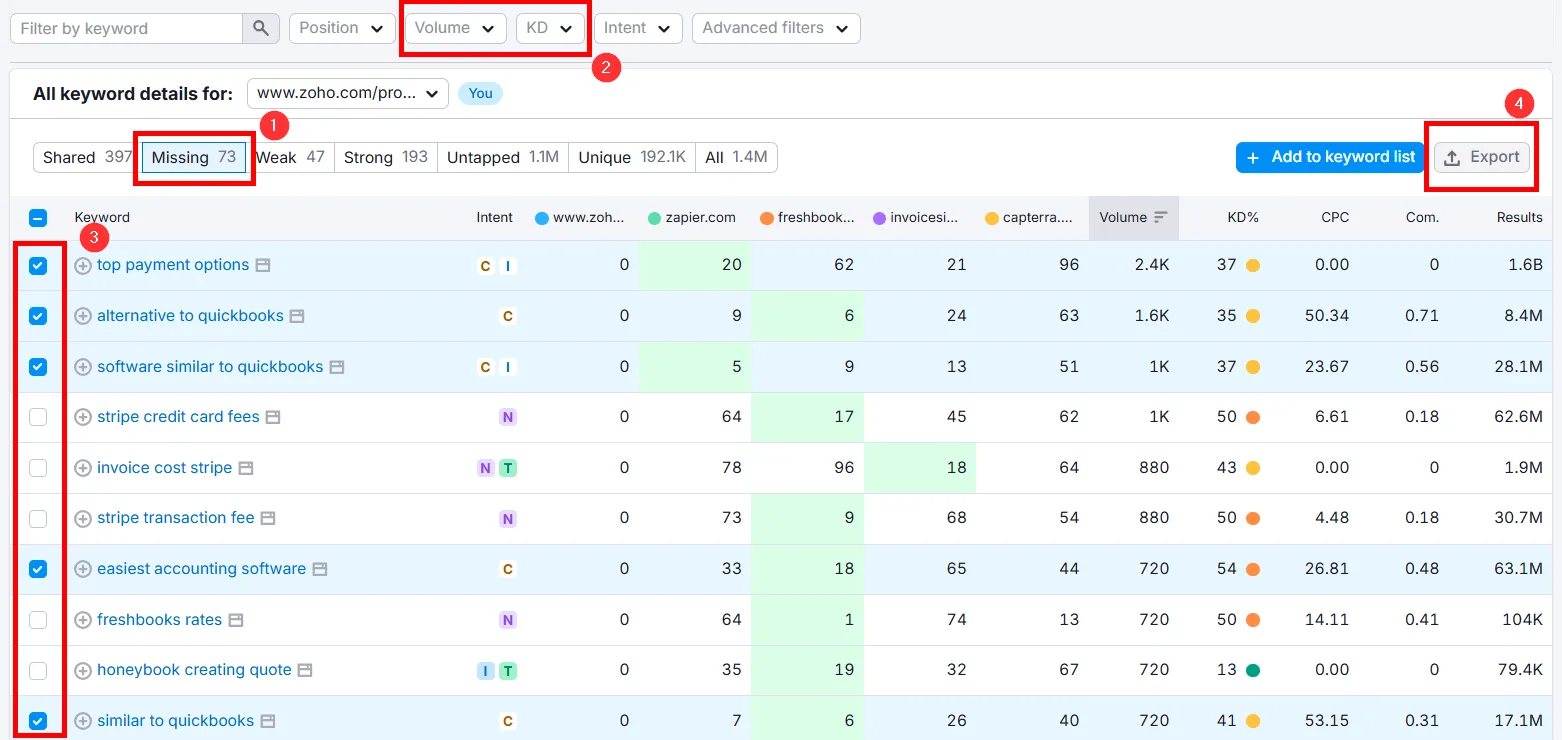
It’s an easy way to see what’s already working for others in your space and find the gaps nobody’s covering yet.
Step 4: Check Everything Through Semrush’s Keyword Overview
At this point you likely have a large keyword pile that needs narrowing to what’s actually valuable. Open Keyword Overview, enter what you’ve found so far (up to 100 at a time), confirm your target country, and search.
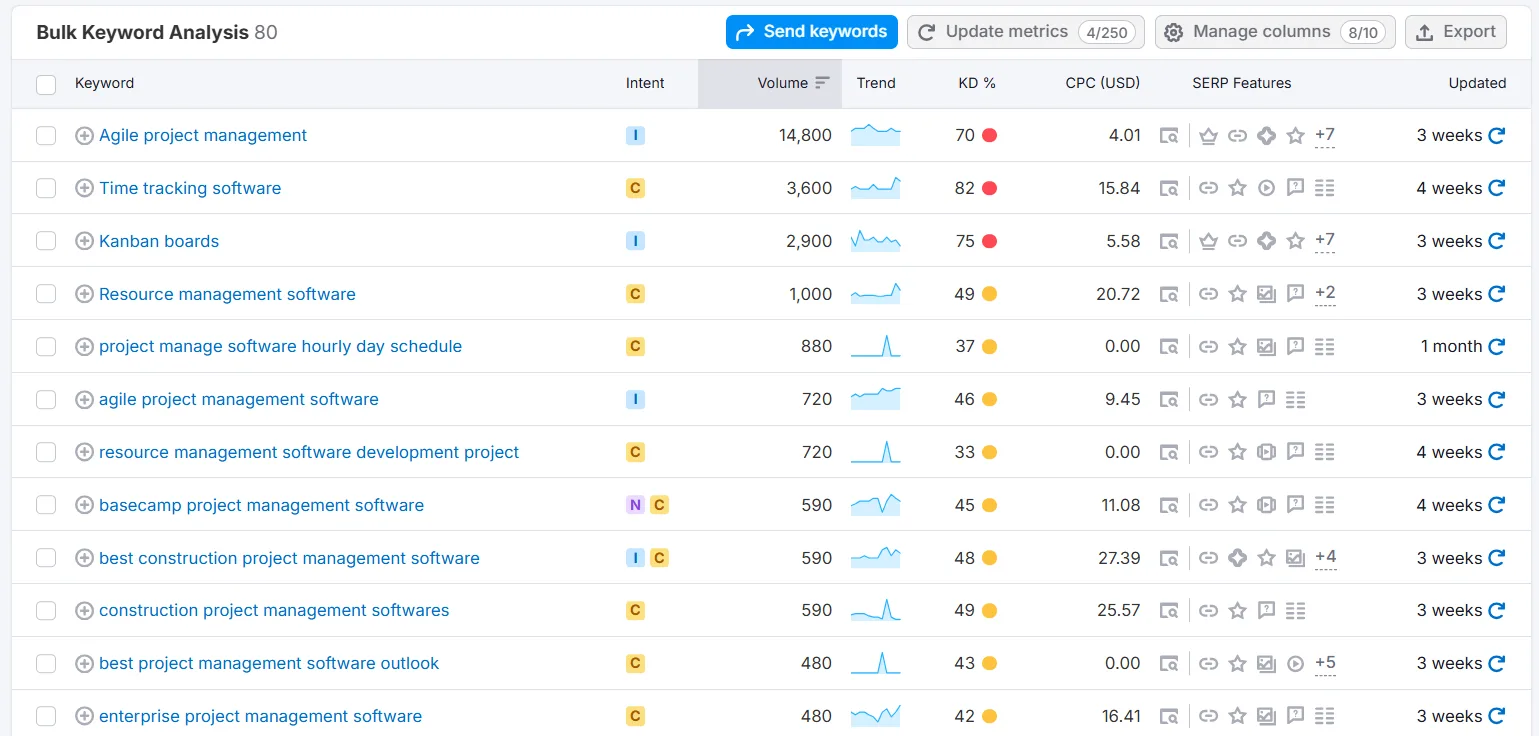
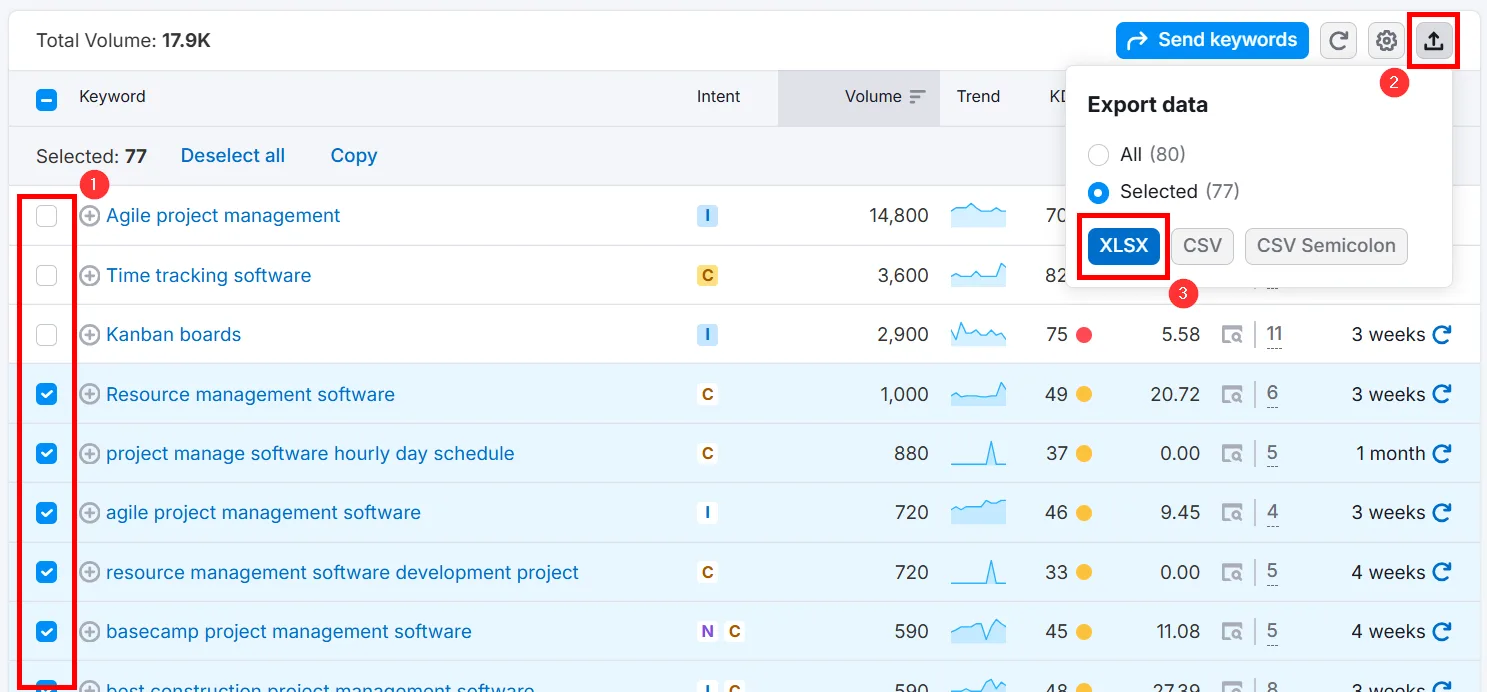
Select whatever has good-to-decent Volume and lower KD%, and export the list.
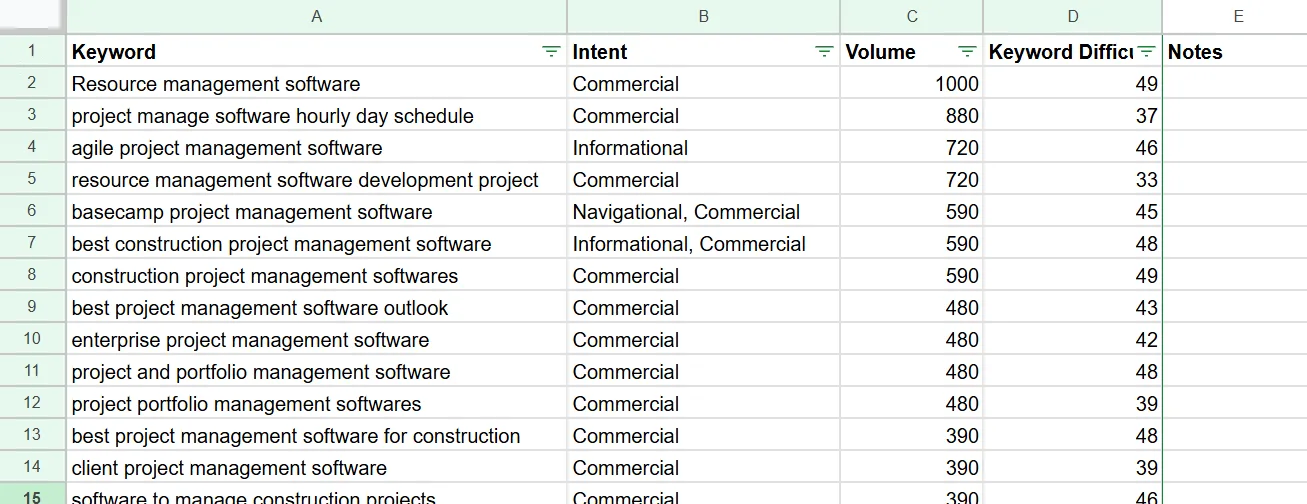
Trim down to just Intent, Volume, and Keyword Difficulty columns.
A Note on Intent: For B2B, You Want All Four
Search intent is the goal behind a query, and sorting your keywords by it puts your business in front of the right audience at the right stage of their buying journey.
↳ Informational. “What is,” “how to,” “why.” Best served with blog posts and guides.
↳ Commercial. “Best,” “compare,” “reviews.” Best served with comparison articles and lists.
↳ Transactional. “Buy,” “pricing,” “services.” Best served with landing pages and product demos.
↳ Navigational. Branded searches like “Semrush pricing” or “Slack login.”
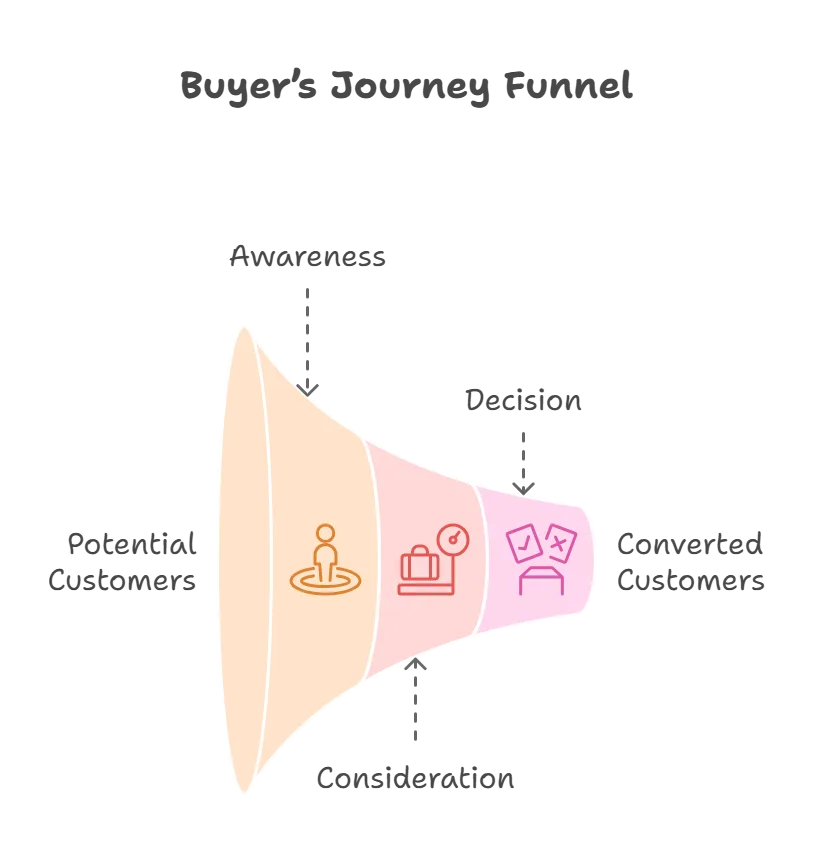
B2B buyers research heavily, moving from awareness to consideration to decision at their own pace. Getting intent right is what lets you meet them at each of those stages effectively.
Step 5: Cluster Keywords and Map to Funnel Stages
Organizing keywords into clusters and aligning them with the funnel keeps your content creation focused and helps your audience find the right piece at the right moment.
a. Cluster Related Keywords
Group semantically or contextually similar keywords together to build topical authority. A “SaaS Cost Optimization” cluster, for instance, might include “reduce cloud costs,” “optimize SaaS spending,” and “best SaaS cost tools.”
b. Map Clusters to Funnel Stages
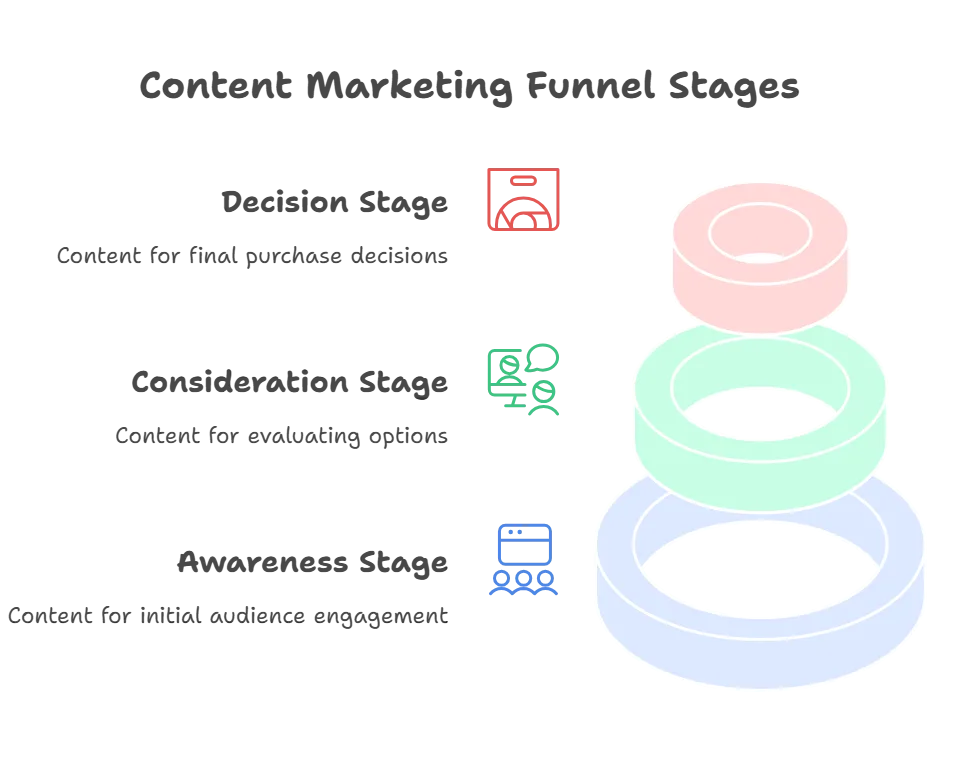
For a project management software company, that might look like:
- “What is a project management software” — ToFu. Informational keywords, awareness-stage content like blogs, guides, infographics.
- “Top 5 project management tools” — MoFu. Consideration-stage content: webinars, comparison guides, case studies.
- “Project management software free trial” — BoFu. Decision-stage content: product pages, testimonials, free trials.
Step 6: Validate Keywords With SERP Analysis
Before committing, check the actual SERP for each target keyword to confirm your content plan matches what’s really ranking.
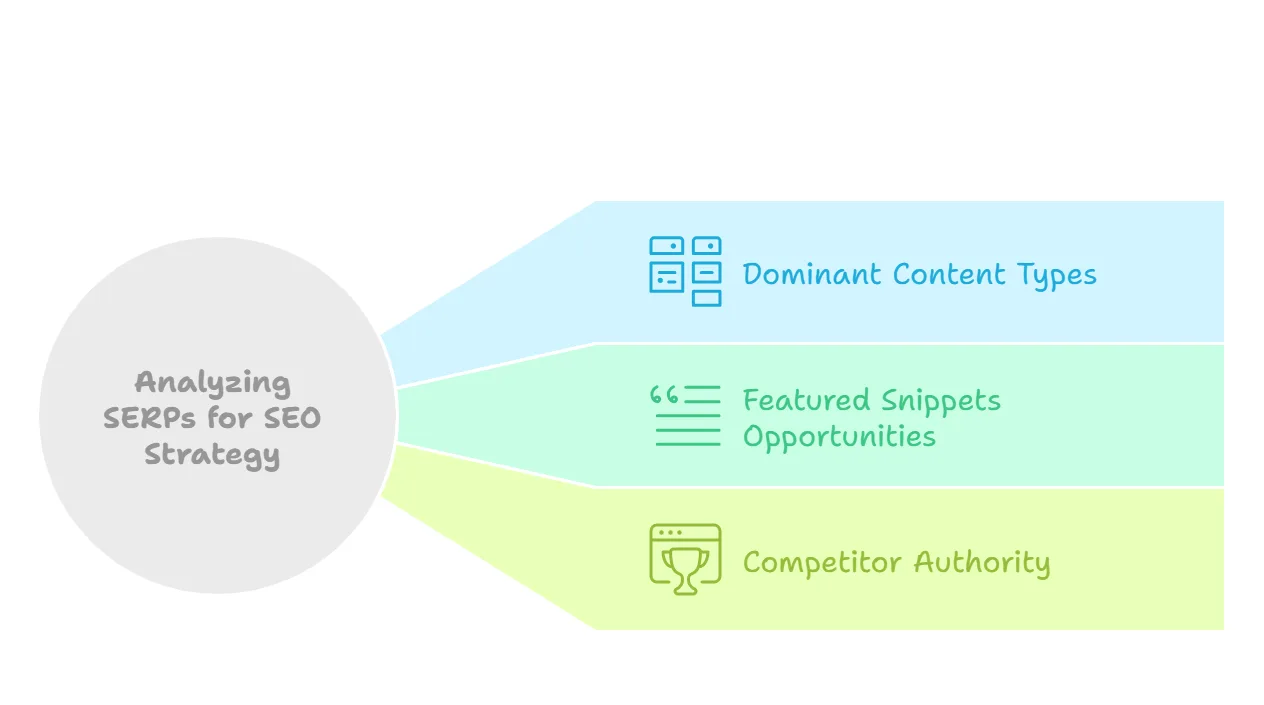
↳ Content type. If product pages dominate, target commercial keywords instead of writing a blog post.
↳ Featured snippets. Look for openings in “People Also Ask” or existing snippets.
↳ Competitor authority. Weigh how established the top-ranking sites are. Going up against major brands directly rarely pays off, a long-tail or less competitive variation usually does better.
A quick review of what’s already ranking, structure, format, tone, tells you exactly what you need to beat.
Targeting the Right B2B Keywords
Following this process gets you genuinely valuable keywords across all four intent types, so you can show up at every step of your buyer’s journey, not just the ones that are easy to find. Once you’ve got the keywords, put them to work: see our keyword research tools directory for tools to help implement the strategy.
Frequently Asked Questions
How is B2B keyword research different from B2C?
B2B leans toward low-volume, high-intent keywords tied to specific industries and business decision-makers, while B2C targets broader, high-volume terms aimed at individual consumers. B2B also deals with longer sales cycles and multiple stakeholders, which shows up in more complex, organization-specific queries.
Is SEO worth it for B2B?
Yes. It puts you in front of decision-makers actively searching for a solution, drives targeted traffic, builds trust, and generates quality leads over the long term.
What’s the most important thing to look for in B2B keyword research?
Search intent. Prioritize keywords that reflect what decision-makers actually need and where they are in the buying journey, over raw volume.
Which tool is best for B2B keyword research?
Semrush tends to be the strongest option, with detailed search volume, keyword difficulty, and competitive data that makes it easier to spot real opportunities.
How can I use internal search data for B2B keyword research?
Analyze what your own visitors search for on your site. It surfaces content gaps and keyword ideas tied directly to what your audience is already looking for.
What role does the buyer’s journey play in keyword research?
It helps you map keywords to awareness, consideration, and decision stages, so your content actually meets people where they are at each point in the process.
Can conference agendas or industry events help find keywords?
Yes. Session titles and descriptions tend to spotlight current challenges and trends your audience cares about, making them a solid, underused keyword source.
How do I refine keywords for niche B2B audiences?
Add specific modifiers, job titles, industries, or use cases, and lean into long-tail phrasing. A tool like Semrush helps filter for low-competition, high-relevance terms.
Should I target competitors’ branded keywords in B2B?
Yes, terms like “[Competitor] alternatives” or “[Competitor] pricing” can work well, as long as the content is accurate, compliant, and genuinely useful.
How do I use customer pain points for keyword research?
Pull insights from customer interviews, G2 reviews, or forums like Reddit to identify real challenges, then build keywords directly around solving them.
What keyword tools should I use besides Semrush?
Google Search Console for hidden opportunities, Google Trends for seasonal patterns, and QuestionDB for question-based keywords tied to what your audience is actually asking.
How do I know if I can compete for a specific B2B keyword?
Check the domain authority of what’s currently ranking, look at the content type dominating the SERP, and make sure you can genuinely offer more value than what’s already there.
How do I balance low-volume and high-volume keywords?
Lean on high-intent, low-volume keywords for your niche audience, while mixing in some higher-volume terms to build visibility during the awareness stage.
Why does clustering keywords matter in B2B SEO?
It builds topical authority around a central subject, strengthens internal linking, and makes it easier to plan content that lines up with each funnel stage.
How often should I revisit my keyword strategy?
Roughly every 3–4 months, plus any time your product changes meaningfully or competitors start gaining ground. Regular updates keep your strategy aligned with the market.
Is Yelp good for B2B?
It can be, especially for service-based businesses. Features like “Request a Call” or “Request a Quote” make it easy for potential clients to reach out directly.