



Wondering what counts as a good keyword search volume?
Honest answer: it depends. I know that’s not the clean number you were hoping for, but it really isn’t that simple. Cost, competition, and potential conversions all play into whether a keyword is actually worth targeting.
This guide walks through how to weigh those factors so you can figure out what search volume range makes sense for you.
What Is Keyword Search Volume in SEO?
Keyword search volume is the average number of times a word or phrase gets searched on a search engine (usually Google) over a set period, typically a month. It’s a proxy for demand.
A keyword with a monthly search volume of 1,000 means people type it into Google roughly 1,000 times a month.
Here’s an example: I searched “german roaches” in Semrush’s Keyword Overview and got a volume of 27.1K in the US.
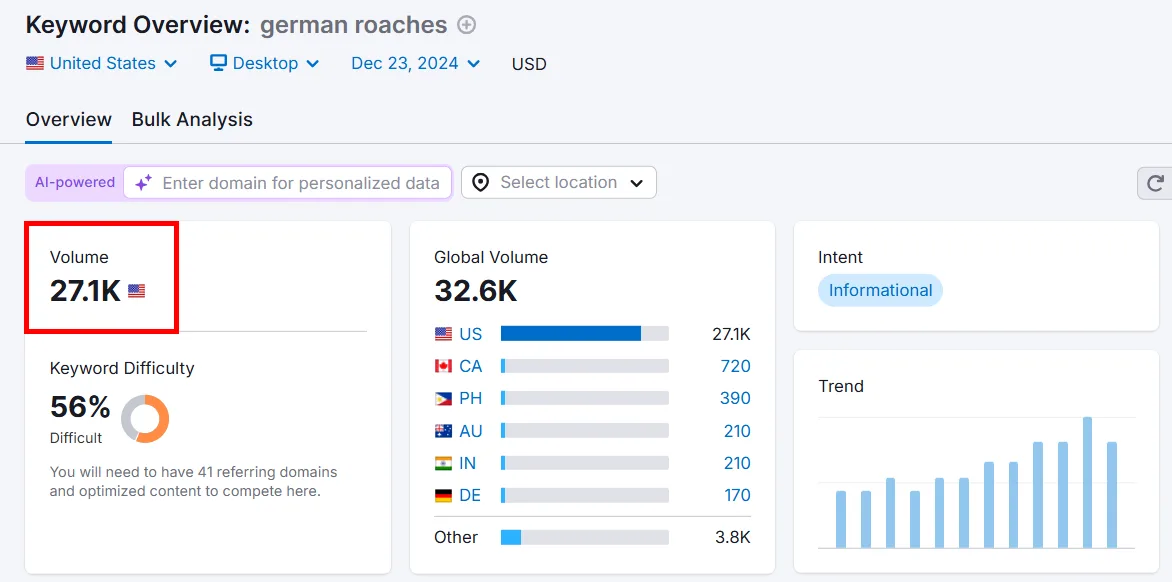
That means “german roaches” gets searched an estimated 27,100 times a month in the US.
Not all keywords behave the same way over time, though:
↳ Evergreen keywords stay relevant year-round and give you consistent traffic. Think “how to cook rice” or “best laptops for work.” Good foundation for long-term content.
↳ Seasonal keywords spike around specific times or events, like “Christmas gift ideas” or “Black Friday deals.” Useful for catching seasonal traffic when it matters.
So What Counts as a “Good” Keyword Search Volume?
There’s no single number that works for everyone. It depends on competition, user intent, and how well the keyword fits your goals.
↳ If you’re a beginner or working a niche topic, lower search volumes can actually be great, especially with less competition and a real shot at conversions.
↳ If you’re running a larger, established site, higher search volumes can make more sense, even against bigger competitors.
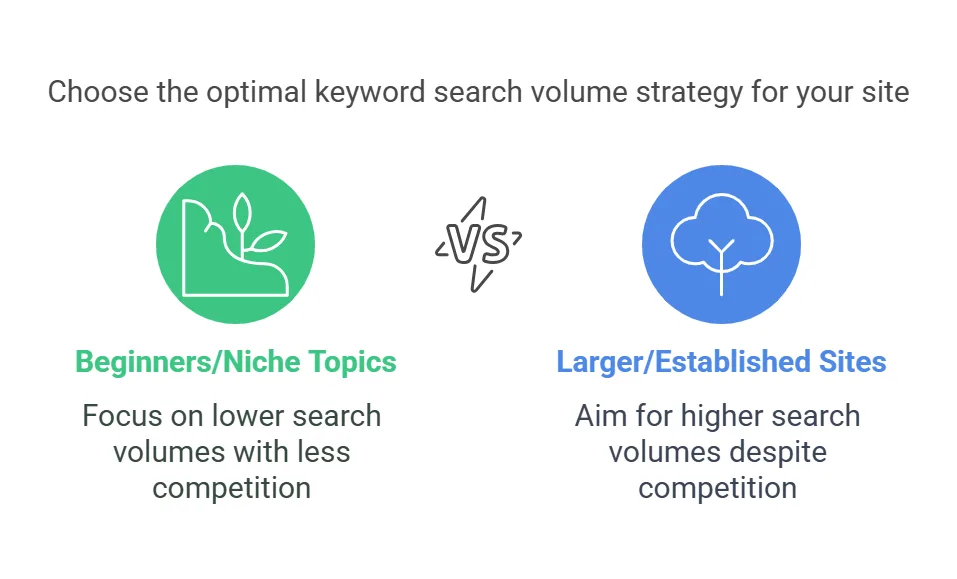
Low-volume keywords tend to match search intent closely, which means better conversion odds even with fewer searches. High-volume keywords bring more traffic but are usually more competitive and less focused.
A genuinely “good” search volume is the one where you can realistically rank and pull in the right kind of traffic for whatever you’re actually trying to do, build a brand, generate leads, or drive sales.
Here’s a rough breakdown of what “good” can look like across different use cases. Treat it as a flexible reference, not a rulebook, since actual good volumes shift by niche, competition, and goal:
| Category | Monthly Range | Description |
|---|---|---|
| Hyper-Specific | 0–35 | Highly specific keywords, detailed questions, or rare search terms. |
| Niche | 35–100 | Localized searches, unique product offerings, or very specific content. |
| Mid-Range | 100–1,100 | A sweet spot for popular products and well-known services. |
| High | 1,100–10,000 | Broader topics with multiple angles. Usually competitive, needs strong content and backlinks. |
| Very Broad | 10,000+ | Typically dominated by high-authority sites and major brands. Needs real domain authority and resources. |
Which Factors Should You Weigh Alongside Search Volume?
Picking the right keyword isn’t only about the number.
↳ Relevance & intent. High volume means nothing if the traffic isn’t relevant. Make sure the keyword actually matches what your audience is looking for.
↳ Competition & difficulty. High volume usually means tougher competition. I use Semrush to check keyword difficulty before deciding whether ranking is realistic.
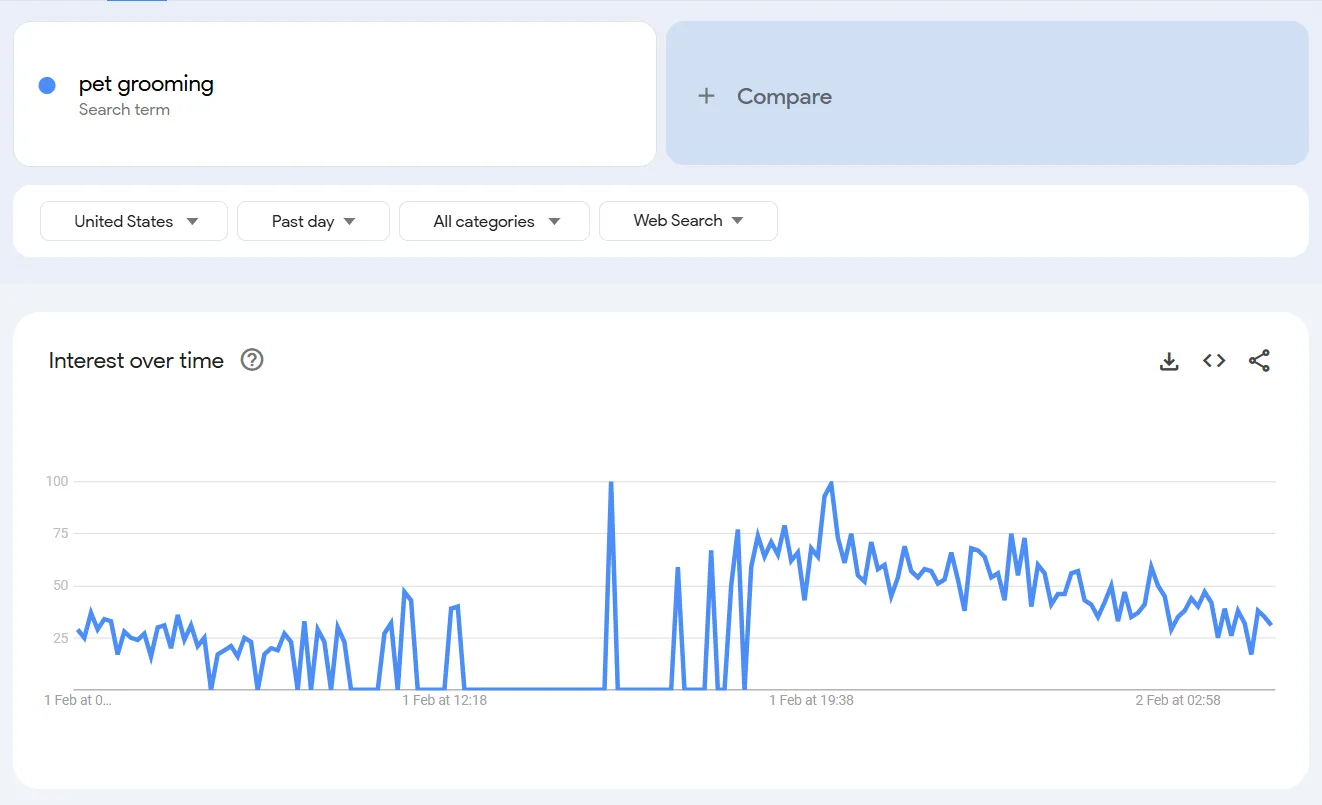
↳ Seasonality & trends. Some keywords peak around holidays or events. Google Trends is my go-to for spotting when interest in a term rises or falls.
↳ Cost & ROI. For paid campaigns, weigh CPC against the potential return. High-volume keywords can get expensive fast.
↳ SERP features & click potential. Even a high-volume keyword can lose you clicks to ads, snippets, or the Google Local Pack.
The simplest way to check this manually is to just Google the term yourself.
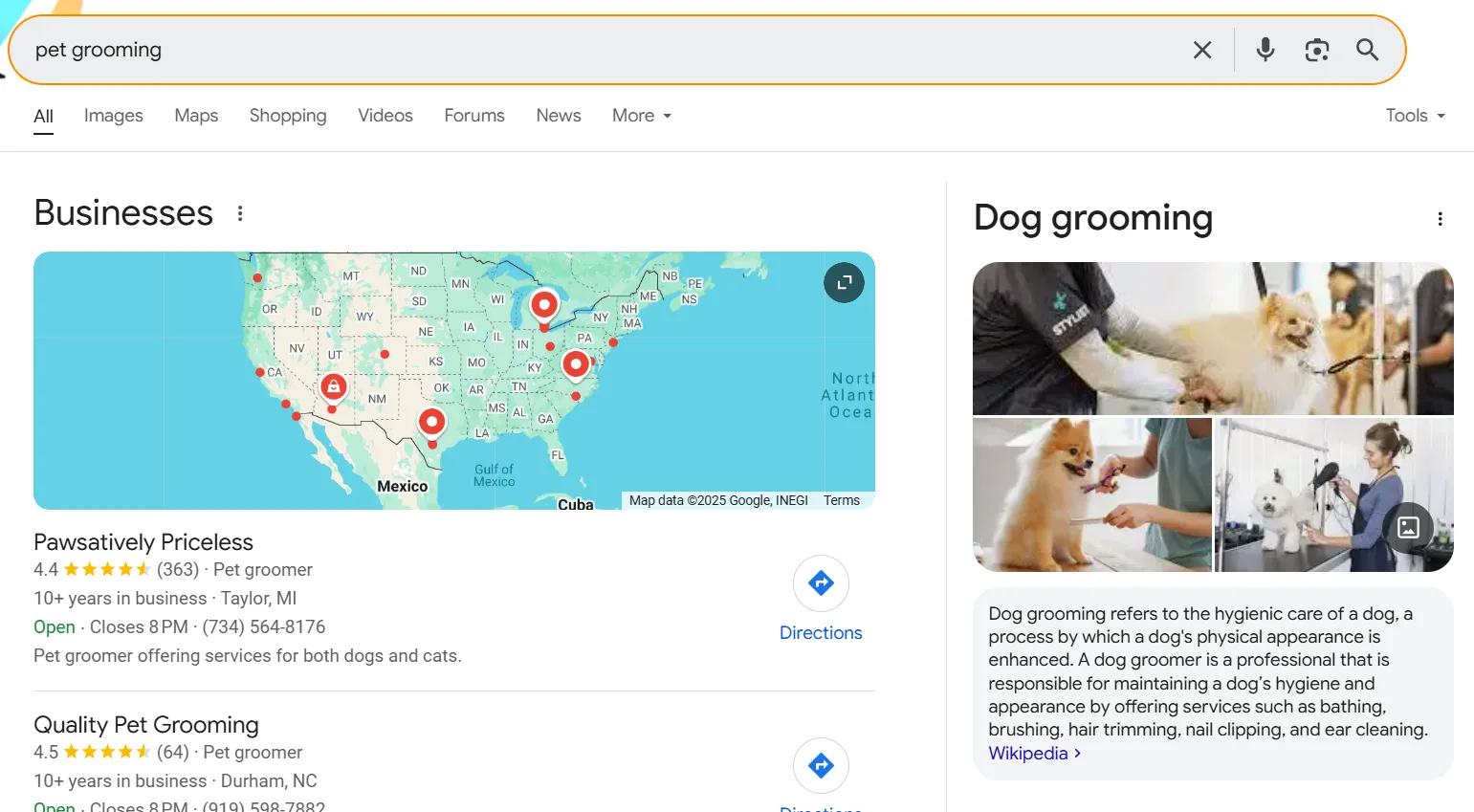
Take “pet grooming,” for instance: it triggers a Google Local Pack (the box listing nearby businesses). Even with solid search volume, a blog post or service page targeting that term alone isn’t going to get many clicks, since fewer people scroll down to organic results at all.
Checking every keyword manually gets tedious fast once you have a real list, though. That’s why I lean on Semrush instead. It surfaces everything in one place.
How to Use Semrush to Find Important Keyword Metrics
Say you already have a list of keywords and want to know how easy or hard they’ll be to rank for, along with seasonal performance and intent.
Open Semrush’s Keyword Overview tool, plug in your keywords, pick a target location, and hit Search.
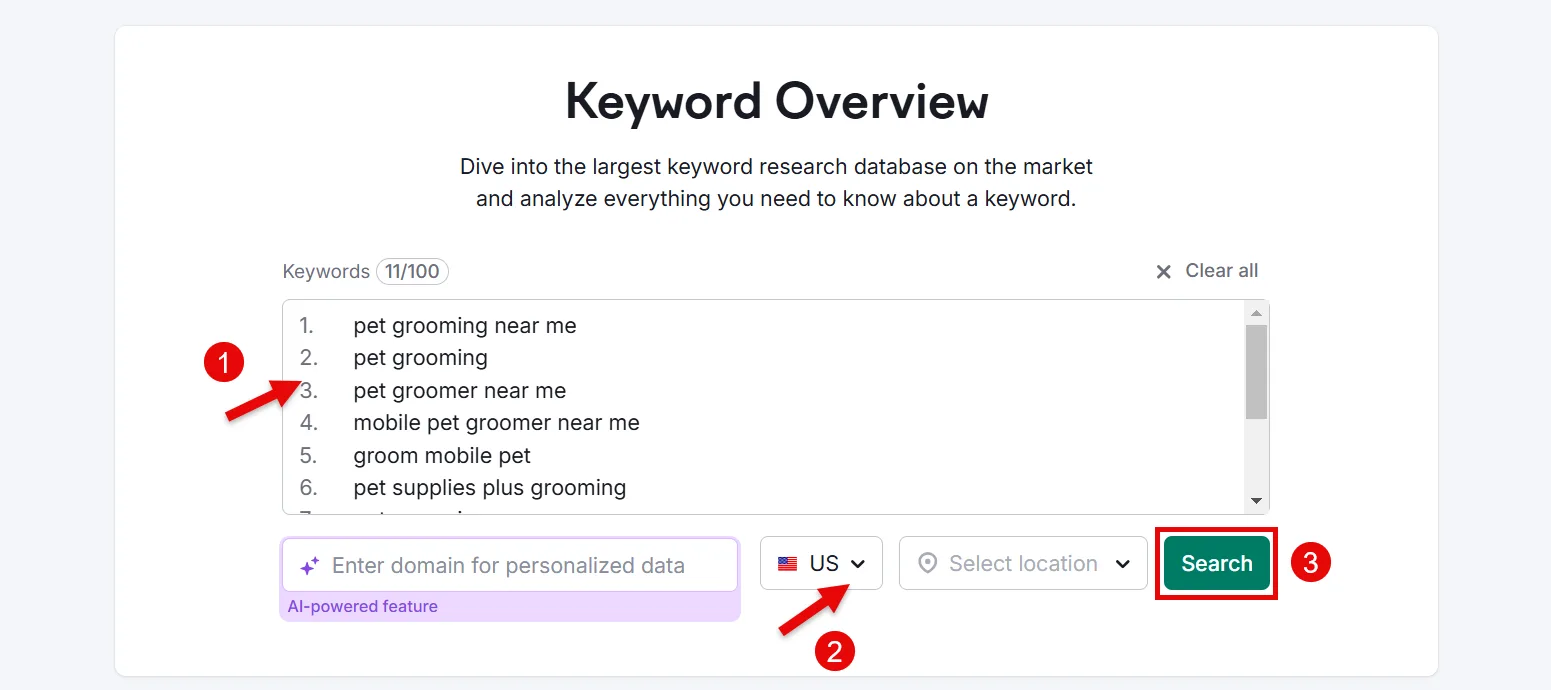
You’ll get a report within seconds.
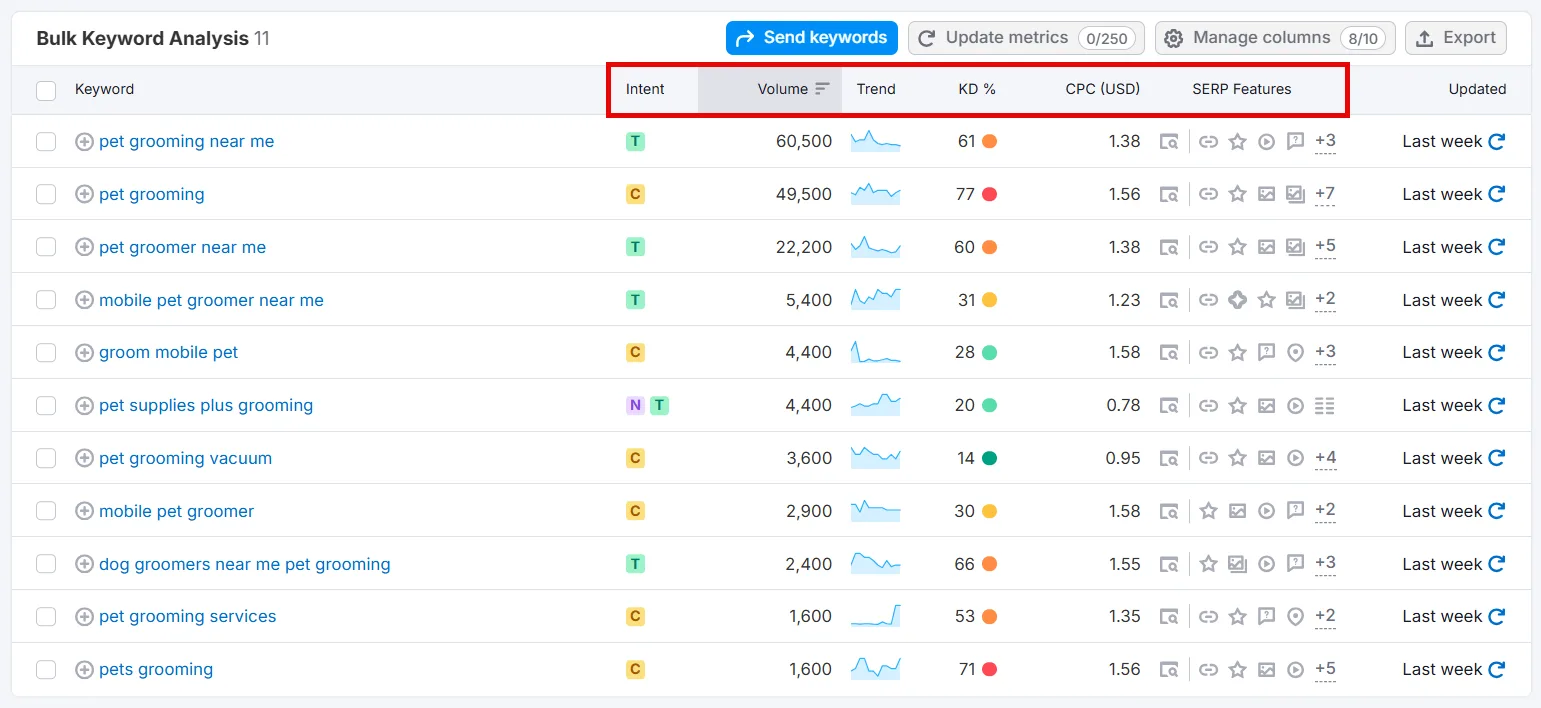
Each keyword comes with:
→ Intent, marked [T] transactional, [C] commercial, [N] navigational, or [I] informational.
→ Volume, the search volume itself.
→ Trend, how the keyword has performed over time.
→ KD%, an estimate of how hard the keyword is to rank for.
→ SERP Features, what kind of features the query tends to trigger.
→ CPC, cost per click if you’re considering ads.
That combination tells you whether a keyword’s worth targeting and how.
More Factors Worth Considering
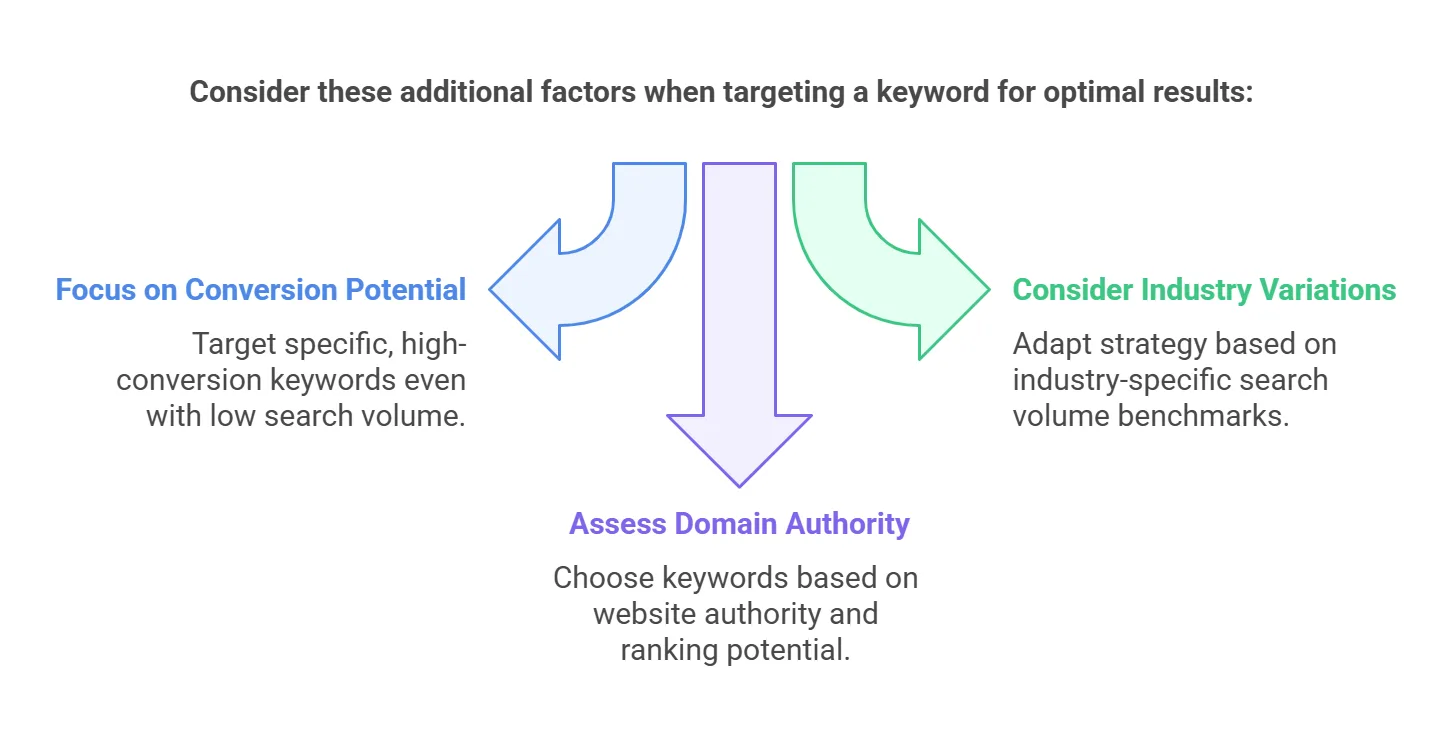
↳ Conversion potential. Buyers closer to a decision tend to use longer, more specific keywords. Something like “mobile pet groomer near me” won’t have huge volume, but it can drive serious conversions.
↳ Industry & niche variations. Different industries have different baselines. Specialized B2B keywords naturally run lower volume than consumer eCommerce terms, so don’t judge them by the same scale.
↳ Domain authority & resources. Google leans toward trusting established sites for high-volume keywords. A smaller site is usually better off targeting low-to-mid volume niche terms that are actually within reach.
So, Is Keyword Search Volume Actually Important?
Yes and no. Every search volume tool is really just making a calculated assumption, and assumptions have limits, especially for trending or incident-based keywords, where there’s often a real lag before the data catches up.
For months after ChatGPT launched, while the internet was going wild over it, keyword tools were still showing close to zero volume for the term. It just took that long for the data to catch up.
Here’s a concrete example of how much tools can disagree. Semrush puts “pet groomers near me” at a Global Volume of 130.2K and 33.1K in the US.
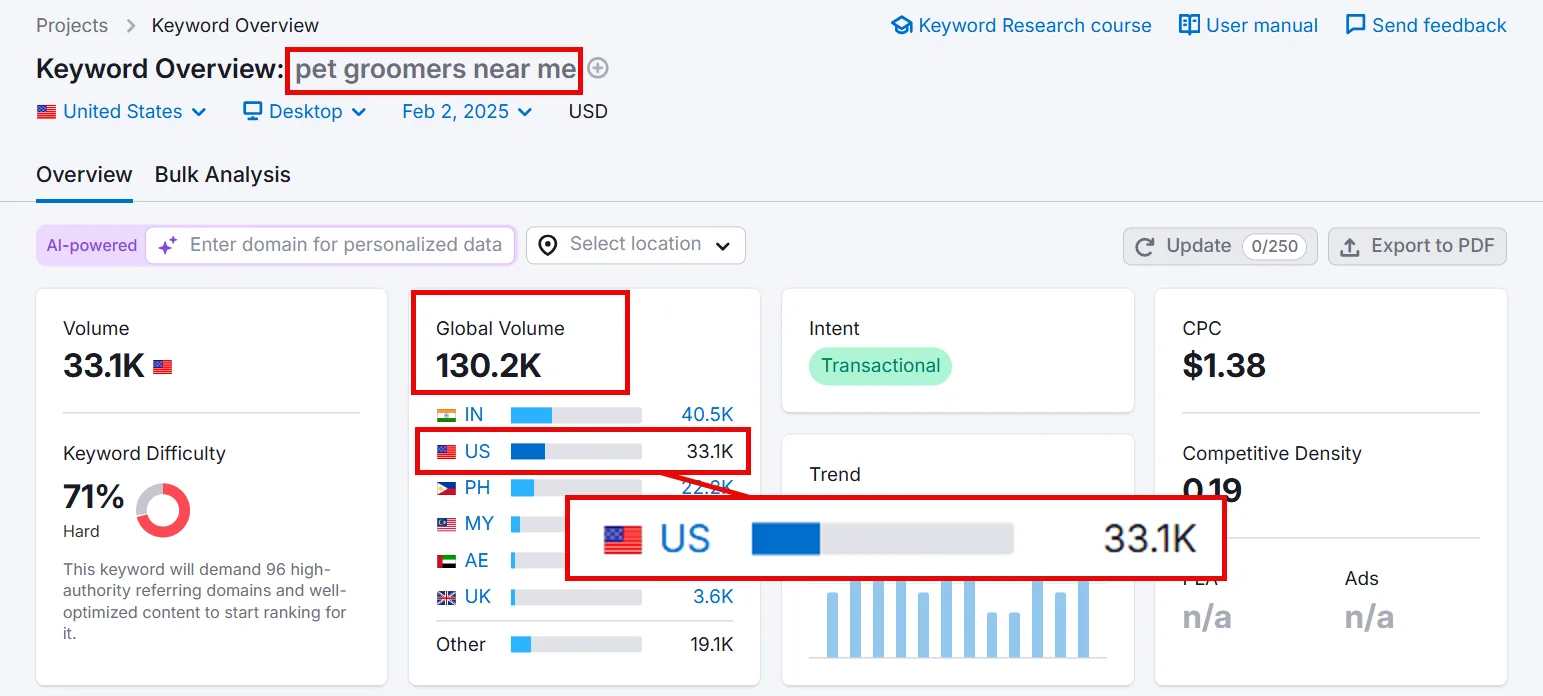
Ahrefs shows 20K globally and 15K in the US for the exact same term.
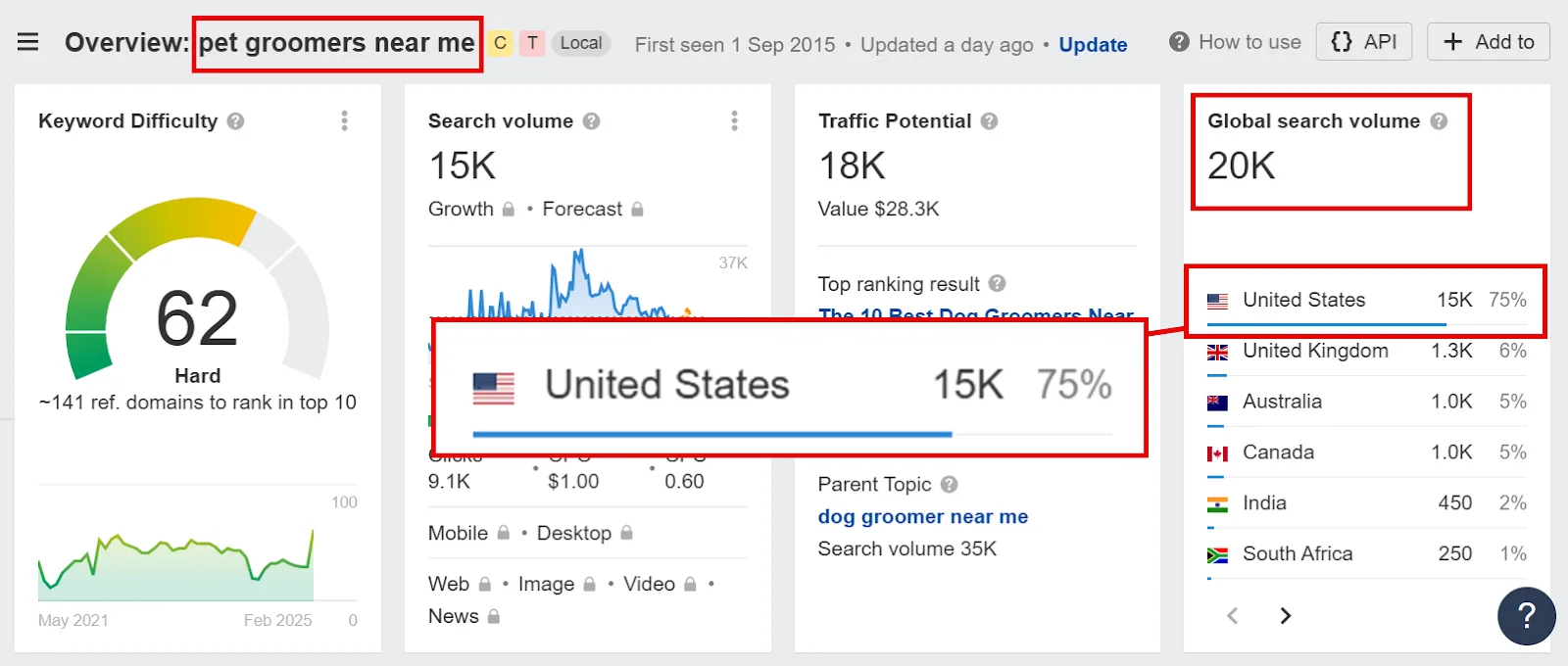
Two of the best tools in the industry, and they still don’t agree. Use search volume to guide your strategy, not as gospel.
Why Search Volume Still Matters
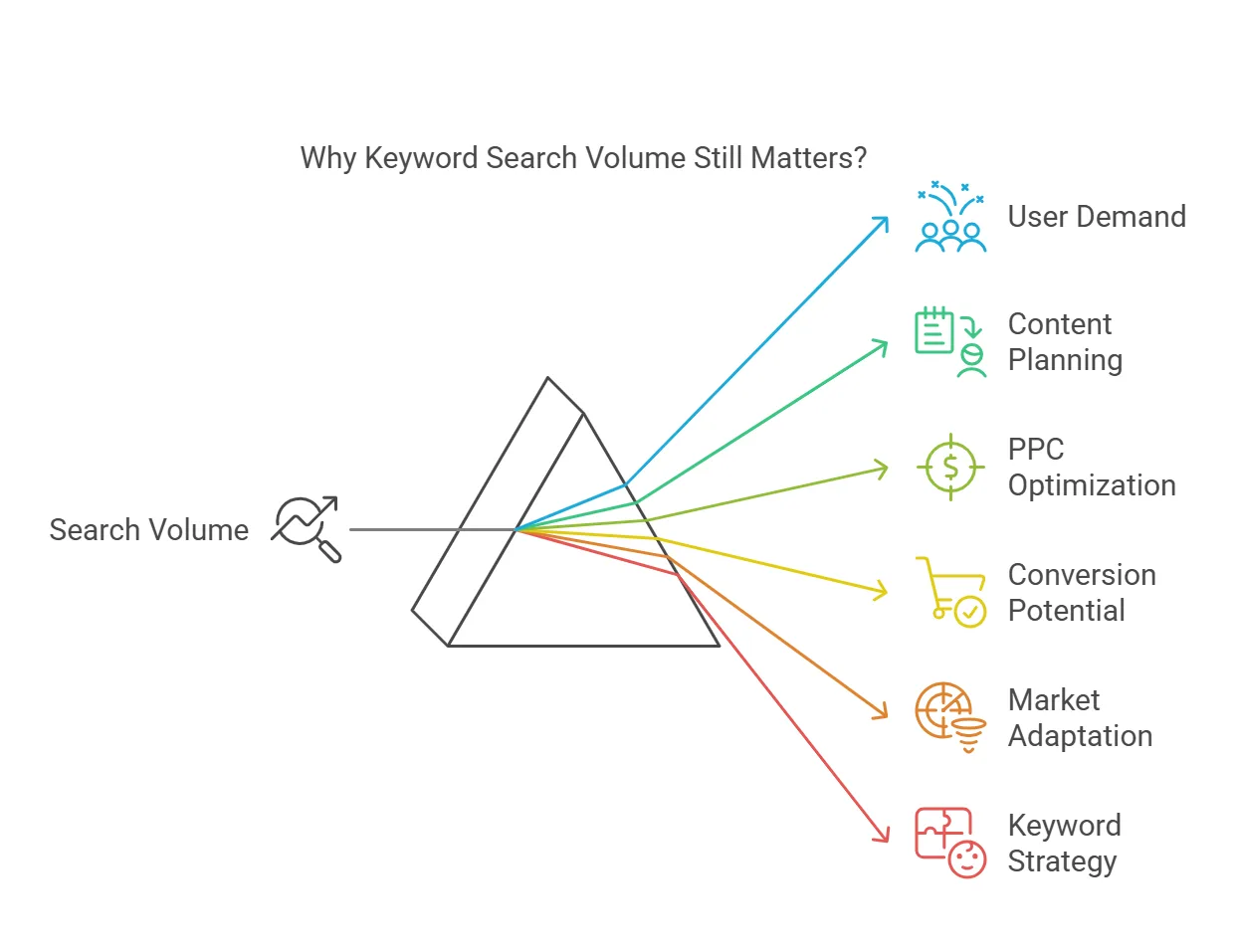
↳ It’s still the clearest signal of raw demand for a term.
↳ High-volume keywords flag popular or trending topics worth building content around, alongside the other metrics already covered.
↳ It helps you plan PPC budgets. Higher-volume terms tend to cost more, so a smaller budget is often better spent elsewhere.
↳ Lower-volume keywords that match intent well can still drive strong conversions.
↳ Volume shifts with seasons and consumer habits, and tracking that helps you adapt faster.
↳ Knowing your keywords’ volume helps you build a healthy mix of high- and low-volume terms across different intents.
How to Find Keyword Search Volume
Semrush’s Keyword Overview covers existing keywords, but it’s also useful for finding brand-new ones.
Semrush Keyword Magic Tool
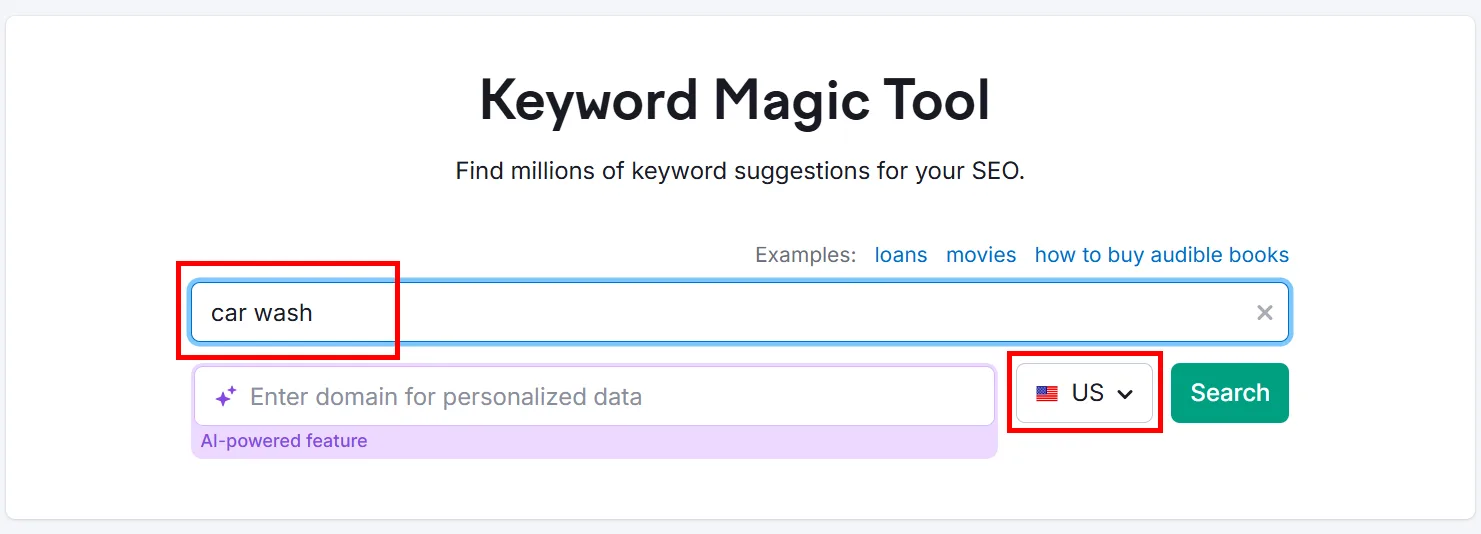
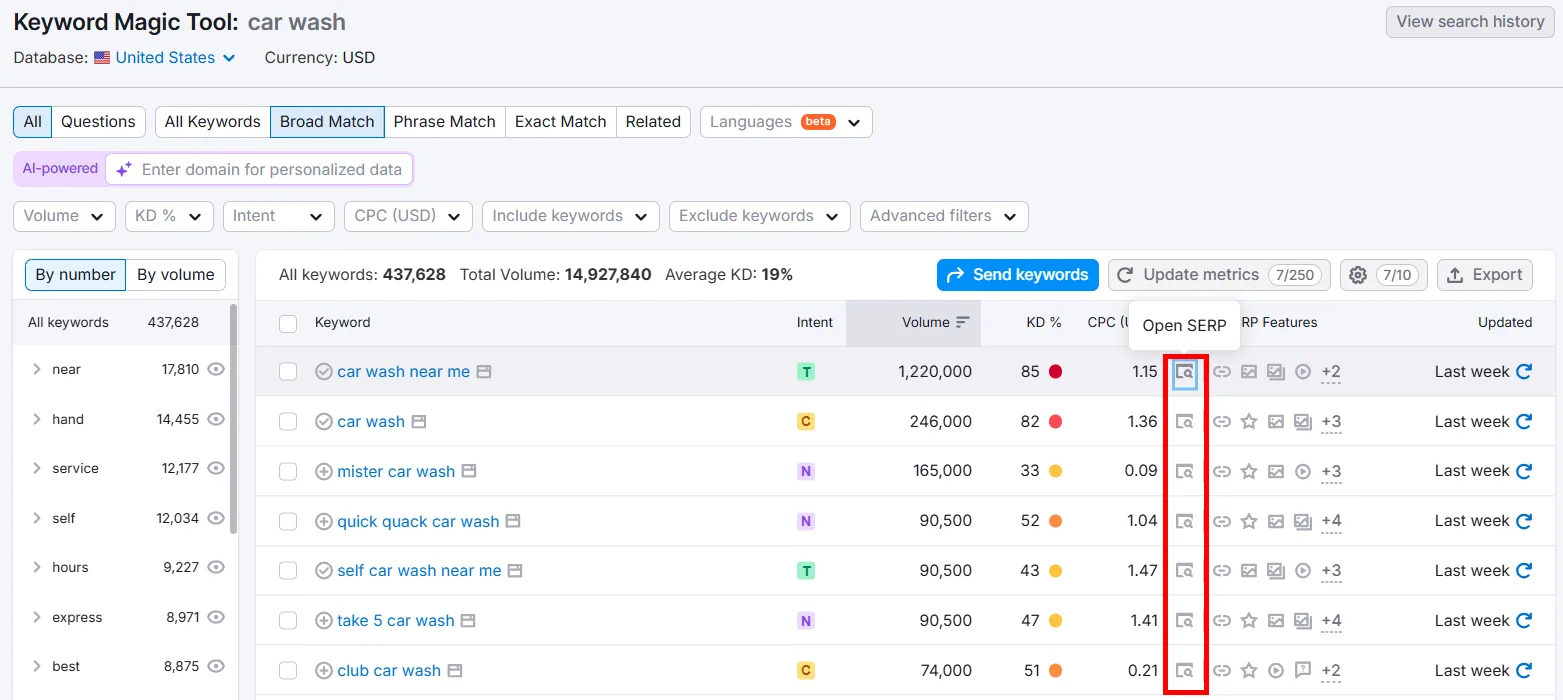
Open the Keyword Magic Tool, type a seed keyword, pick your target country, hit Search.
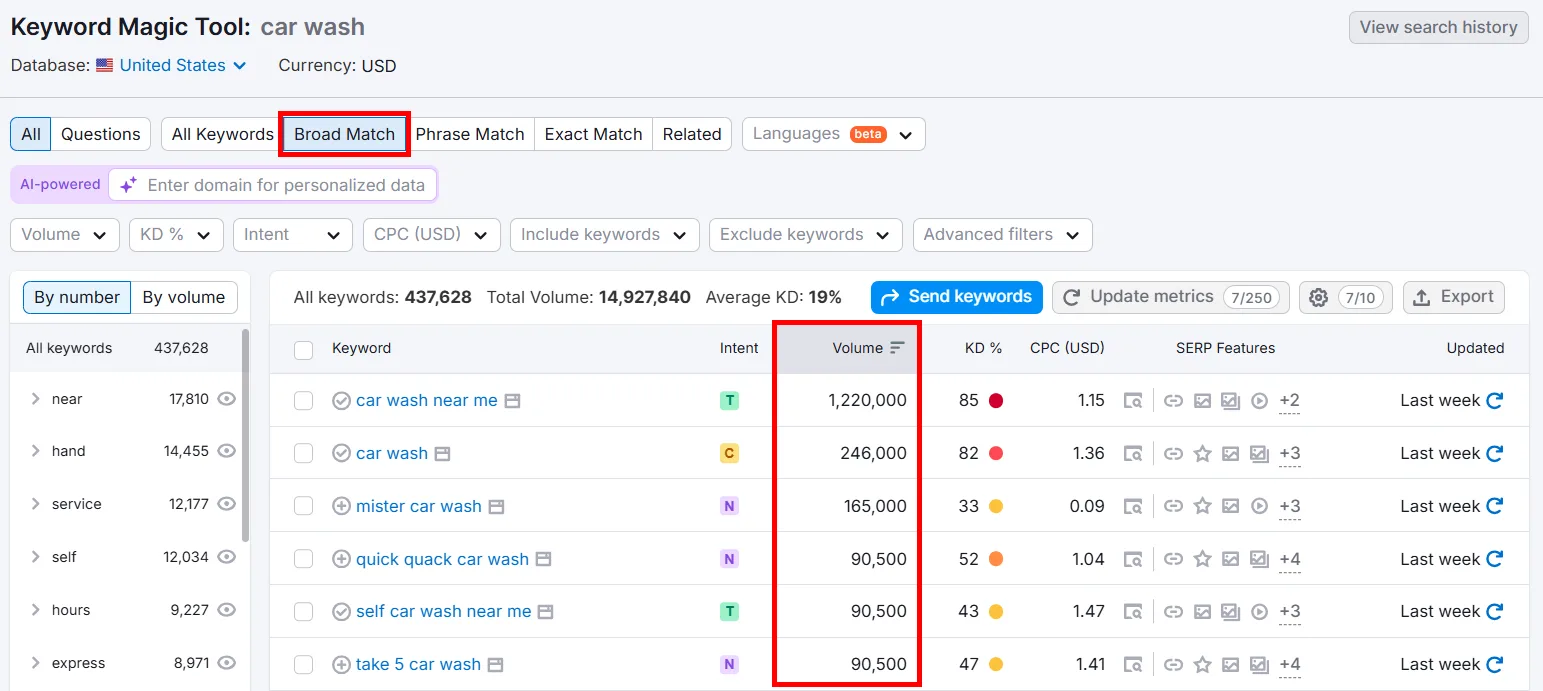
You’ll get a list of Broad Match keywords with monthly volume in its own column.
Click the magnifying glass icon next to CPC to open the SERP for your chosen location and see what’s already ranking.
If you type your own domain into the purple box, you’ll also get a Personal Keyword Difficulty (PKD%) column next to Volume.
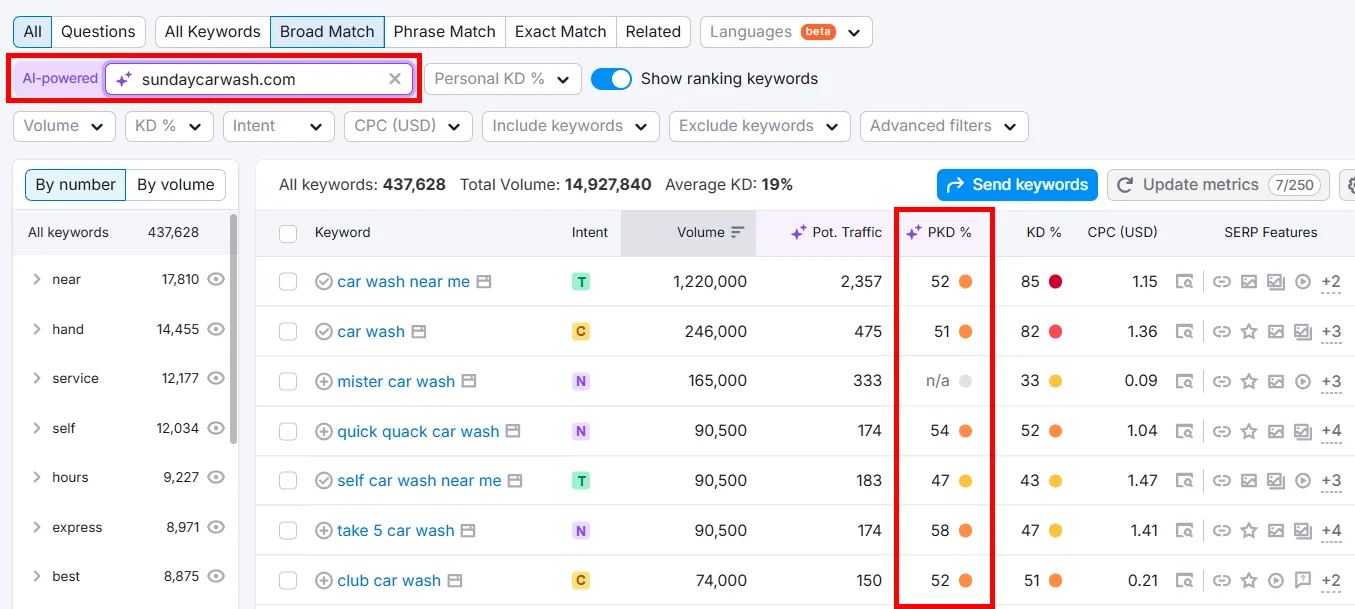
That tells you how hard it’ll be for your specific site to crack the top 10. Compare it to the general KD% score: a lower PKD than KD usually means the term is a particularly good fit for your site. If you’re doing PPC research instead, the CPC column shows average cost per click.
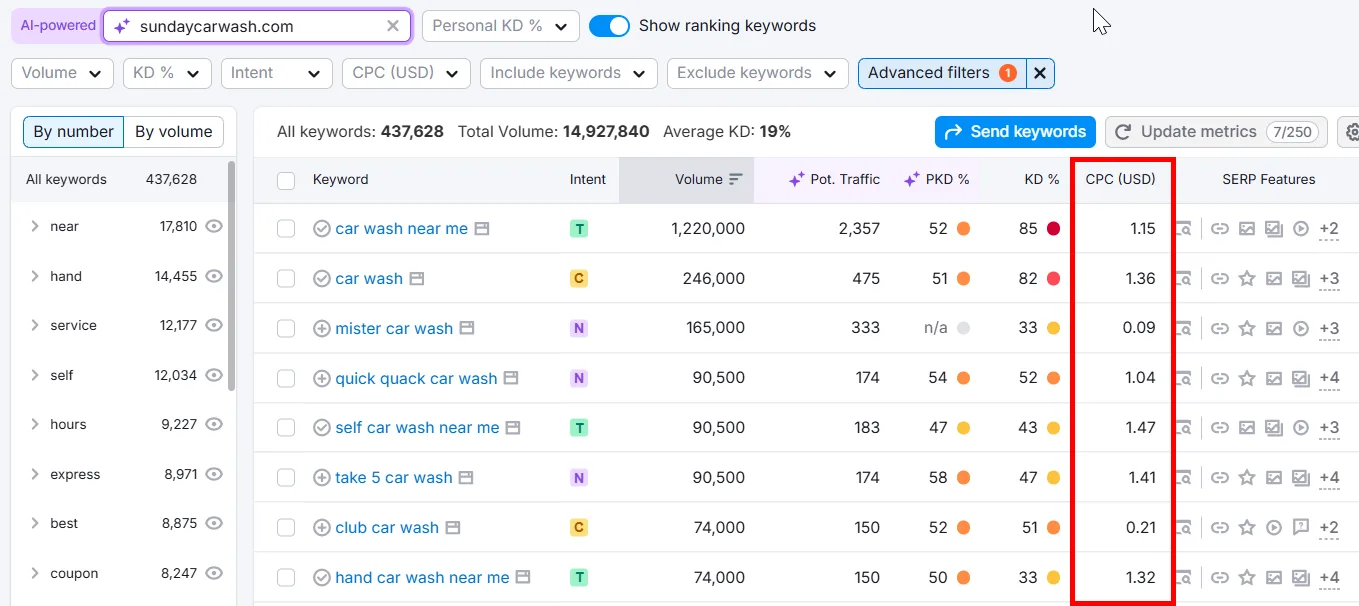
Between relevance, competition, and cost, that’s usually enough to make a solid call either way.
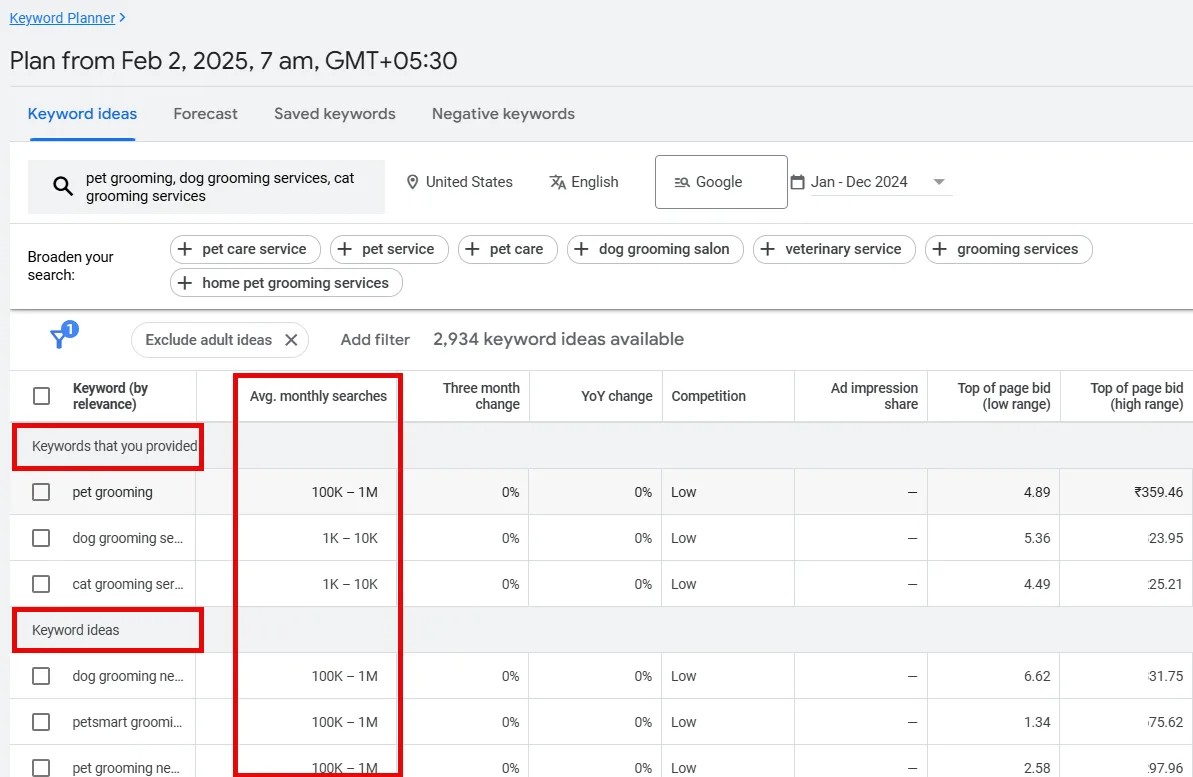
Google Keyword Planner (Free)
It’s built for Google Ads, but it works just as well for organic keyword research.
Open Keyword Planner. If you already have keywords, click “Get search volume and forecasts.”
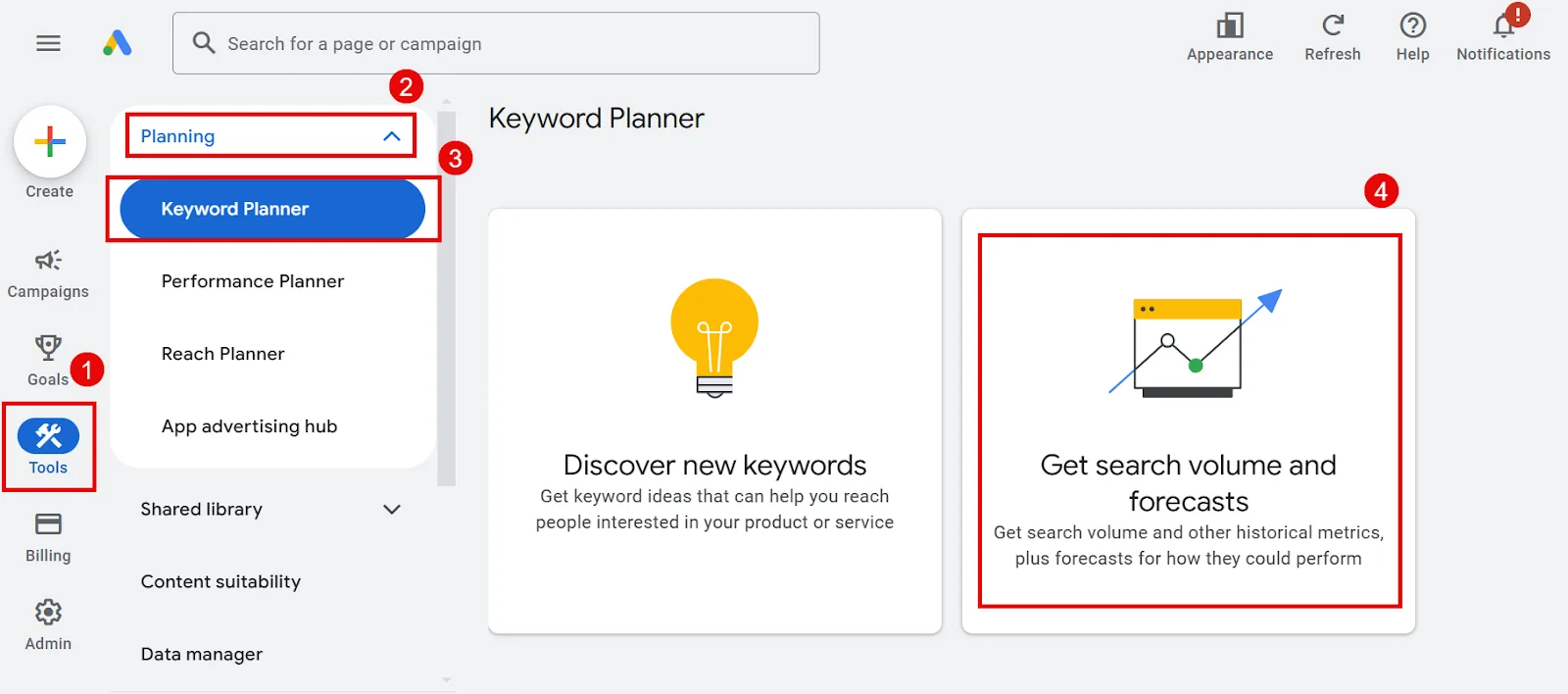
Enter your keywords and hit Get Started.
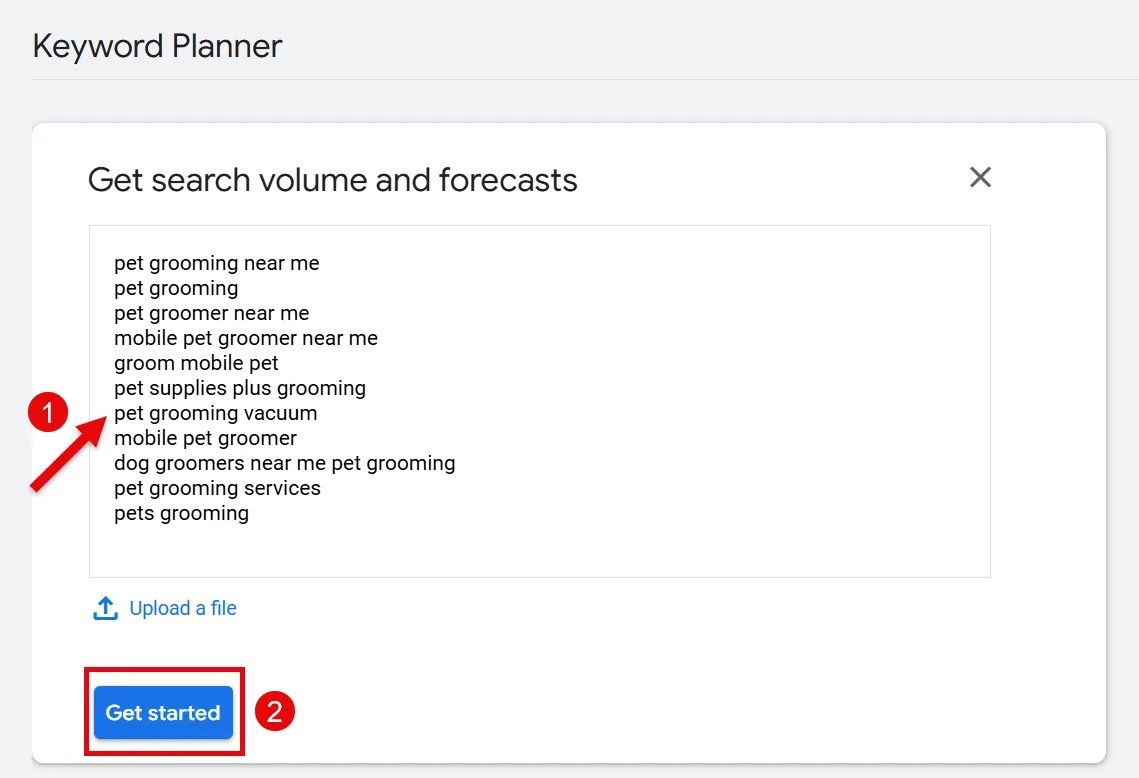
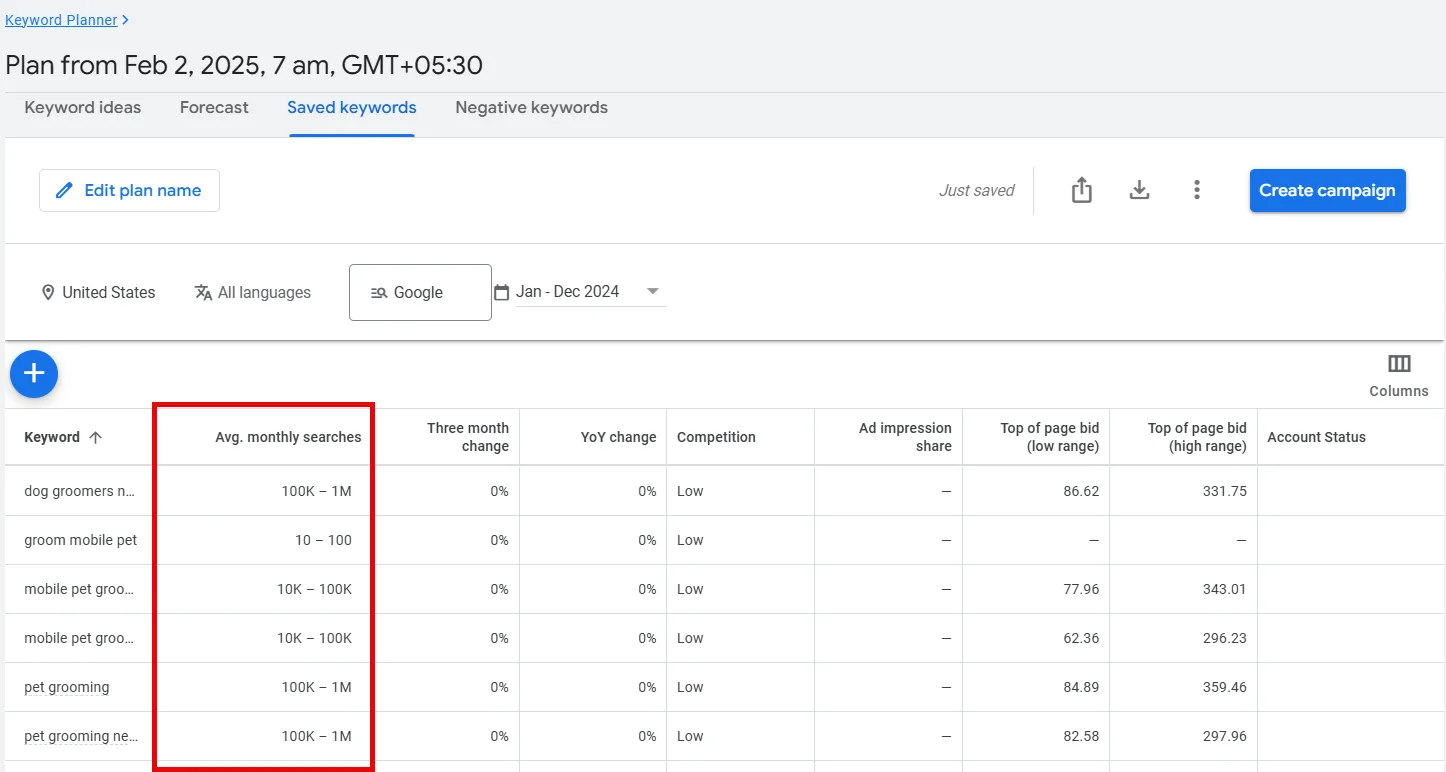
You’ll get Average Monthly Searches for each one.
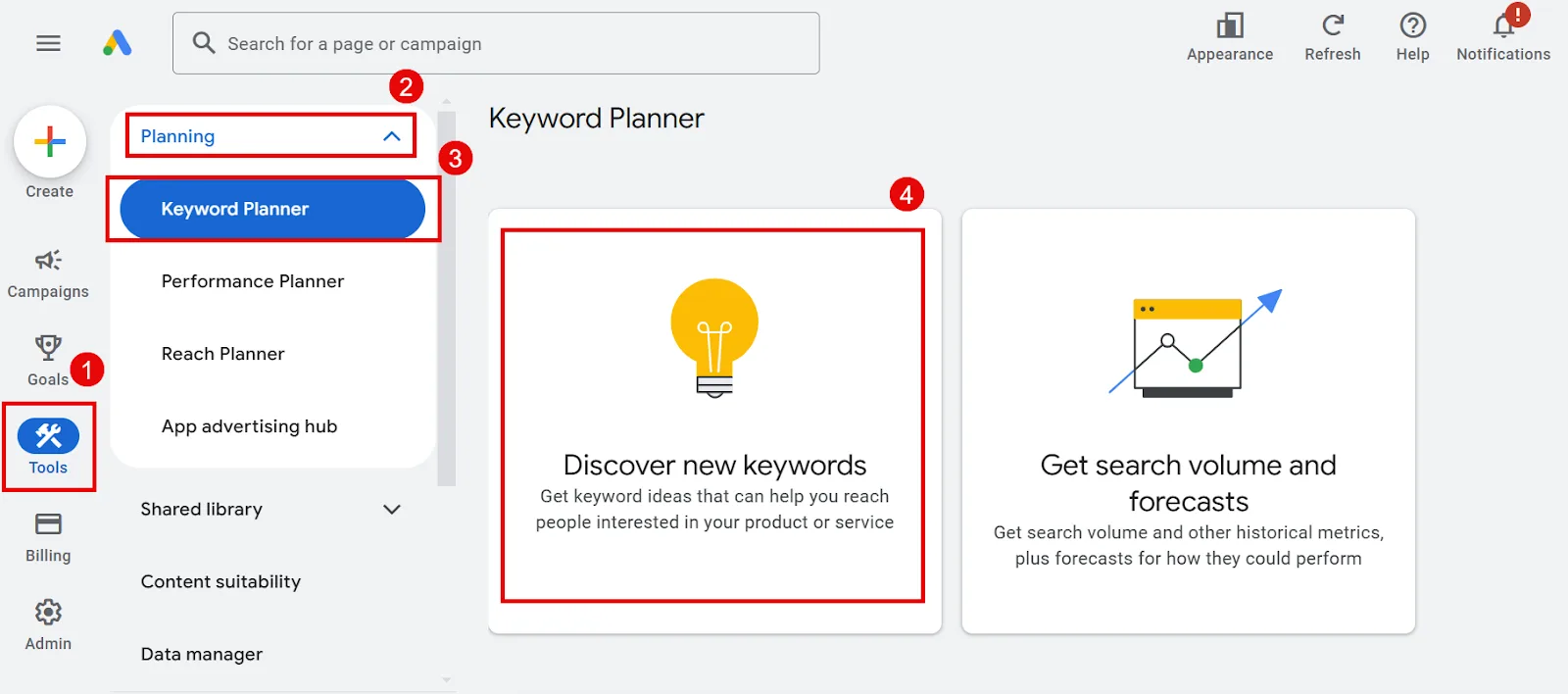
No existing keyword list? Head to the Keyword Planner dashboard instead.
Enter a couple of seed keywords describing your core business, then hit Get Results.
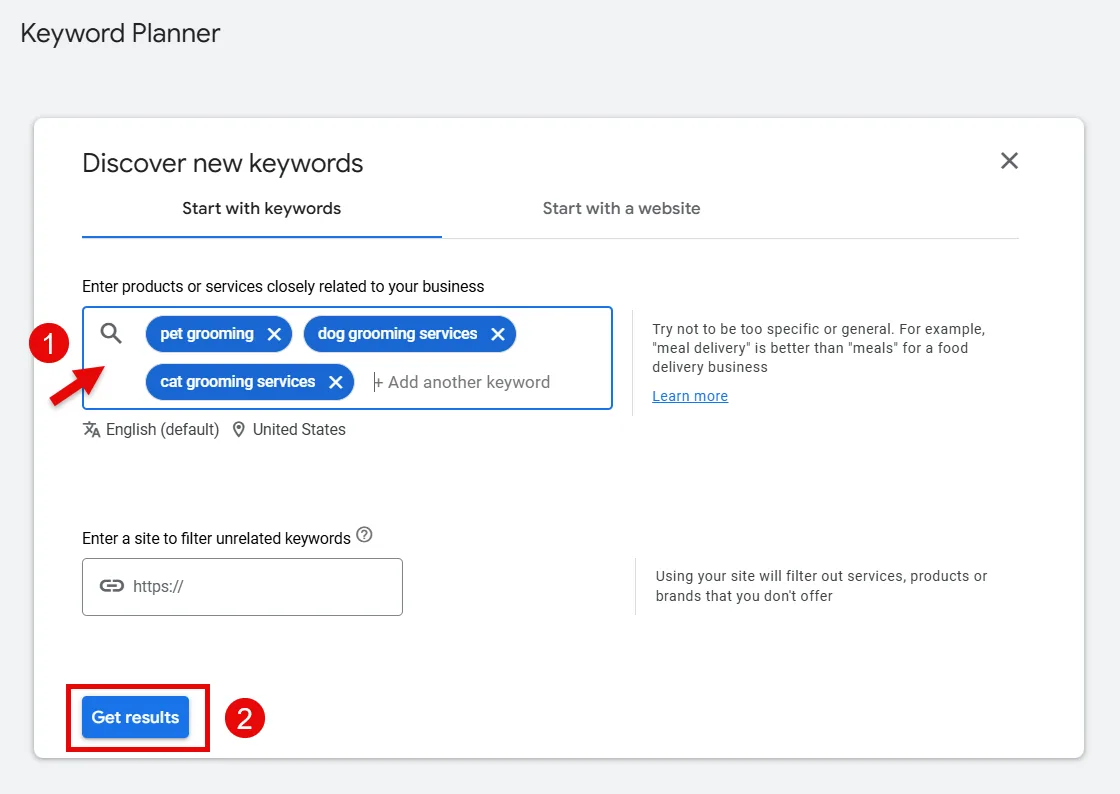
You’ll get a full report of related keywords and their average search volume ranges.
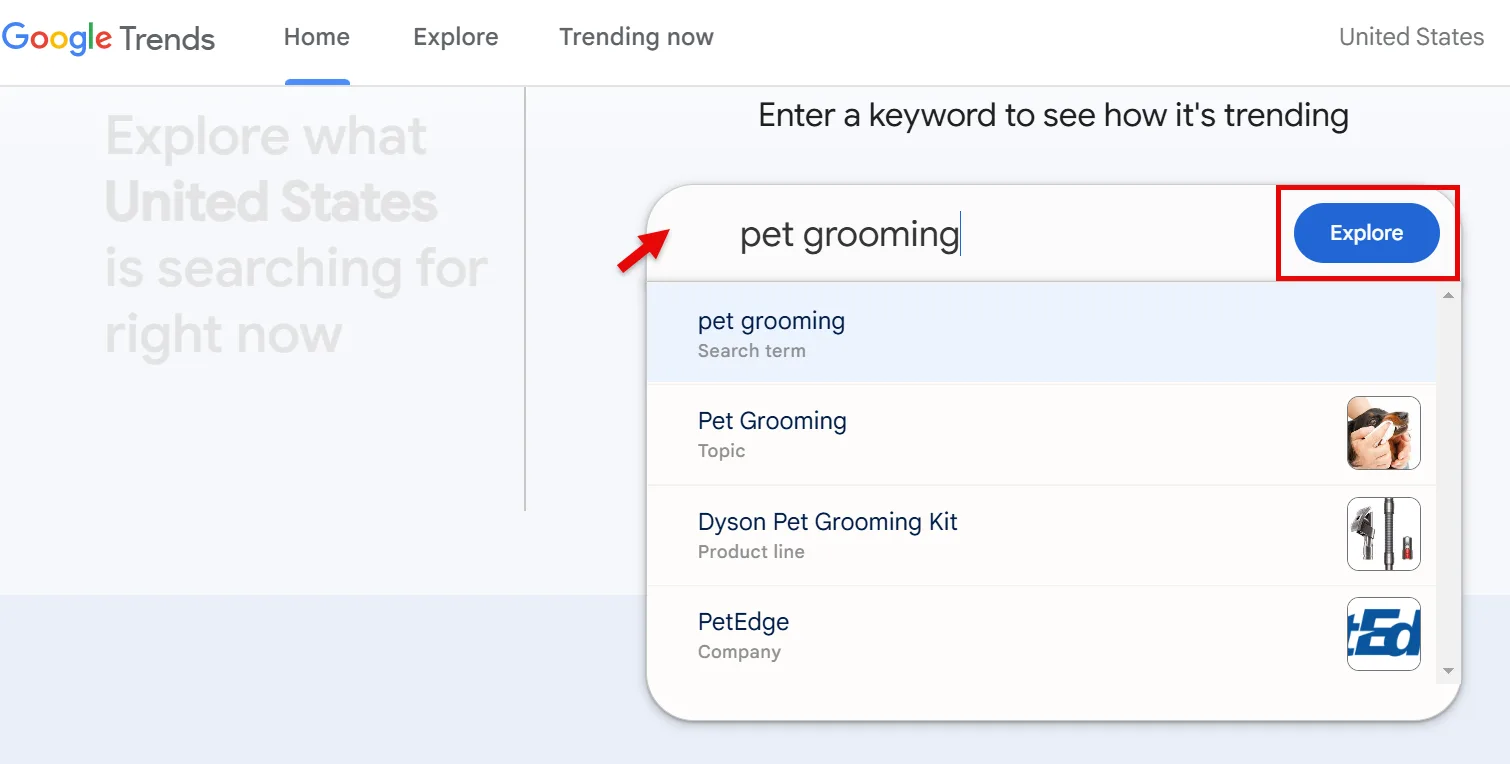
Google Trends for Seasonal Popularity
Enter a seed keyword and hit Explore to see how a topic’s popularity moves over time.
The Interest Over Time graph shows how a topic’s popularity has shifted across the period you’re looking at.
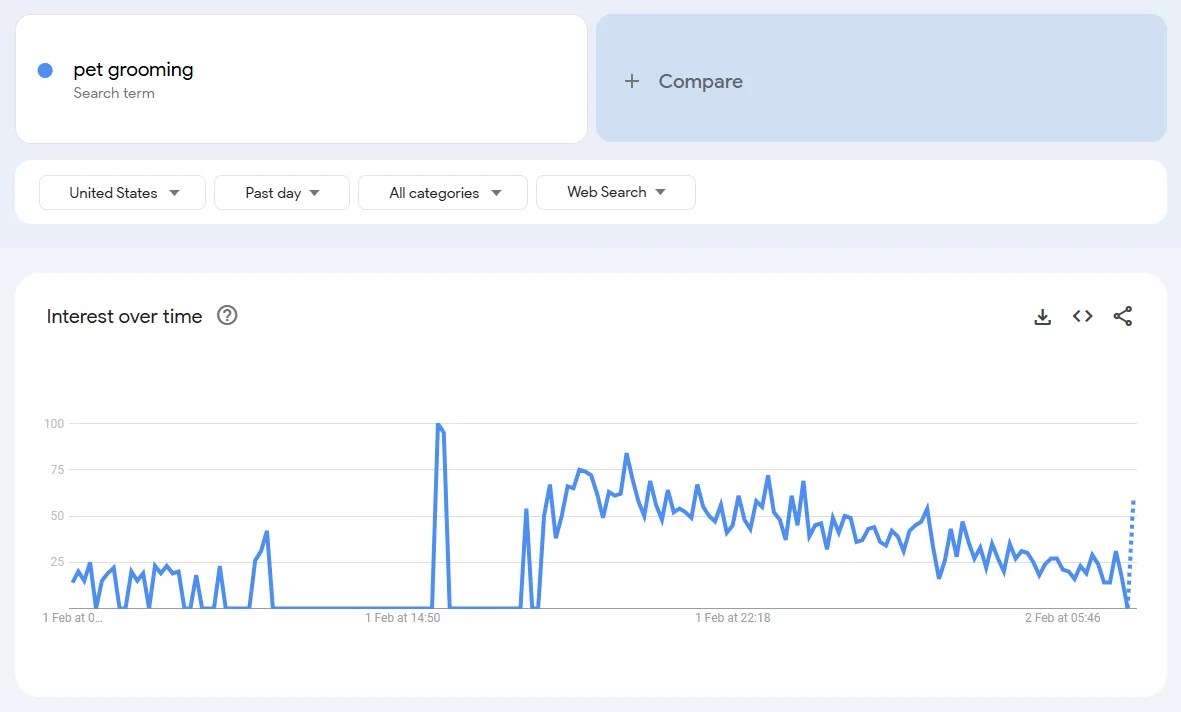
It won’t give you exact volumes, but it’s great for spotting seasonal shifts and comparing terms against each other, and for seeing whether interest in something is rising or fading.
Latest Trends That Should Influence Your Keyword Selection
Figuring out what makes a “good” search volume isn’t only about the number anymore. It’s also about keeping up with how people actually search today.
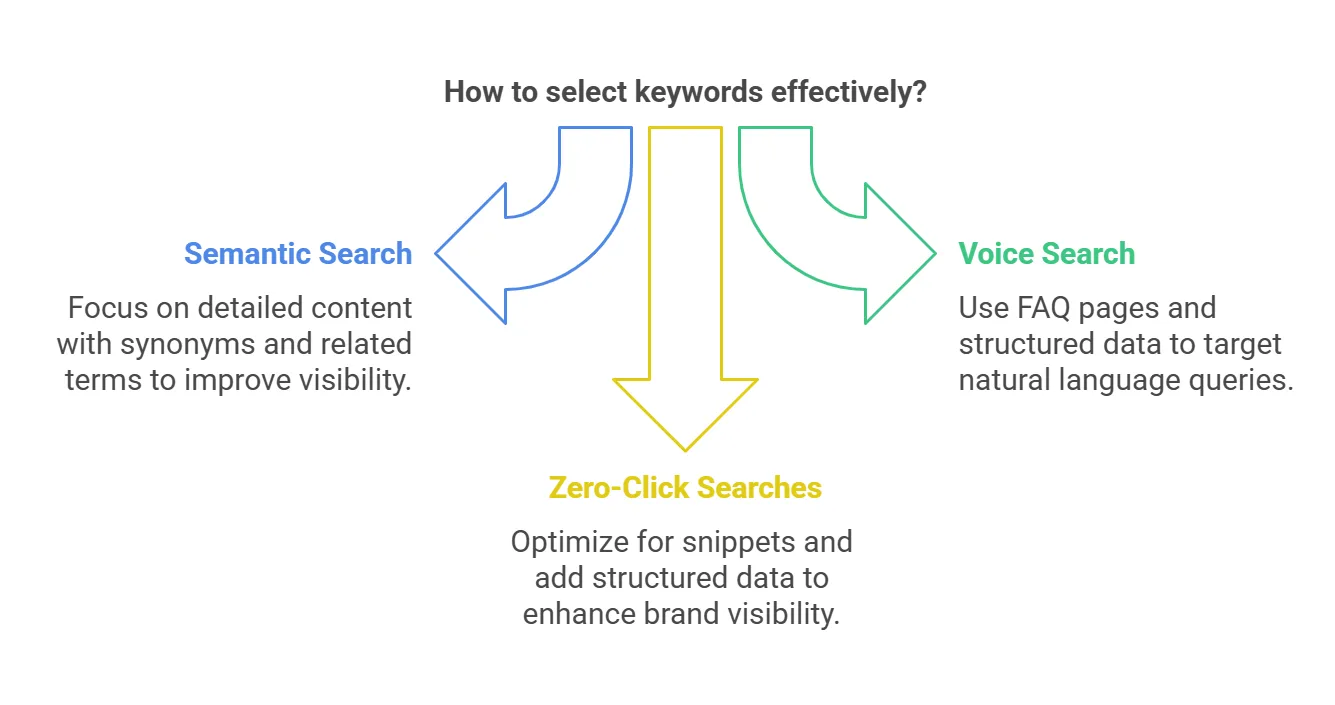
↳ Semantic search. Google understands topics and context far better now (BERT, MUM). Write detailed, well-structured content that actually answers the question, with synonyms and related terms woven in naturally.
↳ Voice search. Natural-language queries like “how can i clean a dirty car seat” are on the rise. Lower volume individually, but high intent. FAQ sections, structured data, and clear Q&A formatting help here.
↳ Zero-click searches. Snippets and Knowledge Graphs answer questions directly on the results page, which cuts clicks but still builds brand exposure. Structured data and clearly-answered common questions keep you visible even without the click.
So Basically: It Depends
What counts as “good” comes down to your niche, your competition, and your goals, along with keyword difficulty, search intent, and CPC if you’re running ads. Use a free keyword research template (or the one from our Google Search Console guide) to track down keywords with solid volume and manageable difficulty.
Frequently Asked Questions
What is the best tool to find search volume?
Semrush is my pick for detailed insights and easy-to-read reports. If budget’s tight, Google Keyword Planner is a solid free alternative. Both give you the monthly numbers you need to decide which keywords actually fit your goals.
How do you calculate keyword volume?
Tools like Semrush or Google Keyword Planner estimate it from historical search data, averaging how often a term gets looked up each month. The numbers are approximations, but they’re solid enough to guide keyword and content planning.
Is a search volume of 10,000 high for a keyword?
It depends heavily on your niche. For broad topics, 10,000 might be unremarkable; in a narrower space, it could mean serious competition. Weigh it against relevance and conversion potential rather than treating it as a fixed threshold.
What is considered a high volume keyword?
Generally anything from around 1,100 up past 10,000 monthly searches. High volume usually comes with high competition too, so it’s worth balancing against how well the keyword actually matches your audience and goals.
What is a good keyword density for SEO?
Somewhere around 1–2% of total content is the usual guideline, meaning your main keyword shows up naturally rather than forced in. Focus on writing genuinely useful content that includes your keywords organically rather than chasing a specific percentage.
What is a good number of keywords for SEO?
There’s no fixed number. Shorter articles tend to work well with two or three well-chosen keywords, longer pieces can support a few extra long-tail phrases. Keep it natural rather than engineering toward a count.
How many keywords should I use for 1,000 words?
Three to five carefully chosen keywords is a reasonable range, enough to cover your main topic plus a bit of supporting context without overstuffing. Natural usage matters more than hitting an exact number.
Is 500 words good for SEO?
It can work fine if the topic is focused and the content actually answers the query. Longer posts often go deeper, but a tight 500-word piece can still rank well. Quality and relevance matter more than length alone.
What is an ideal SEO score?
Generally above 80 out of 100 signals a well-optimized page: clear content, sensible keyword use, solid on-page elements. What counts as ideal varies a bit by industry, but 80+ is a reasonable target either way.
Which type of keywords are best for SEO?
A mix works best. Broad keywords bring a wider audience, long-tail keywords target specific intent and tend to convert better. Pick whichever fits your content naturally rather than forcing a particular type.